
← Back

Roncale Palace

Piazza Vittorio Emanuele, 25, 45100 Rovigo RO, Italia ★★★★☆ 404 views
Chiara Donato
Rovigo
🏆 AI Trip Planner 2026

Get the free app

Discover the best of Rovigo with Secret World — the AI trip planner with 1M+ destinations. Get personalized itineraries, hidden gems and local tips. Free on iOS & Android.

🧠 AI Itineraries 🎒 Trip Toolkit 🎮 KnowWhere Game 🎧 Audio Guides 📹 Videos
Download on the App Store Get it on Google Play
Scan to download Scan to download

About Roncale Palace

Roncale Palace - Rovigo | Secret World Trip Planner

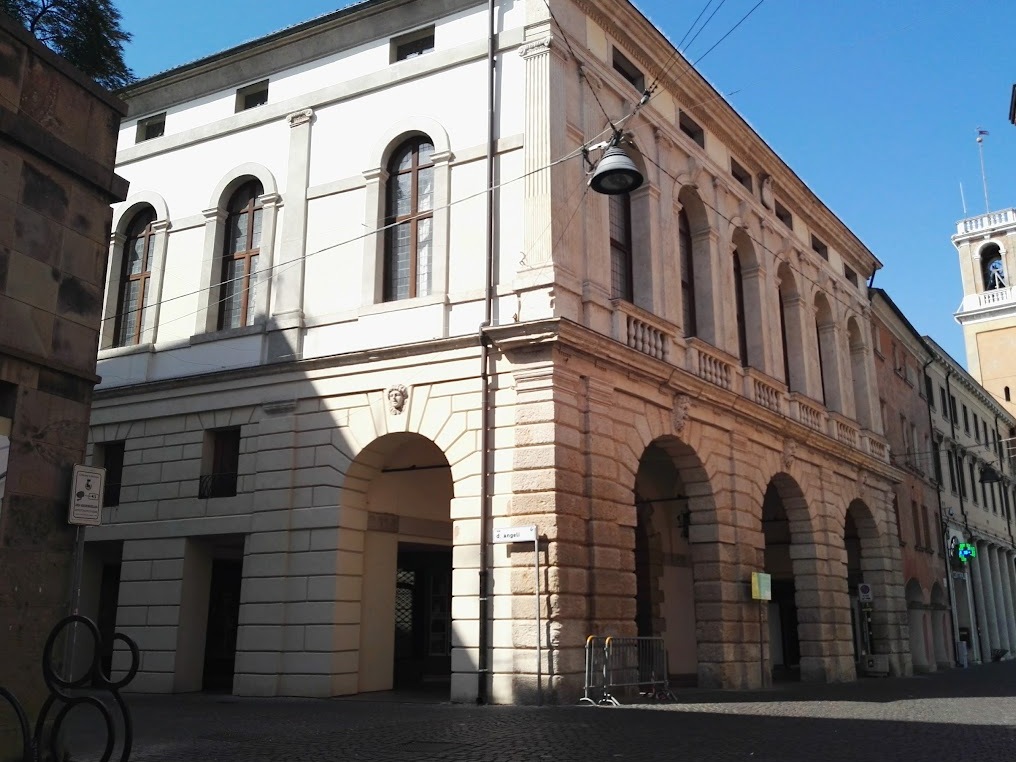
Built between 1550 and 1562 at the behest of Giovanni Roncale, the palace was meant to be the manifesto of the social rise of a family, the Roncale, who moved to Polesine from the Bergamo valleys around 1475 and became so rich in the space of seventy years that they became members of the town council (1545). The building, which occupies the corner between today's Via Angeli and Piazza Vittorio Emanuele II, contrasts the architectural characteristics of the early Ferrarese Renaissance of Palazzo Roverella with the grandeur of the Venetian Renaissance. The façade towards the Piazza consists of two superimposed orders: Doric ashlar on the ground floor, on which three large arches with masks in the keystones open, and Ionic on the first floor, where six high arched windows interspersed with Ionic pilasters give rhythm to the space. It is interesting to observe how the façade ends on the corner with Via Angeli: on the ground floor as well as on the first floor one can notice a double pilaster to underline the conclusion of the building. This feature is absent, however, in the final part of the building towards the civic tower. This anomaly underlines how the palace is actually unfinished. In fact, in the intentions of the client, the building should have continued along the Piazza, occupying all the properties that the Roncale family had purchased on the northern side of the Piazza from 1516 to 1538. However, the project was too ambitious and the illness and consequent death of Giovanni's brother Antonio in the summer of 1550 contributed to the scaling down of the original project. The project has often been attributed to the Veronese architect Michele Sanmicheli; however, although there are notable stylistic elements that can be attributed to Sanmicheli and the attribution is confirmed in the literature, there are no certain sources and the only 16th century document that refers to the workers is limited to mentioning generic prothi and experts. The palace, even if unfinished, was in the sixteenth century one of the most elegant in the city to the point of being chosen to host, in 1574, Henry III, King of France and Poland. The monarch expressed his satisfaction with the stay by conferring on the master of the house Antonio (son of Giovanni Domenico and grandson of Antonio) the honour of Knight of the Sacred Military Order of San Michele.

🗺 AI Trip Planner

Plan your visit to Rovigo

Suggested itinerary near Roncale Palace

MAJ+
500.000+ travelers worldwide
  1. 🌅
    Morning
    Roncale Palace
    📍 Rovigo
  2. ☀️
    Afternoon
    Roverella Palace and the Art Gallery of the Academy of Concordi
    📍 0 km · Rovigo
  3. 🌆
    Evening
    Cathedral of Rovigo
    📍 0.2 km · Rovigo

Buy Unique Travel Experiences

Powered by Viator

See more on Viator.com

Explore nearby · Rovigo

Frequently Asked Questions

Giovanni Roncale commissioned the palace between 1550 and 1562 as a manifesto of his family's social rise. The Roncale family had migrated from the Bergamo valleys to Polesine around 1475 and accumulated such wealth that they became town council members by 1545, making this grand Renaissance palace a symbol of their success.
The original project was far more ambitious than what was built, intended to extend along the entire Piazza Vittorio Emanuele II using properties the Roncale family had purchased from 1516 to 1538. The project was scaled down due to the illness and death of Giovanni's brother Antonio in summer 1550, leaving the building incomplete as evidenced by the missing double pilasters on the civic tower side.
The palace blends early Ferrarese Renaissance characteristics with the grandeur of Venetian Renaissance design. Its façade features a Doric order with three large arches on the ground floor and an Ionic order with six arched windows on the first floor, creating a harmonious contrast of architectural styles.
Although the project has been frequently attributed to Veronese architect Michele Sanmicheli based on notable stylistic elements, there are no certain historical sources confirming this attribution. The only surviving 16th-century document merely mentions generic workers and experts without identifying the principal architect.
Roncale Palace occupies the corner between Via Angeli and Piazza Vittorio Emanuele II in Polesine. Visitors can admire its distinctive Renaissance façade with its carefully detailed stonework, ornamental arches, decorative keystones, and the architectural anomalies that reveal the building's unfinished state.
