



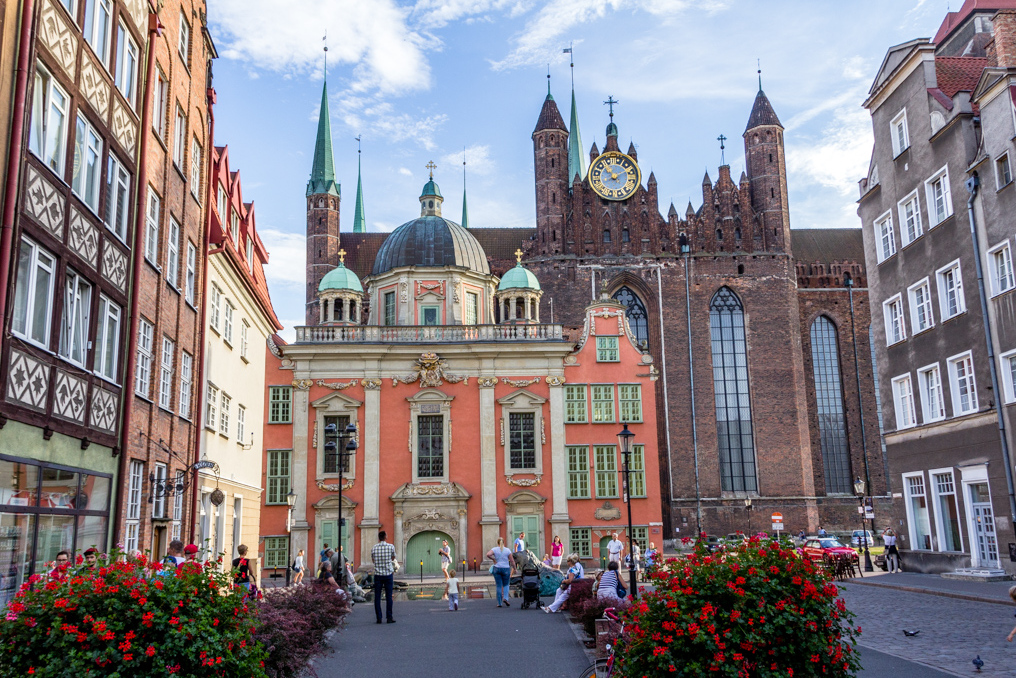
Nestled quietly amidst the bustling streets of Gdańsk, the Royal Chapel is a hidden gem often overshadowed by the impressive silhouette of St. Mary's Basilica. This charming baroque structure, located at 54.3503505, 18.6537377, is not just a place of worship but a testament to the city's rich history and cultural tapestry.
The chapel's origins can be traced back to the late 17th century, a period marked by religious tension in Northern Poland. Following the Protestant Reformation, Gdańsk, predominantly a Protestant city, saw a growing need for a place of worship for its Catholic minority. This need was addressed through the vision of Andrzej Olszowski, the Primate of Poland from 1674 to 1677. Upon his death in 1677, his estate contributed 80,000 zł to the chapel's construction, alongside 20,000 zł from King Jan III Sobieski.
Construction began in 1678 and was completed in just three years. Although the identity of the architect remains somewhat uncertain, many attribute the design to Tylman of Gameren, a Dutch architect known for his baroque style. However, Barthel Ranisch is documented as the head engineer, while Andreas Schlüter crafted the exquisite interior design. The chapel's establishment marks a significant moment in Gdańsk's history, reflecting the shifting religious landscape of the time.
Architecturally, the Royal Chapel is a stunning representation of the baroque style, characterized by its dramatic use of light, intricate ornamentation, and a sense of grandeur that invites visitors to pause and admire. The façade is adorned with elegant sculptures and detailed carvings, which tell stories of faith and cultural significance. Inside, the chapel boasts a remarkable altar and frescoes that capture the viewer’s imagination, with an atmosphere that evokes reverence and reflection.
The interior is also home to significant artworks that showcase the craftsmanship of the era. The intricate altarpiece, designed by Schlüter, features a stunning depiction of the Assumption of the Virgin Mary, surrounded by saints and angels. The chapel's ceiling is adorned with beautiful frescoes that further enhance its artistic allure, reflecting the baroque fascination with the divine.
Culturally, the Royal Chapel serves as a backdrop for local traditions and religious practices. Though it may be lesser-known, the chapel hosts regular masses, drawing both locals and visitors who seek spiritual solace or simply wish to admire its beauty. The city's Catholic community continues to uphold traditions such as Easter services and Christmas celebrations, which are marked by special masses held within these historic walls.
When visiting Gdańsk, one cannot overlook the local gastronomy that complements the city’s rich cultural landscape. Nearby, you’ll find traditional Polish fare such as pierogi, stuffed dumplings that come in various flavors, and bigó—a hearty hunter's stew made with sauerkraut and meats. For those with a sweet tooth, Sernik (Polish cheesecake) and Makowiec (poppy seed roll) are must-try delicacies. Pair these with a glass of Żywiec, a popular Polish beer, for an authentic culinary experience.
As you wander through the cobbled streets of Gdańsk, keep an eye out for lesser-known curiosities that add depth to the city's narrative. For instance, the chapel’s location on ul. Świętego Ducha reveals a quieter side of Gdańsk, away from the bustling tourist hotspots. Interestingly, the Four Quarters Fountain, located just across the street, showcases a mesmerizing water display that dances in sync with music during the summer months, providing a delightful backdrop to the chapel's serene beauty.
Moreover, visitors often miss the chapel's striking baroque bell tower, which offers a stunning view of the surrounding area. Climbing this tower provides a unique perspective of Gdańsk, allowing you to appreciate the architectural wonders that pepper the cityscape.
To truly appreciate the Royal Chapel, the best time to visit is during the summer months when the weather is warm and the streets are alive with activity. Arriving early in the morning or late afternoon not only provides a quieter experience but also allows for the best natural light for photography. If you plan to attend a mass, check the schedule ahead of time, as this is one of the few opportunities to enter the chapel and admire its interior.
In summary, the Royal Chapel in Gdańsk is a remarkable site that weaves together history, art, and local culture within its baroque walls. While it may be overshadowed by its larger neighbor, it deserves recognition for its unique contributions to the city’s heritage.
For a personalized itinerary to explore Gdańsk's hidden treasures, consider using the Secret World app to navigate your journey.
