
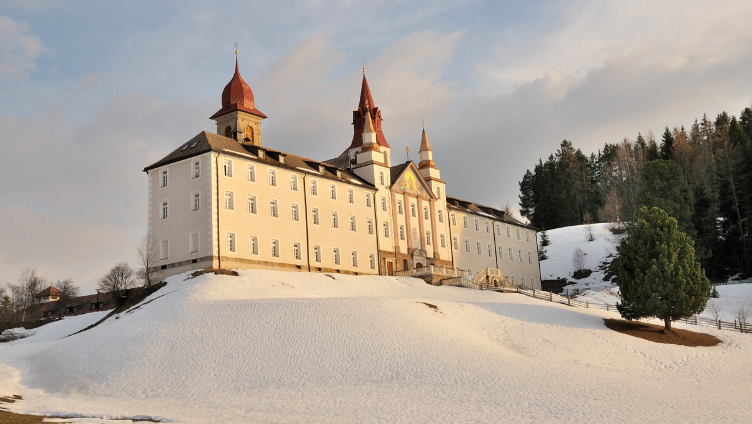

Nestled at an elevation of 1,520 meters above sea level, the Sanctuary of Madonna di Pietralba stands as the most significant pilgrimage site in South Tyrol, Italy. This remarkable basilica, known locally as Wallfahrtskirche Maria Weissenstein, commands a breathtaking view over the Val d'Ega and is closely associated with the mystical origins that date back to the 16th century.

The story of the sanctuary begins in 1553, when the Virgin Mary is said to have appeared to a hermit named Leonhard Weissensteiner after he fell into a deep gorge. Struck by divine inspiration, Leonhard constructed a modest chapel to honor this miraculous event. Over the years, as the site gained prominence among pilgrims, the chapel was expanded into the magnificent Baroque structure we see today, with its ornate details and towering presence. The adjoining convent was added later, enhancing the sanctuary's importance as a spiritual retreat. In 1885, the sanctuary received a significant blessing when it was reconsecrated by Bishop Giovanni Giacomo della Bona, further solidifying its status in the region.
Visitors to the Sanctuary of Madonna di Pietralba are greeted by a wealth of artistic treasures. The high altar, adorned with intricate gold and silver leaves, is a focal point of admiration. Artists like Adam Mölk contributed to the stunning frescoes that embellish the basilica's interior, depicting various biblical scenes and saints, which play a crucial role in the sanctuary's spiritual narrative. The architecture itself is an impressive example of Baroque style, characterized by its grandeur and intricate detailing, inviting reflection and reverence among the many pilgrims who visit each year.
Culturally, the sanctuary is woven into the fabric of local traditions. The site attracts a diverse crowd of pilgrims, not only from South Tyrol but also from neighboring regions and beyond. The numerous votive offerings left by visitors testify to the deep faith and gratitude of those who seek solace and healing here. Among the two chapels that belong to the sanctuary, one is the original chapel inside the church, while the other is the Chapel of St. Peregrine Laziosi, dedicated to the patron saint of cancer patients. Each year, various festivals and religious events are held, creating a vibrant atmosphere filled with prayer, song, and community spirit.
When it comes to gastronomy, the area surrounding Nova Ponente offers a delightful array of local delicacies. Traditional Tyrolean dishes such as Speck (cured ham) and Knödel (dumplings) are staples, often enjoyed with hearty mountain cheeses. After a day of exploration, visitors can warm up with a glass of Südtiroler Wein, a local wine that beautifully complements the rich flavors of the region. For those with a sweet tooth, Strudel, especially the apple variety, is a must-try, often enjoyed in quaint mountain cafés that dot the landscape.
While many pilgrims and tourists flock to the sanctuary for its spiritual significance, a few lesser-known curiosities add to its charm. The sanctuary's serene location and tranquil ambiance have made it a favored retreat not only for the faithful but also for various popes. In 1988, it gained international attention when Pope John Paul II visited, highlighting its importance not just as a pilgrimage site but as a place of peace and reflection. Interestingly, Pope John Paul I also recognized the sanctuary as a summer retreat, showcasing its appeal beyond religious boundaries.
For those wishing to visit, the best time to experience the Sanctuary of Madonna di Pietralba is during the summer months, when the surrounding landscape is lush and vibrant. Spring and autumn also offer a unique charm, with fewer crowds and the beauty of changing seasons. Visitors should not miss the chance to explore the tranquil paths that lead to the sanctuary, allowing for moments of quiet contemplation and appreciation of the natural beauty that envelops this sacred site.
In conclusion, the Sanctuary of Madonna di Pietralba is not just a religious site; it is a rich tapestry of history, art, and culture that invites visitors to ponder deeper connections to faith and community. For those looking to explore this captivating destination and its surroundings, consider using the Secret World app to craft a unique itinerary that suits your personal travel desires.


