


I had three days in Athens and a specific problem: the Acropolis in the morning or in the afternoon? Is the National Archaeological Museum really worth four hours? And how do you combine Monastiraki with Plaka without making unnecessary kilometers? These are questions that no paper guide answers in a personalized way. So I decided to test Secret World, the AI-based trip planner that promises tailor-made itineraries, to organize my Greek stay from scratch.
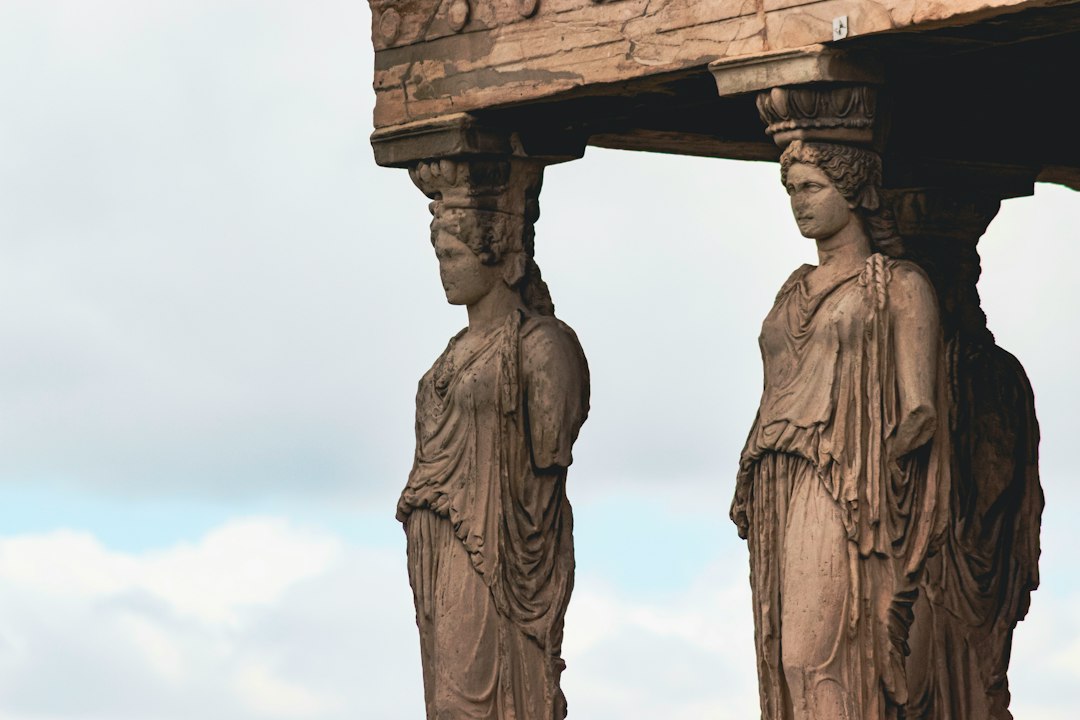
I used the app for three consecutive days, from April 14 to 16, 2026, with a medium budget and very specific preferences: ancient architecture, local markets, little crowd. What I found surprised me in part, disappointed me slightly, and convinced me enough to write this honest review.
How Secret World Works: What Really Happens When You Ask a Question
The first thing I asked the AI was simple: “Build me a three-day itinerary in Athens, starting from the Koukaki neighborhood, focusing on ancient history and local cuisine, avoiding peak hours”. The response arrived in about twelve seconds. It was not a generic list of attractions: the AI understood that Koukaki is a fifteen-minute walk from the Acropolis and had structured the first day with a visit to the site at 8:30 AM, before organized groups arrived, suggesting to ascend from Dionysiou Areopagitou Street. Ticket price indicated correctly: 20 euros full price, free every first Sunday of the month.
I then refined the request: “I want to include the Ancient Agora Museum but I don’t know how much time to dedicate to it”. Secret World responded with a precise analysis: ninety minutes are sufficient for the main collection, two hours if you want to read the extended captions. It also noted that the museum is included in the combined Acropolis ticket for 30 euros, which covers six sites in five days. This type of practical detail, which I usually look for on three different sites, was all in one response.
For concretes: where Secret World beats Google Maps and ChatGPT
The most obvious advantage over simply using ChatGPT or Google Maps is the automatic geographical contextualization. When I asked to add a visit to the Central Market of Athens, the Varvakios Agora, the AI recalculated the itinerary taking into account that it is a twenty-minute walk from Monastiraki and suggested visiting it early in the morning, when the fish stalls are active and prices for a meal on-site range between 8 and 12 euros. I didn't have to ask for schedules, logistics, or alternatives: they were already in the text.
Another strong point is the management of actual travel times, not the optimistic ones from Google. Secret World has included thirty-minute buffers between the main attractions, justifying them with the hilly layout of the historic center. Anyone who has walked on the Filopappos Hill knows that those thirty minutes are never too many. I also appreciated that the app spontaneously indicated that the National Archaeological Museum, while wonderful, requires at least three hours to visit without rushing, and that on Thursday evenings it has extended hours until 8:00 PM.
Honest drawbacks: the limits I encountered using the app
Not everything is perfect. The first limitation I noticed concerns local restaurants and taverns: the dining recommendations are more generic compared to the accuracy that the AI shows for historical sites. When I asked for an authentic tavern near Psirri, I received three plausible names but without details on average prices per person or whether they accept reservations. I had to do an external check on Google Maps to find out which one was actually open on Sunday evening.
The second limitation is minor but present: the interface still does not allow exporting the itinerary in PDF format or syncing it directly with Google Calendar. For an app that aims to replace the travel agent, this lack is felt when offline or when wanting to share the plan with a travel companion. It is a problem that can be solved with an update, but by 2026, that feature is expected to be already included.
Comparison with competitors: Wanderlog, TripIt, and the old DIY method
I used Wanderlog in the past for a trip to Lisbon: it is great for visual mapping, but it requires you to manually enter each stop. Secret World starts from natural language input and builds everything automatically, which saves at least two hours of planning. TripIt, on the other hand, excels at organizing already booked flights and hotels, but it does not generate itineraries: it is a collection tool, not a creation tool. The comparison is not even too direct.
Compared to DIY with travel blogs and forums, Secret World wins on speed and logistical consistency. I took twenty minutes to build an itinerary that would have previously taken me an entire evening. The trade-off is that you lose the personal voice of someone who has truly experienced those places, but for the operational structure of the trip, the AI works better than I expected.
Final vote 9/10: why I recommend it and to whom
Secret World deserves 9 out of 10 for a simple reason: it made my stay in Athens more efficient without making it mechanical. I saw more things, wasted less time orienting myself, and discovered that the combined ticket for the Acropolis saved me 18 euros compared to single tickets. That missing point for the perfect score is due to the gastronomic gaps and the absence of the itinerary export.
I recommend it to those traveling alone or as a couple, who have a flexible itinerary and want a solid starting point to customize. It is not a tool for those looking for casual discovery or completely improvised travel. But if you want to arrive in Athens already knowing that the sunrise over the Acropolis is worth the sacrifice of waking up at 7:00 AM, try Secret World before you leave: it will save you time, money, and some discussions about the route.


