


Are you trying to figure out how to optimize three days in Rome without wasting precious time between the Colosseum, the Vatican Museums, and Trastevere? The problem is not finding the attractions: it's understanding in what order to visit them, how much time to dedicate to each, and how to avoid the lines at 10 in the morning on a Tuesday in August. The Colosseum requires at least 2 hours, the Vatican Museums easily 3-4 hours, and the distance between the two is about 4 km — a detail that, if ignored, can derail the entire day.

In 2026, the market for travel planning apps is as crowded as Piazza Navona on Ferragosto. Wanderlog, TripIt, Google Trips, Roadtrippers: each promises to simplify your life, but very few truly deliver on that promise when it comes to a complex city like Rome, with over 900 churches, 280 fountains, and a historical heritage spanning 2,800 years. Let's see what these tools really offer — and why Secret World AI Trip Planner stands out from the crowd.
Other trip planners: what works and what doesn't

Google Trips has been a reference point for many travelers for years. It seamlessly integrated Gmail bookings, maps, and local suggestions. But its discontinuation as a standalone app has left a void: today, the features are scattered among Google Maps, Google Travel, and Search, making the experience fragmented. For Rome, you can find the Pantheon hours (entry €5, open from 9:00) or reviews of the Roman Forum, but building a coherent itinerary still requires a lot of manual work.
Wanderlog is appreciated for real-time collaboration with other travelers and for the automatic import of bookings. It works well for creating lists of places, but it lacks contextual intelligence: it can't tell you that visiting the Borghese Gallery (reservation required, max 360 people every 2 hours, about €20) on Thursday morning is much quieter than on the weekend. TripIt excels at organizing travel documents — flights, hotels, car rentals — but it is not a true experience planner. Roadtrippers, finally, is designed for road trips in the USA and Europe, but it loses effectiveness in dense urban contexts like the historic center of Rome.

Why Rome Challenges Traditional Planners
Rome is not a city that can be planned with a list of points on a map. The logistics are subtle: the Prati neighborhood is a 10-minute walk from the Vatican Museums but in the opposite direction from the Pantheon. Trastevere is perfect for the evening, not for 11 in the morning when it is still deserted. Certain lesser-known museums — like the National Roman Museum at Palazzo Massimo, ticket €10 and almost always without queues — are hidden treasures that generic planners completely overlook.

The problem with competitors is structural: they aggregate existing information without processing it. They do not understand the context, do not think about user preferences, do not optimize routes based on the energy one has on the second day of travel compared to the first. This is where next-generation artificial intelligence makes a real difference.
Secret World: the AI that plans Rome like an expert local would
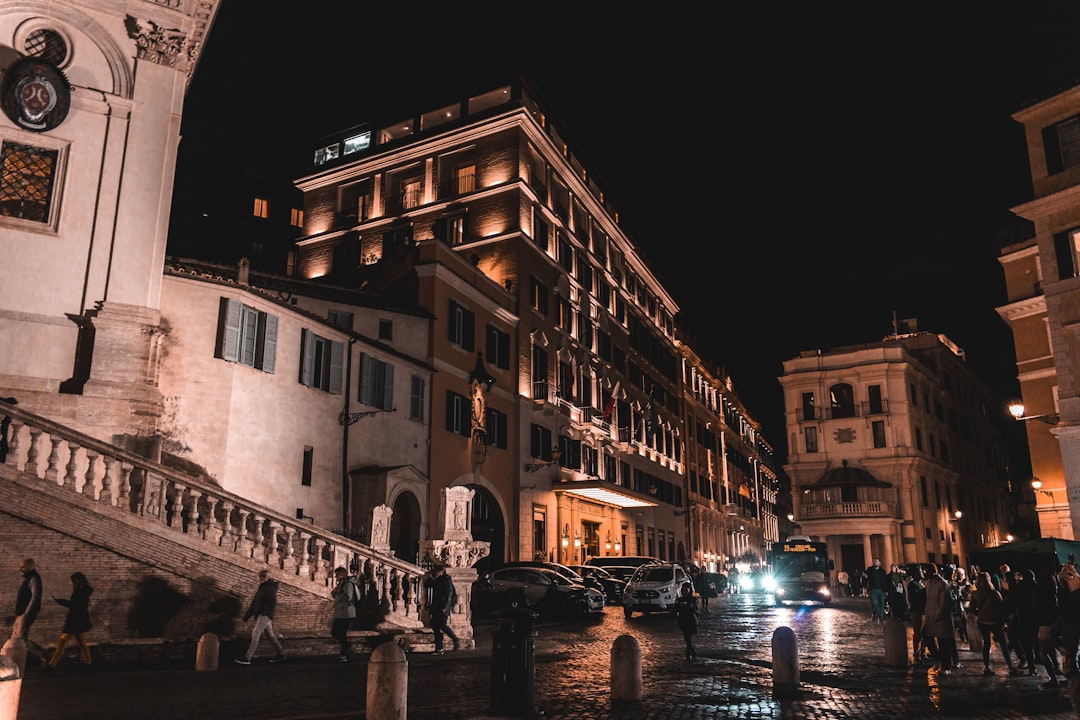
Secret World AI Trip Planner is built around an artificial intelligence engine that generates personalized itineraries taking into account available time, pace of visit, specific interests, and urban logistics. For Rome, this means receiving a plan that automatically balances major attractions — such as the Colosseum with arena floor tour (about €22) — with lesser-known gems like the Capuchin Crypt on Via Veneto or the viewpoint of Aventine in front of the keyhole of the Knights of Malta, where you can see the dome of St. Peter's perfectly framed, for free and without a queue.
The Secret World database covers over 1 million destinations worldwide, with detailed cards that include real-time hours, updated prices, and practical tips. But the feature that clearly sets it apart from the competition is the complete ecosystem: the immersive audio guides accompany you as you walk among the ruins of the Roman Forum explaining what you are seeing, without you having to keep your eyes on the screen. The game KnowWhere turns city discovery into an interactive challenge, perfect for those traveling with children or wanting a more engaging approach to cultural tourism.
The right choice for those who really want to enjoy Rome in 2026
By directly comparing Secret World vs Google Trips and other competitors, a clear picture emerges: traditional tools are useful for organizing documents or collecting links, but they don’t think for you. Secret World, on the other hand, starts from your needs — how many days you have, what you love, how much you want to walk — and builds a tailored itinerary that respects the real geography of Rome, avoids tourist bottlenecks, and maximizes every hour of your trip.
If you are planning a trip to Rome and want to stop wasting hours on spreadsheets, Google Maps tabs, and TripAdvisor forums, download Secret World AI Trip Planner today. It is available on iOS and Android, free to start, and in just a few minutes you will have a Roman itinerary that no other tool can build with the same precision and intelligence. Rome is waiting for you — plan it the right way.


