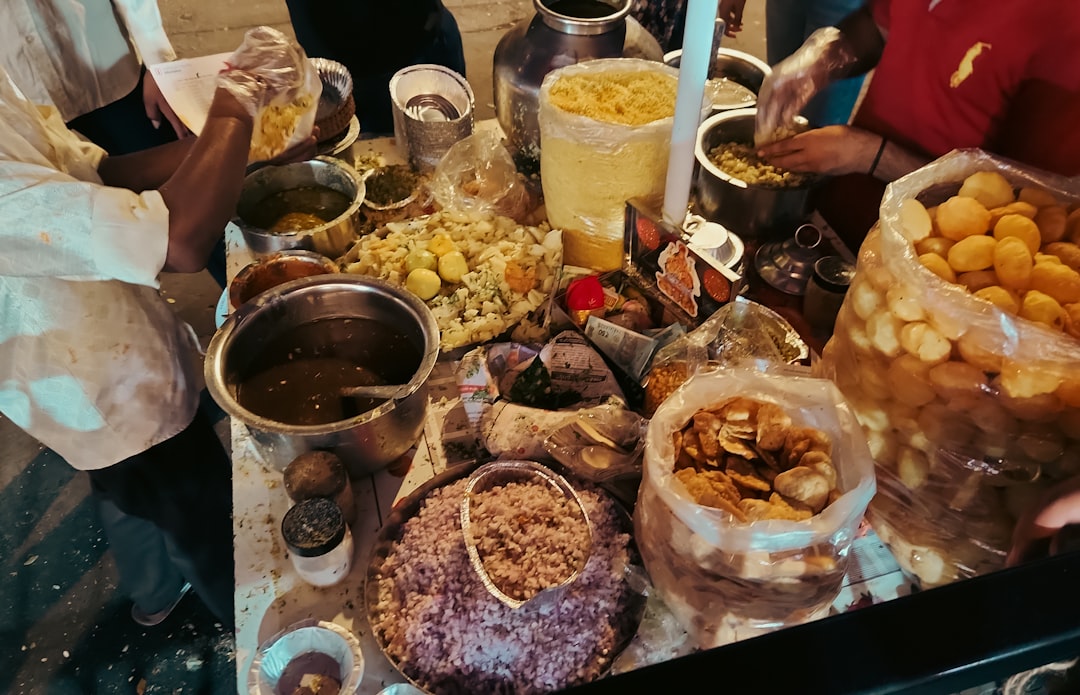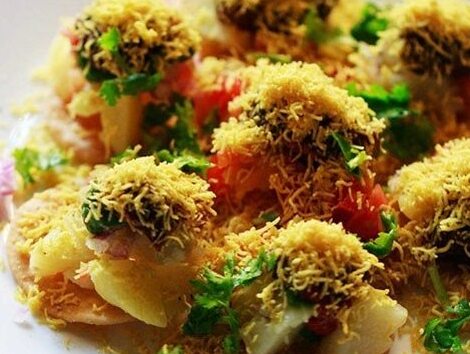

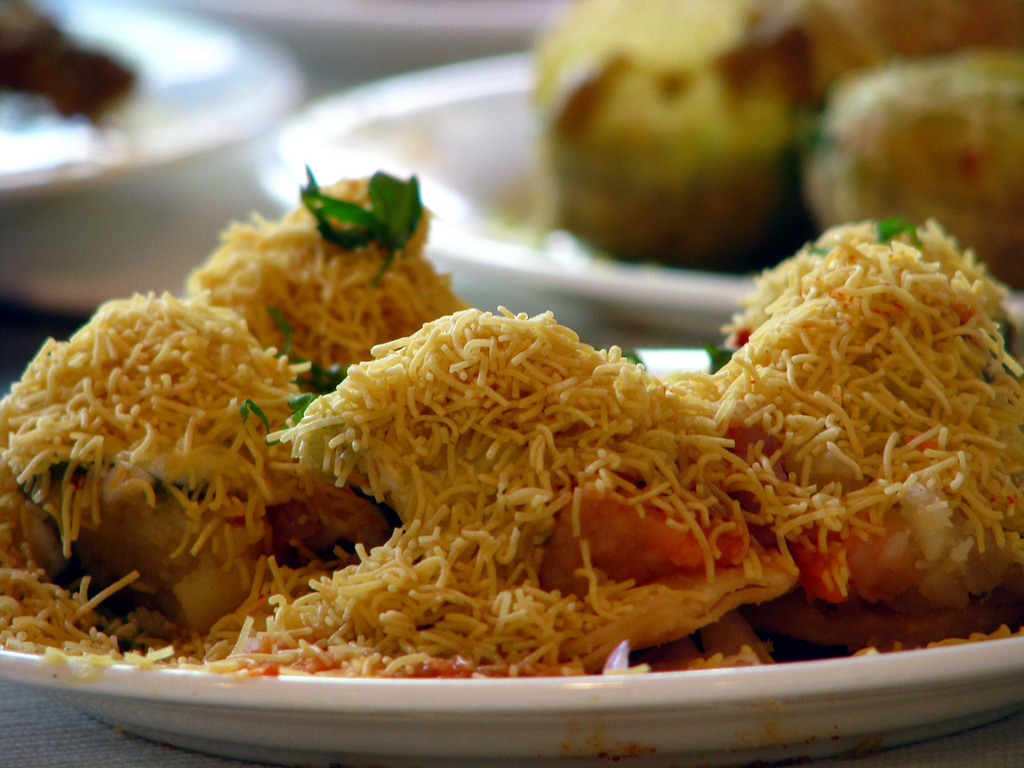
In the bustling streets of Mumbai, where the air is infused with the aroma of spices and the vibrant chaos of city life, one can find a culinary delight that has stood the test of time—Sev Puri. This popular street food, known for its sweet, tangy, and spicy flavors, is not just a snack but a beloved part of the city's cultural tapestry.
### History and Origins The origins of Sev Puri can be traced back to the broader category of chaat—a type of street food that originated in Northern India. The word "chaat" is derived from the Hindi word "chaatna," meaning "to lick," indicating the finger-licking nature of these dishes. While chaat has ancient roots, Sev Puri itself became a staple in Mumbai during the city's growth as a major port and trade hub in the late 19th and early 20th centuries. Migrants from various regions brought with them their culinary practices, blending them into what we know today as quintessential Mumbai street food.
### Art and Architecture While Sev Puri itself is not directly related to art and architecture, the vendors selling this iconic dish often operate near some of Mumbai’s most notable historic structures. For instance, one might enjoy a plate of Sev Puri within view of the Gateway of India or the Chhatrapati Shivaji Maharaj Terminus, both fine examples of Indo-Saracenic and Victorian Gothic Revival architecture. The bustling streets provide a backdrop of architectural beauty, a reflection of the city’s colonial past and its vibrant, multicultural present.
### Local Culture and Traditions Sev Puri is interwoven with Mumbai's cultural fabric, often enjoyed during festivals like Diwali and Ganesh Chaturthi, where food plays a central role in celebrations. The preparation and consumption of Sev Puri embody the communal spirit of these events, bringing people together over shared plates and lively conversation. The dish is not only a snack but a social experience, reflecting Mumbai's melting pot of traditions and flavors.
### Gastronomy The heart of Sev Puri lies in its simplicity and the balance of flavors. Prepared with puri (crispy flatbreads), boiled potatoes, chopped onions, tomatoes, and a mix of tamarind and mint chutneys, it is topped with sev—crunchy, thin noodles made from gram flour. Each bite offers a burst of textures and tastes, a testament to Indian culinary ingenuity. It's typically paired with a steaming cup of chai, creating a perfect harmony of flavors.
### Lesser-known Curiosities A lesser-known fact about Sev Puri is its adaptability. In Mumbai, you'll find variations like Dahi Puri, where yogurt is added for a creamy twist, or Chinese Bhel, a fusion version with noodles and soy sauce. This adaptability is a nod to Mumbai's cosmopolitan nature, where traditional recipes are constantly evolving.
### Practical Visitor Information The best time to enjoy Sev Puri is during the cooler months from November to February, when Mumbai’s humidity is at bay, and the weather is pleasant for street-side dining. For an authentic experience, head to Juhu Beach or Chowpatty, where numerous vendors set up their stalls. Look for stalls with a bustling crowd—a sign of freshness and local approval. Always ensure hygiene by observing the vendor’s cleanliness practices.
Embark on a culinary journey through Mumbai’s streets with Sev Puri as your guide, and consider using Secret World to craft your personalized itinerary for an unforgettable visit.