


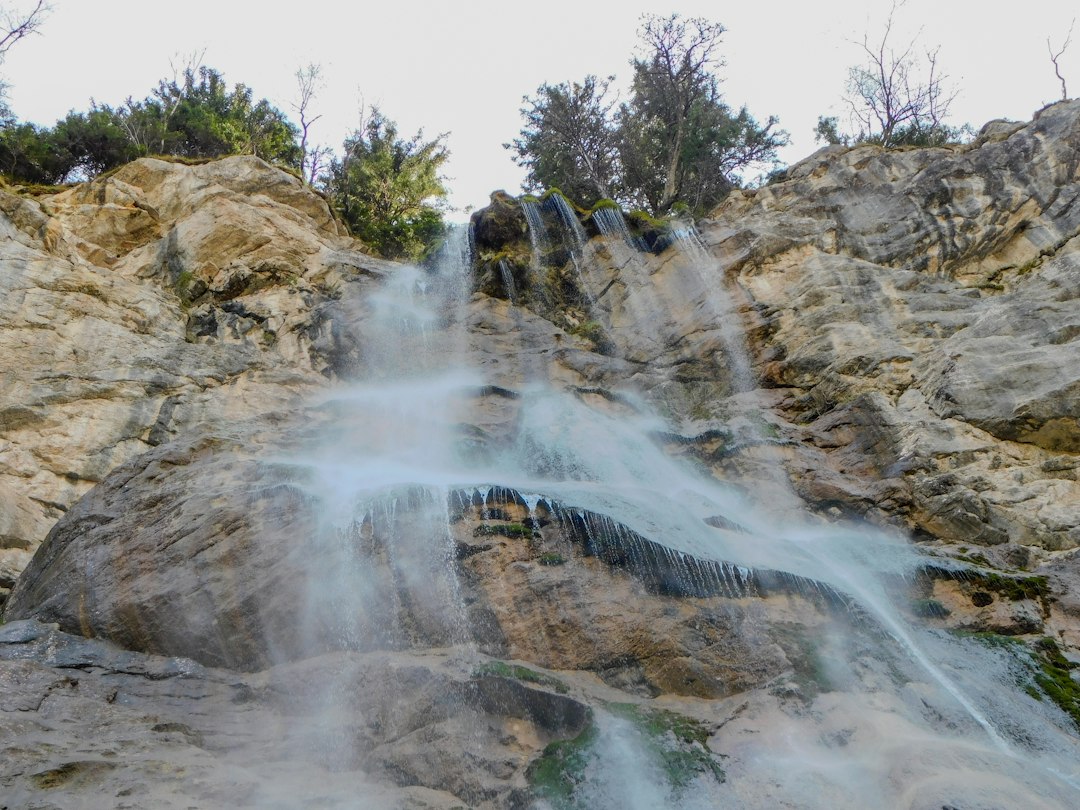
The noise arrives before the sight. Still hidden among the firs and beeches of the Bosna River canyon, the roar of the Skakavac waterfall can be heard like a continuous thunder, a deep bass that vibrates in the humid air of the forest. Then, after rounding the last bend of the path, the veil of water appears: 98 meters of free fall, a white ribbon that plunges vertically from the gray limestone rock to form a foamy basin at its feet. It is one of the tallest single-drop waterfalls in the Balkans.

Skakavac is located in the Bijambare Natural Park, a few kilometers north of Sarajevo, within a wooded canyon that seems to belong to another dimension compared to the Bosnian capital. The very name, in Bosnian, literally means grasshopper, a reference to the way the water jumps and bounces over the rocks before plunging into the void. The waterfall is fed by the Skakavac stream, a tributary of the Bosna water system, and reaches its full power in spring, when the melting snow on the surrounding mountains transforms the summer trickle into a mighty and roaring column.
The path in the woods: an approach that prepares the show
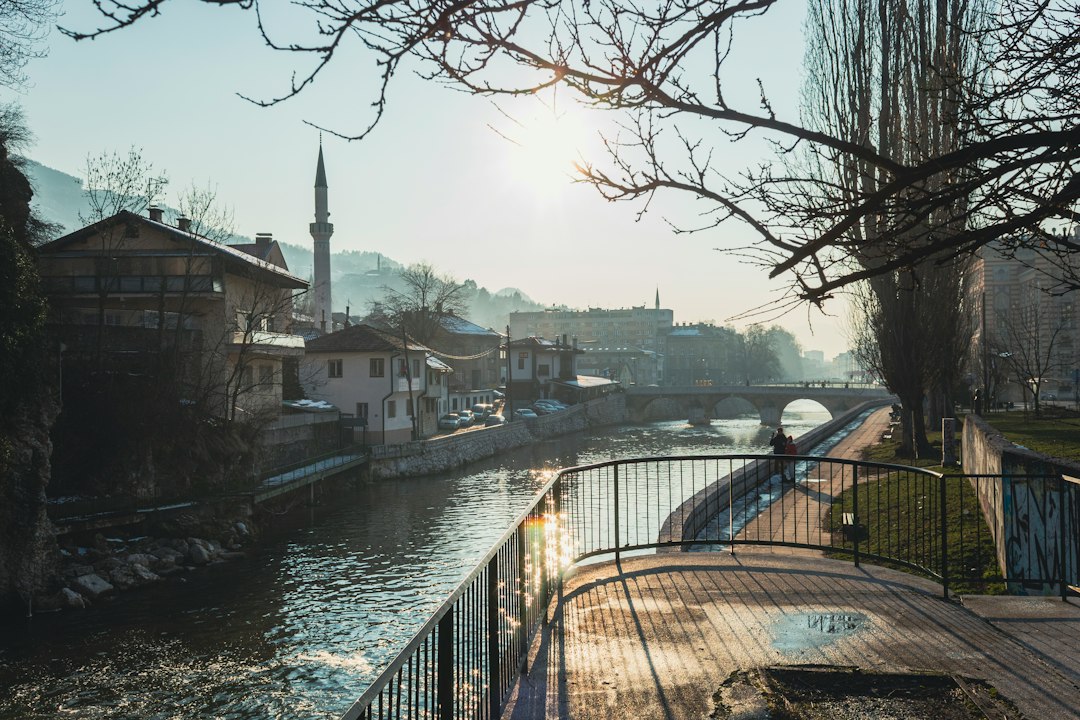
The route to reach the waterfall starts from the parking lot near the village of Nahorevo, north of Sarajevo. The path winds for about three kilometers through a dense forest of conifers and broadleaf trees, with a moderate elevation gain that makes it accessible even to inexperienced hikers. The trail surface is partially equipped with walkways and wooden handrails in the steeper sections, but it is advisable to wear hiking shoes with good non-slip soles, especially after rain.
As you get closer to the waterfall, the air changes: it becomes cooler, saturated with humidity, and smells of moss and wet stone. The rocks along the path are often covered with bright green lichens, nourished by the perpetual mist that the waterfall generates around it. In the warmer months, this cool microclimate makes the walk particularly pleasant compared to the heat of the city.
The moment of arrival: sound, mist, and visual power
When you arrive at the base of the waterfall, the first sensation is physical even before it is visual. The fine mist generated by the impact of the water on the rocks envelops everything within a radius of dozens of meters, settling on hair, glasses, and clothing. Those carrying a camera must keep it sheltered until the last moment and act quickly: the humidity is intense and persistent.
Looking up, the waterfall appears even more imposing than expected. The rock wall from which it plunges is almost vertical, a dark gray that contrasts with the white of the freely falling water. On either side of the waterfall, vegetation clings to the crevices of the rock with tenacious roots, creating a green border that frames the drop. The basin at the base is shallow but in constant motion, with whirlpools of white foam forming and dissipating continuously.
When to go and how to organize the visit
The best time to visit Skakavac is spring, between April and June, when the water flow is at its maximum and the waterfall shows all its strength. In summer, the flow decreases significantly, but the trail remains pleasant due to the cool microclimate. In winter, with temperatures below zero, the waterfall can partially freeze, offering a different spectacle but requiring appropriate equipment and greater caution on the trail.
From Sarajevo, it is possible to reach the starting point of the trail by car in about 20-30 minutes, taking the road north towards Nahorevo. There is no entrance ticket to access the area, which is part of the public natural heritage. The total time for the hike, round trip including time at the waterfall, is about two and a half hours. It is advisable to leave in the early hours of the morning on summer weekends, when the trail can become crowded with local hikers coming from the capital.
A place that belongs to the city without being part of it
What makes Skakavac unusual is not only its height but its proximity to a European capital. Sarajevo is a city of about 300,000 inhabitants, with a dense urban center and a layered history. Yet, less than half an hour's drive away, there exists this wooded canyon where the only sound is that of falling water. The waterfall has neither been built nor modified: it is simply there, as it was before the city existed, indifferent to time.
For those visiting Sarajevo and with half a day to spare, Skakavac offers something that no museum can provide: the tangible feeling of being under something much larger than oneself, with mist on your hands and the sound of water drowning out every other thought.


