
← Back

Sunder Nursery - Delhi's Heritage Park

Opp Humayun Tomb, Bharat Scouts and Guides Marg, Nizamuddin, National Zoological Park, Sundar Nagar, New Delhi, Delhi 110013, India ★★★★☆ 1,142 views
Miriam Agreeste
New Delhi
🏆 AI Trip Planner 2026

Get the free app

Discover the best of New Delhi with Secret World — the AI trip planner with 1M+ destinations. Get personalized itineraries, hidden gems and local tips. Free on iOS & Android.

🧠 AI Itineraries 🎒 Trip Toolkit 🎮 KnowWhere Game 🎧 Audio Guides 📹 Videos
Scan to download iOS / Android
Scan for AppGallery Huawei users

About Sunder Nursery - Delhi's Heritage Park

Sunder Nursery - Delhi's Heritage Park - New Delhi | Secret World Trip Planner

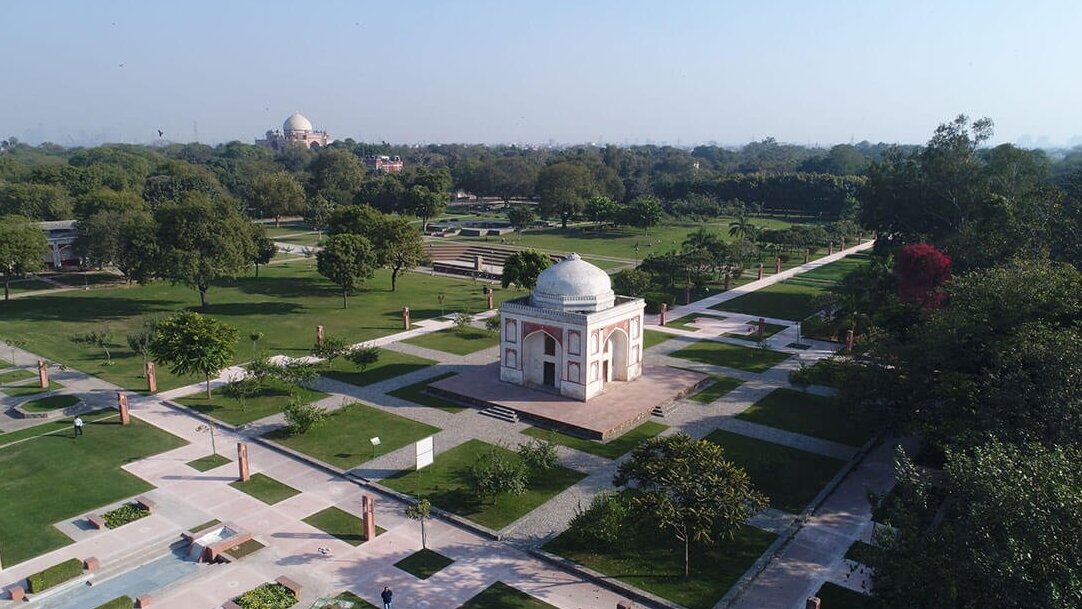
The location of Sunder Nursery, adjacent to Humayun’s Tomb Complex and Nizamuddin Basti, largely follows the Mughal Grand Trunk Road connecting significant monuments. The landscape design aims to enhance the historic character of the nursery, attract visitors and provide a seamless pedestrian connection with Humayun’s Tomb Complex.Originally known as Azim Bagh and built by the Mughals in the 16th century, is spread over 90 acres (36 hectare).Future plans aim to link nearby areas to develop it into India's largest park covering 900 acres. Today Sunder Nursery contains fifteen heritage monuments of which 6 are UNESCO World Heritage sites, including Archaeological Survey of India (ASI) protected Sundarwala Burj, Sundarwala Mahal and Lakkarwala Burj. After renovations starting in 2007, the nursery reopened to public as a heritage park on 21 February 2018. Now it contains over 300 types of trees, making it Delhi's first arboretum. During the British rule, the nursery was established to grow experimental plants, which gave it its current designation as a nursery. The "Sunder" part of the name comes from the Sunder Burj tomb located in the same premises. Although the name Sunder Nursery has still held, the park has been quoted to be a 'Delhi's Central Park' after renovations (though not to be confused with the central park in Connaught Place, New Delhi).The area contains over 280 native tree species. Apart from this there are around 80 types of bird species and 36 types of butterflies. The Bonsai House is home to some bonsai over 80 years old.

Sunder Nursery - Delhi's Heritage Park - New Delhi | Secret World Trip Planner
🗺 AI Trip Planner

Plan your visit to New Delhi

Suggested itinerary near Sunder Nursery - Delhi's Heritage Park

MAJ+
500.000+ travelers worldwide
  1. 🌅
    Morning
    Sunder Nursery - Delhi's Heritage Park
    📍 New Delhi
  2. ☀️
    Afternoon
    Delhi: Sunder Burj tomb
    📍 0 km · New Delhi
  3. 🌆
    Evening
    Hazrat Nizamuddin Baoli
    📍 0.4 km · New Delhi

Buy Unique Travel Experiences

Powered by Viator

See more on Viator.com

Explore nearby · New Delhi

Frequently Asked Questions

Sunder Nursery was originally known as Azim Bagh and built by the Mughals in the 16th century, spanning 90 acres. During British rule, it was established to grow experimental plants, earning its 'nursery' designation, while the 'Sunder' part comes from the Sunder Burj tomb located within the premises.
Sunder Nursery contains fifteen heritage monuments, of which 6 are UNESCO World Heritage sites protected by the Archaeological Survey of India, including the notable Sundarwala Burj, Sundarwala Mahal, and Lakkarwala Burj. These monuments reflect the rich Mughal heritage of the area.
After major renovations that started in 2007, Sunder Nursery reopened to the public on February 21, 2018, as Delhi's heritage park. It is now Delhi's first arboretum, featuring over 300 types of trees and 280 native tree species, along with an impressive Bonsai House containing some specimens over 80 years old.
The park is home to around 80 types of bird species and 36 types of butterflies, making it a haven for nature lovers and birdwatchers. The diverse flora and fauna create an ideal environment for spotting various avian species and colorful butterflies throughout the day.
Located adjacent to Humayun's Tomb Complex and Nizamuddin Basti, Sunder Nursery provides seamless pedestrian connections and follows the historic Mughal Grand Trunk Road. Future plans aim to expand the park from its current 90 acres to 900 acres, developing it into India's largest park while linking nearby areas.
