
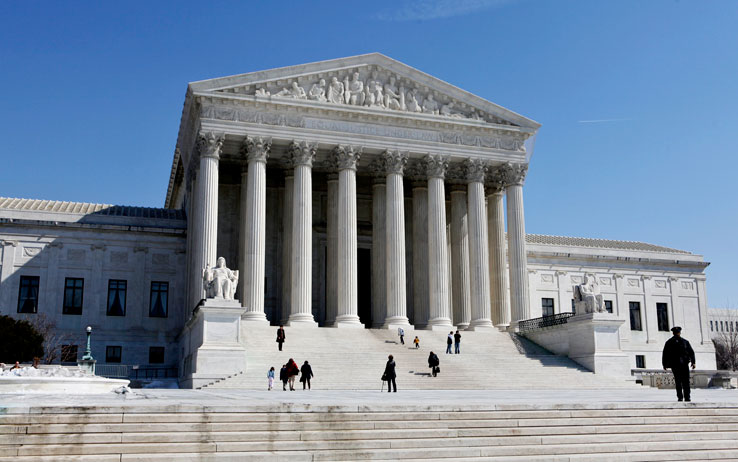

The Supreme Court of the United States, perched on Capitol Hill at 38.8905857, -77.0047908, stands as a pillar of American democracy, embodying the judicial authority vested by the Constitution. This monumental edifice is not merely a legal institution but a vibrant tapestry of history, art, and cultural significance that beckons visitors from around the globe.

The origins of the Supreme Court trace back to Article III of the U.S. Constitution, established in 1789. Yet, it wasn't until 1935 that the Court found a permanent home in its current neoclassical building. Conceived by architect Cass Gilbert, the structure was designed to reflect the gravitas and dignity of the Court's role. Before this, the Court was a nomadic entity, convening in various locations including the U.S. Capitol and even a private residence in Philadelphia. Key historical events have unfolded within its walls, such as the landmark case of Brown v. Board of Education in 1954, which declared racial segregation in public schools unconstitutional, reshaping American society.
The Supreme Court's architecture is a testament to classical grandeur. Its imposing Corinthian columns and the sculptural frieze depicting historical lawgivers from Moses to Napoleon are awe-inspiring. The Great Hall, lined with busts of former Chief Justices, leads visitors to the Courtroom where justice is meted out. Notable artworks include the bronze doors at the entrance, each weighing six and a half tons and intricately carved with scenes from legal history. Inside, the ceiling of the Courtroom is adorned with a coffered design, echoing the elegance of ancient Roman structures. Gilbert sought to create a temple of justice, and the building's solemn beauty fulfills this vision.
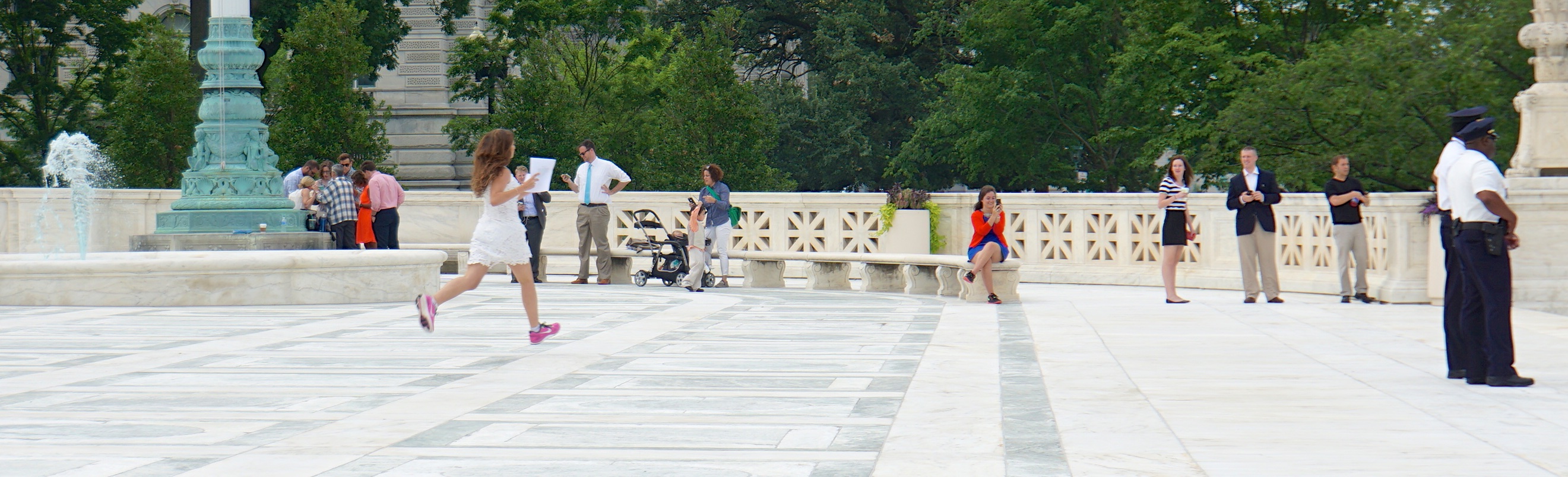
Despite its serious purpose, the Supreme Court is steeped in cultural significance. On the first Monday in October, the Court's term begins with a ceremonial session, drawing legal luminaries and curious onlookers alike. The building also serves as a stage for public demonstrations, a testament to its role as a beacon of judicial discourse and civic engagement. The Court's steps have borne witness to pivotal moments in history, from civil rights marches to women's rights protests, reflecting the dynamic interplay between law and society.
While the Supreme Court itself does not boast a menu, the nearby area offers a taste of Washington, D.C.'s diverse gastronomy. Just a short stroll away, Eastern Market is a haven for food lovers, featuring an array of local flavors. Visitors can savor a quintessential D.C. half-smoke, a spicy sausage often topped with chili, onions, and cheese, or indulge in a slice of pie from the renowned local bakery, Dangerously Delicious Pies. The city's food scene, rich with international influences, provides a delicious counterpoint to a day of exploring judicial history.
Beyond its grandeur, the Supreme Court harbors lesser-known curiosities. The building's foundation is made of Indiana limestone, but the exterior is crafted from Vermont marble, symbolizing the unity of the country's states. Inside, a basketball court resides on the fifth floor, humorously dubbed "The Highest Court in the Land." This recreational space offers a lighthearted contrast to the weighty decisions made below.
For those planning a visit, the Supreme Court is open to the public, but it's wise to plan ahead. The best time to explore is in the fall or spring when the weather is mild and the cherry blossoms or autumn leaves add a picturesque backdrop to the experience. Arrive early to avoid the crowds and take advantage of the free docent-led tours, which provide insights into the Court's proceedings and history. Be sure to observe a court session if in session; it's a rare opportunity to witness the judicial process in action.
In essence, the Supreme Court is more than a court of law—it's a monument to American ideals, a canvas of artistic expression, and a mirror reflecting the nation's evolving cultural and social fabric. Whether you're a history buff, an architecture enthusiast, or a curious traveler, the Supreme Court offers a compelling journey into the heart of American democracy.


