
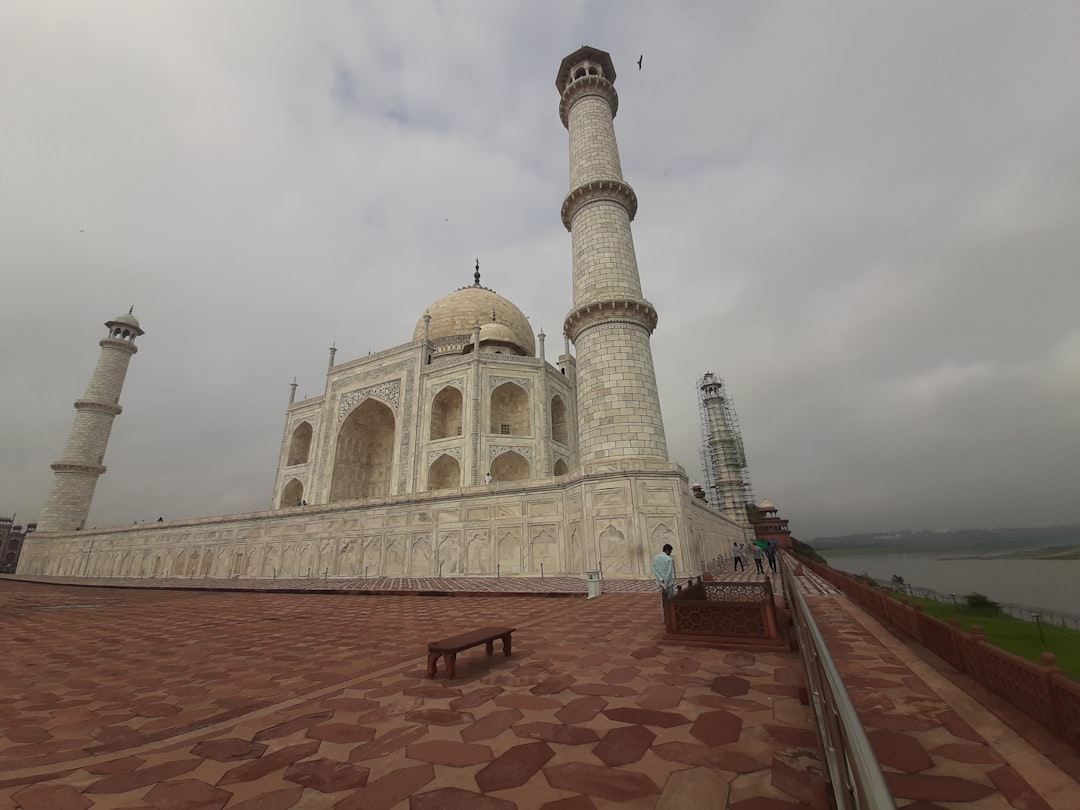

The white marble takes on a pale pink hue in the first minutes after dawn, then shifts to a pale gold as the sun rises over the Yamuna River. This is not a special effect or a romantic suggestion: it is the physics of light working on a surface of Makrana marble, extracted from Rajasthan and polished to become almost translucent. From the viewpoint on the north side of the complex, overlooking the river, this spectacle has repeated itself every morning for almost four centuries.
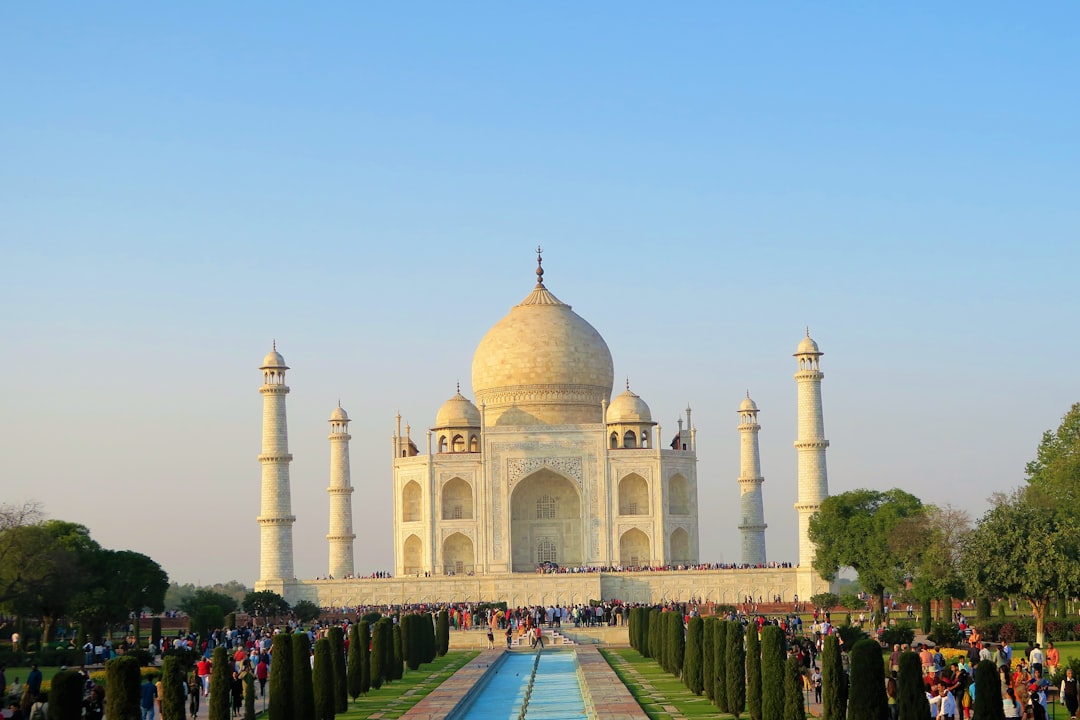
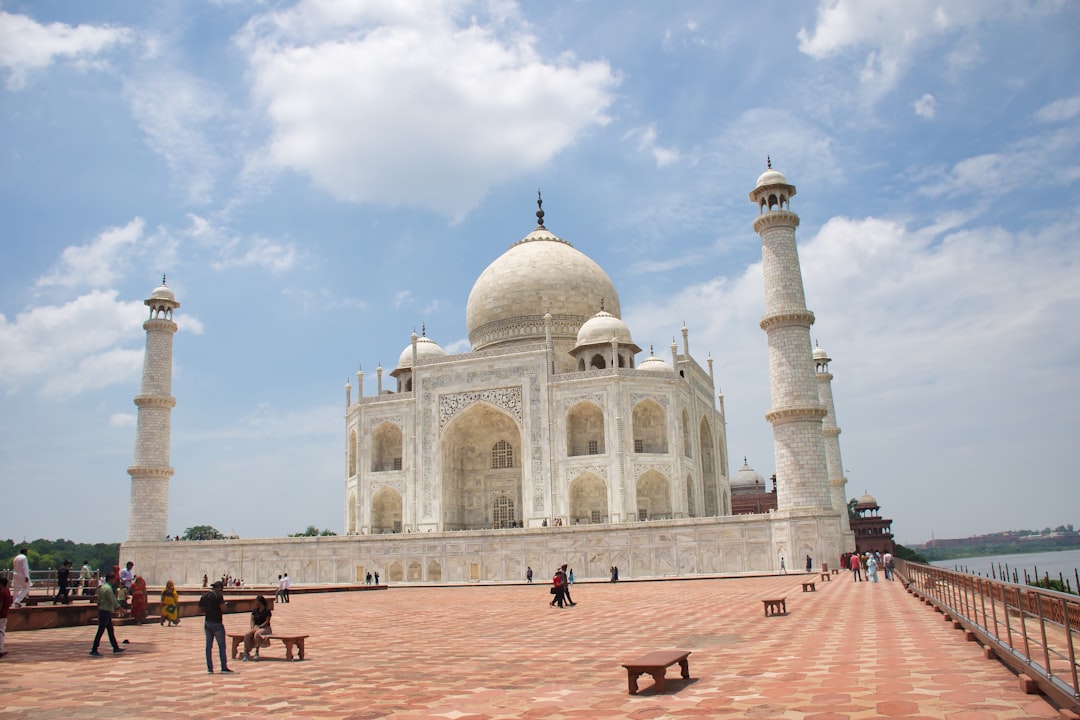
The Taj Mahal was commissioned by the Mughal emperor Shah Jahan in memory of his wife Mumtaz Mahal, who died in 1631 during the birth of their fourteenth child. The construction took about twenty years and was completed around 1653, with the contribution of over twenty thousand artisans from across the empire and Central Asia. The chief architect is traditionally identified as Ustad Ahmad Lahori, although historical sources remain partially controversial. The result is a mausoleum approximately 73 meters tall, including the central dome, set within a symmetrical garden of 17 hectares that follows the principles of charbagh, the Persian garden divided into four parts by water channels.
The morning light and the viewpoint on the river
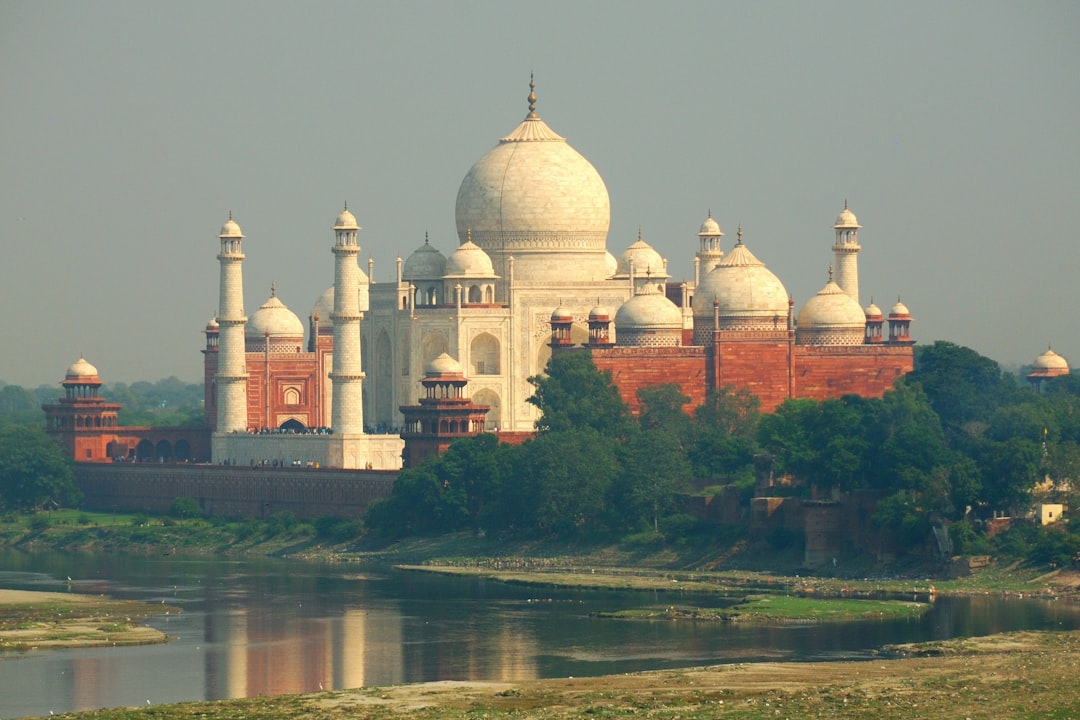
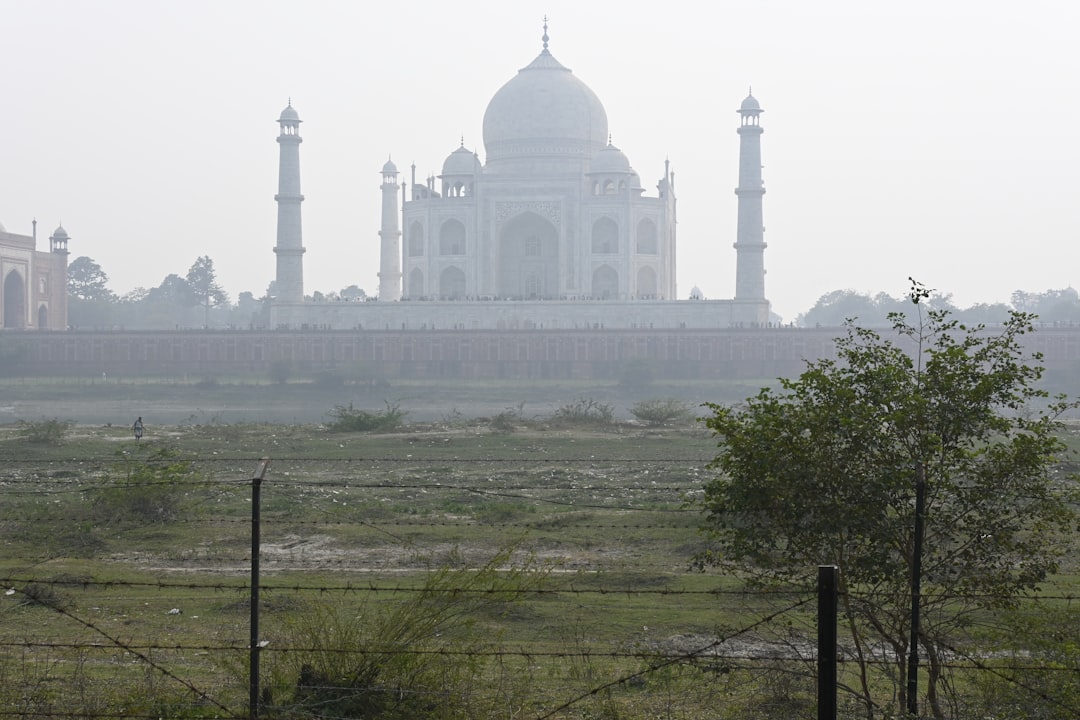
The Yamuna View Point can be reached by walking along the eastern side of the complex or through the Mehtab Bagh, the garden on the opposite side of the river, which offers a frontal perspective of the entire structure. From this position, in the hours immediately following dawn, the central dome and the four minarets — each about 40 meters tall and slightly tilted outward to avoid structural damage in case of an earthquake — reflect the light differently depending on the solar angle. The marble absorbs and returns the warm colors of the morning with an intensity that photographs only partially capture.
The chromatic effect is amplified by the still water of the Yamuna in the early hours of the day, when river traffic is still absent and the surface acts as an imperfect mirror. In summer, with the sky already bright before six, the tones quickly shift towards bright white. In winter, with frequent fog in the Gangetic plain, the structure can gradually emerge from the mist in a way that many visitors describe as unreal.
Architectural details to observe up close
Approaching the main platform reveals details that distance obscures. The outer walls are adorned with inlays of precious stones — jasper, jade, turquoise, lapis lazuli — according to the pietra dura technique, imported from Italy and adapted by the Mughal masters. Floral motifs and Quranic inscriptions in calligraphic characters run along the arches of the four main facades. The inscriptions were designed with letters of increasing size towards the top, so that they appear uniform to the observer's eye at ground level.
Inside the tomb chamber are the cenotaphs of Shah Jahan and Mumtaz Mahal, decorated with floral inlays. The true remains are located in a crypt at the lower level, not accessible to the public. Light filters through windows of perforated marble, creating geometric patterns on the floor that change with the movement of the sun.
Practical Information for the Visit
The complex opens at dawn and closes at sunset, and it is closed on Fridays. The entrance ticket for foreign visitors is approximately 1100 Indian rupees (equivalent to just over 12 euros at the current exchange rate), which includes access to the main mausoleum. It is advisable to purchase tickets online through the official Archaeological Survey of India portal to avoid queues at the ticket counters, especially in the winter months from October to March, when tourism reaches peak levels.
Arriving within the first thirty minutes of opening is the most effective choice for two reasons: the light is at its most intense chromatic phase and organized groups have not yet filled the main pathways. Motorized tuk-tuks cannot approach the main gates for conservation reasons; visitors disembark in an external parking area and proceed on foot or with the electric vehicles provided. Comfortable footwear is essential, but at the entrance to the marble platform, it is mandatory to remove them or wear the shoe covers provided for free.
How to reach Agra and when to go
Agra is located about 230 kilometers south of New Delhi and can be reached by train in less than two hours with the Gatimaan Express, the fastest train service on the route. Agra Cantonment station is the closest to the Taj Mahal. The months between November and February offer pleasant temperatures during the day, between 15 and 25 degrees, while summer brings intense heat and the monsoon, between July and September, can limit visibility but provides dramatic skies and reduced crowds.
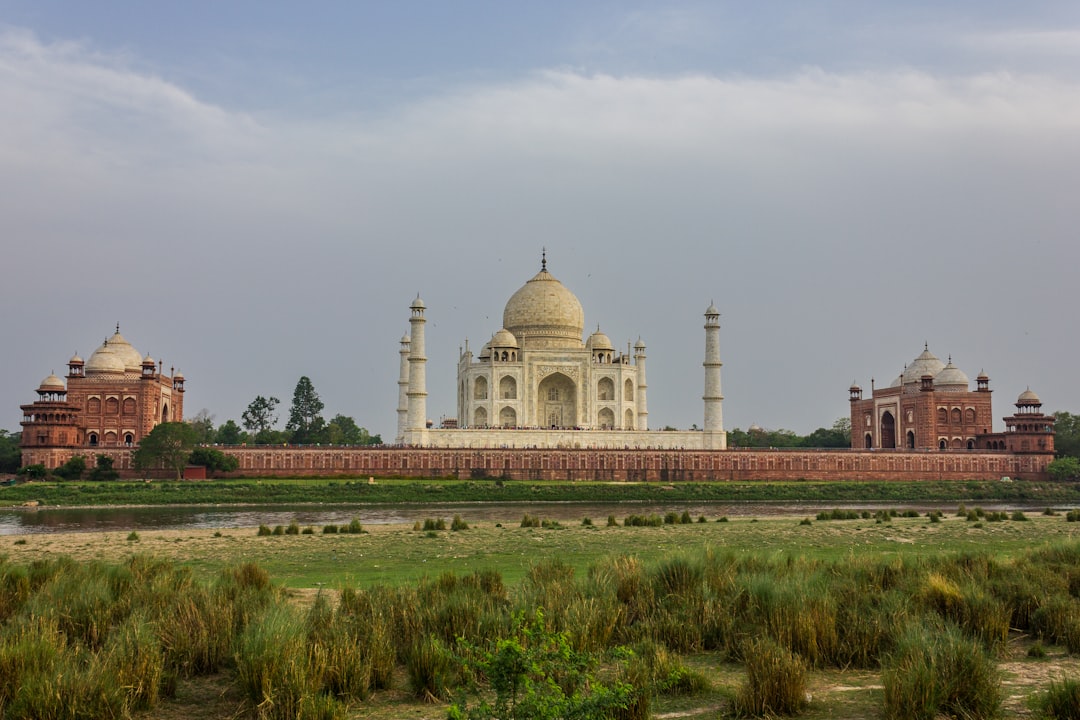
Spending at least two hours on the visit allows you to walk through the entire garden, reach the main platform, and stop at Mehtab Bagh for the view over the river. Those with more time can explore the Agra Fort, less than three kilometers away, where Shah Jahan spent the last years of his imprisonment — by order of his son Aurangzeb — with a direct view of the mausoleum he had built for his wife.


