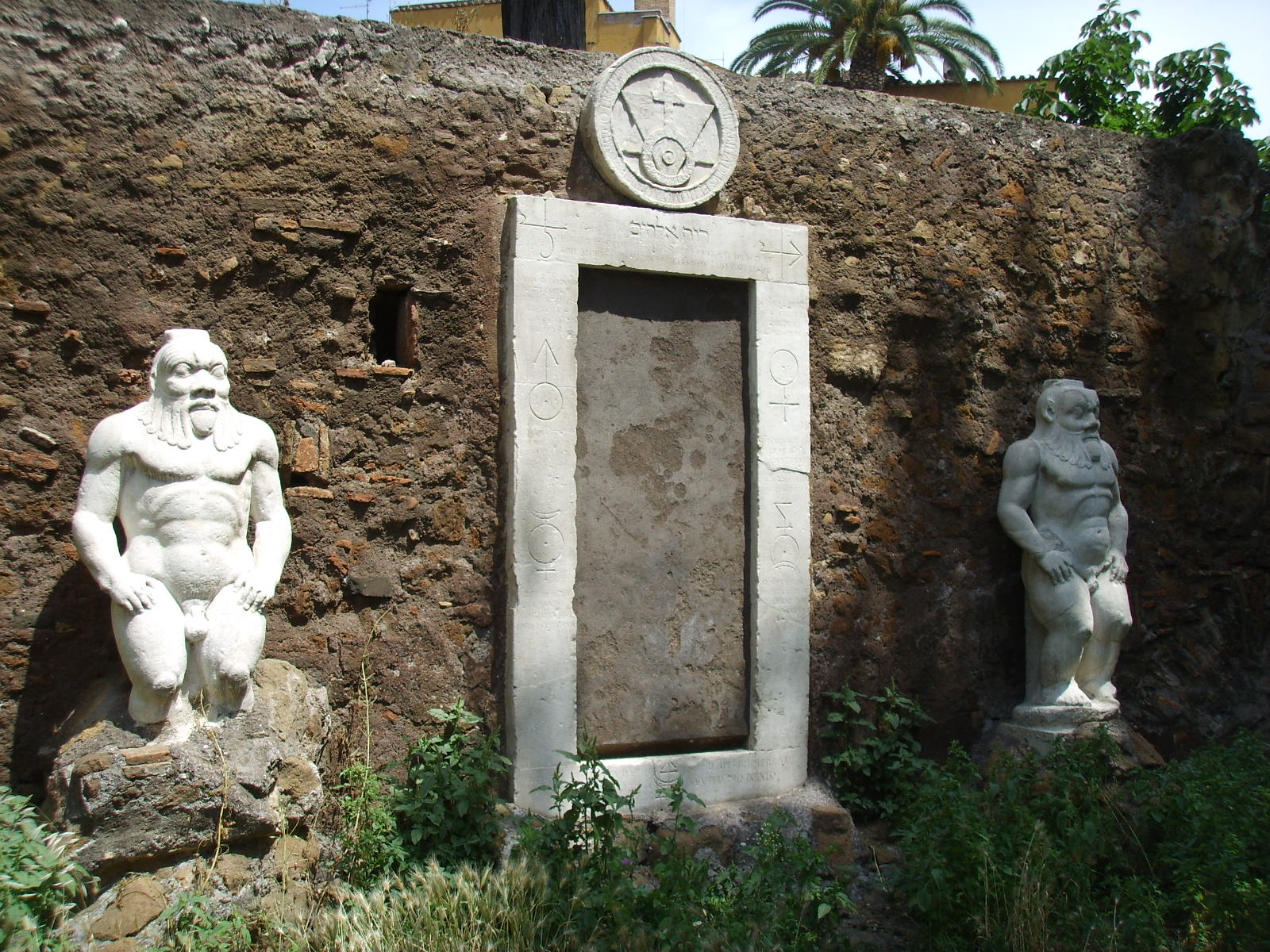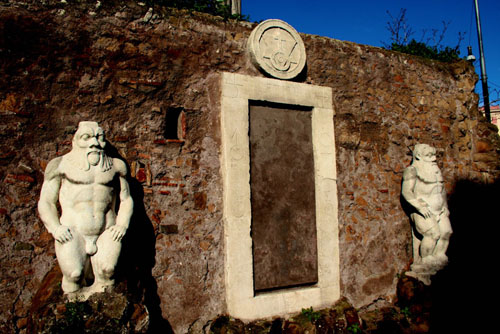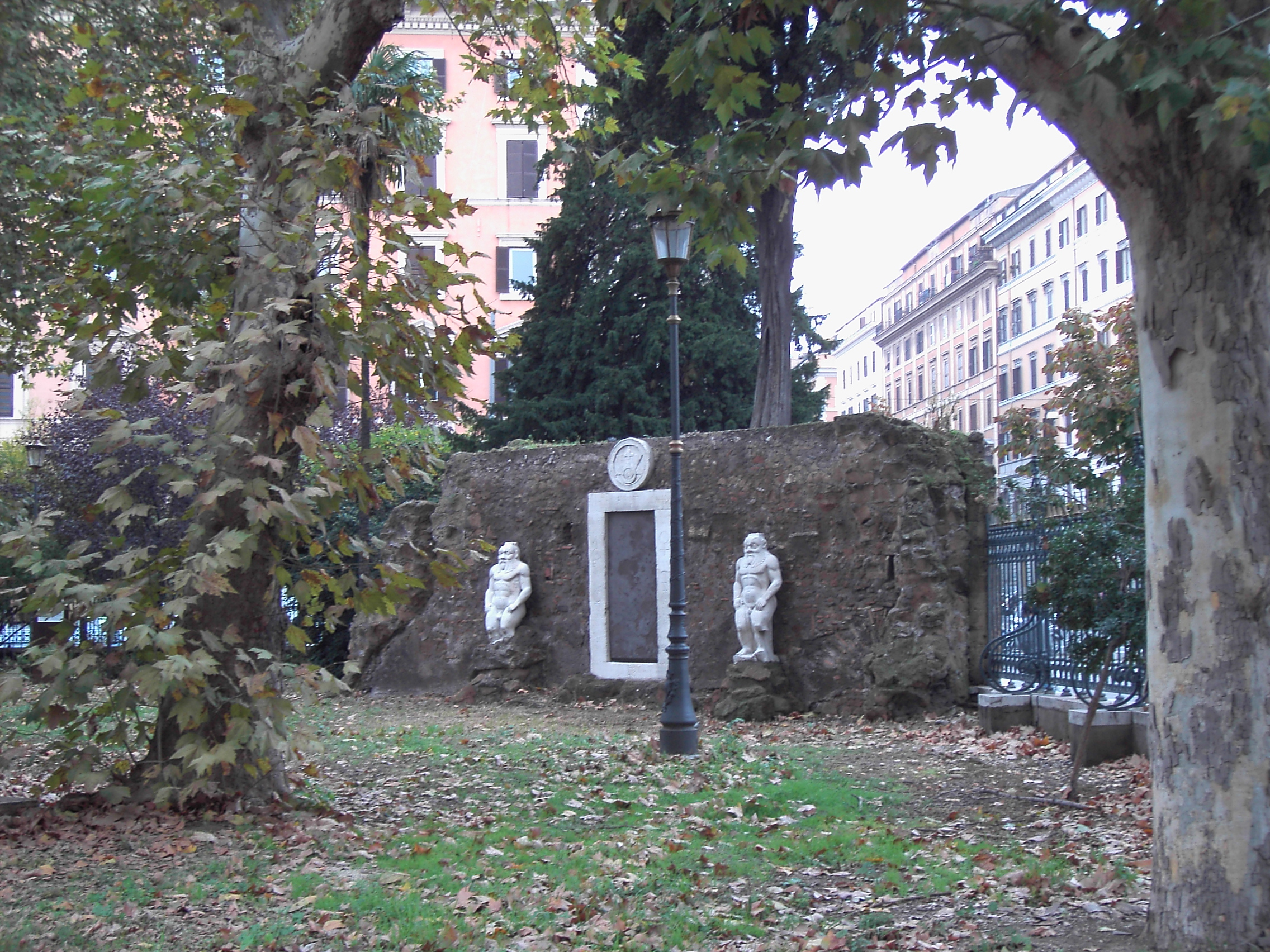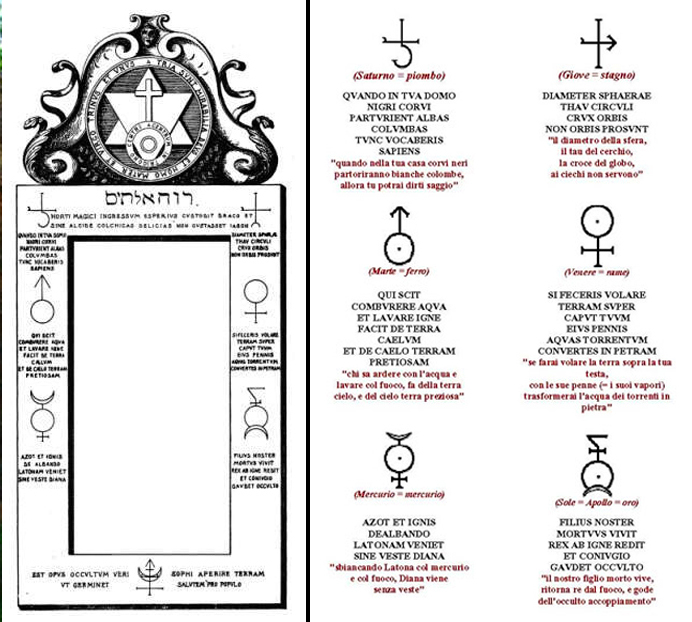

In the center of Rome, in a corner of Piazza Vittorio between stalls and deep degradation there is one of the most important alchemical evidence perhaps in the world. It is the magic door or better known as the alchemical door, a door with strange signs and representations with two statues depicting side by side BES Egyptian deity of the night that presides over the fun of virility and reproduction. It is located in the center of the Esquiline district where once stood Villa Palombara of which now remains very little, and it was the Marquis Maximilian Palombara to erect this door ..... a true monument to alchemy. The door served as an entrance to the so-called HORTI and was built in the late '600. Later, with the destruction of Villa Palombara was relocated where after three centuries is still the testimony of the past. It is said that the Marquis Massimiliano of Palombara was accustomed to the occult sciences and is suspected to be part of the Rosicrucians (evidence is the bas-relief that surmounts the lintel is identical to a frontispiece of a Rosicrucian essay), and these led him to know a beggar. It is said that the beggar was approached by the same Marquis intrigued by that strange character who wandered around the horti in search of something. The beggar told Palombara that he was looking for some herbs to create the noble metal, and it is the same Palombara who welcomed the beggar and gave him the possibility to perform his experiments in the laboratory equipped with ampoules and chemical materials. The following morning Palombara entered in the laboratory and found on the workbench some parchments with alchemic symbols and some golden straws, but there was no trace of the beggar. Another version fully denies the legend of the beggar, attributing to the true hermetic meaning of the door a more spiritual value. Still today we don't know which was the truth, but we know that the beggar had the name of Giuseppe Francesco Borri, a magician and thaumaturge chased away from the Jesuit college because he was interested in occult practices. The studies of the door do not stop only to the knowledge of the alchemic structure, in fact there are some particulars that lead us to think that Palombara did not want only to make us understand how to create gold but how to reach the knowledge and the supreme balance. "SI SEDES NON IS" The word palintroma can be read from left to right "if you sit you do not proceed" and from right to left "if you do not sit you proceed" this can also lead us to find a more philosophical meaning, almost as if the Palombara pushes us to go forward in the search for truth whatever it is. The symbols that are present on the door (syllabae chimicae) are taken from the "Commentatio de Pharmaco Catholico" published in Chymica Vannus, in 1666. In the external frame of the circular bas-relief we find an epigraph in which the concept of the Trinity is expressed: TRI SUNT MIRABILIA DEUS ET HOMO MATER ET VIRGO TRINUS ET UNUS "Three are the wondrous things God and Man; Mother and Virgin; Triune and One". In the bottom of the bas-relief we see two crossed triangles that form a six-pointed star, that is the "seal of Solomon", union of water and fire, spirit and matter, as above as well as below. On the lower part of the seal there is a smaller circle with the inscription: "Centrum in trigono centri", surmounted by the cross of the 4 elements and with the solar symbol in the center. At the top of the lintel, written in Hebrew, is the invocation to the Holy Spirit: "Ruah Elohim". Nothing can be done without his help. It follows the warning that one cannot enter the garden of the Hesperides, that is through the door, without killing the dragon that guards it. HORTI MAGICI INGRESSUM HESPERIUS CUSTODIT DRACO ET SINE ALCIDE COLCHICAS DELICIAS NON GUSTASSET IASON "The dragon of the Hesperides guards the entrance to the magical garden and without Hercules, Jason would not have tasted the delights of Colchis." The dragon represents the passions, the instincts; Hercules represents the will; with the victory over the dragon the alchemical practice begins, whose development is indicated on the jambs of the "door" where we can distinguish the three phases of the alchemical process: black, white, red. Many others are the symbols of this strange door and therefore still today the mystery of the alchemical door is still alive after more than three centuries.