
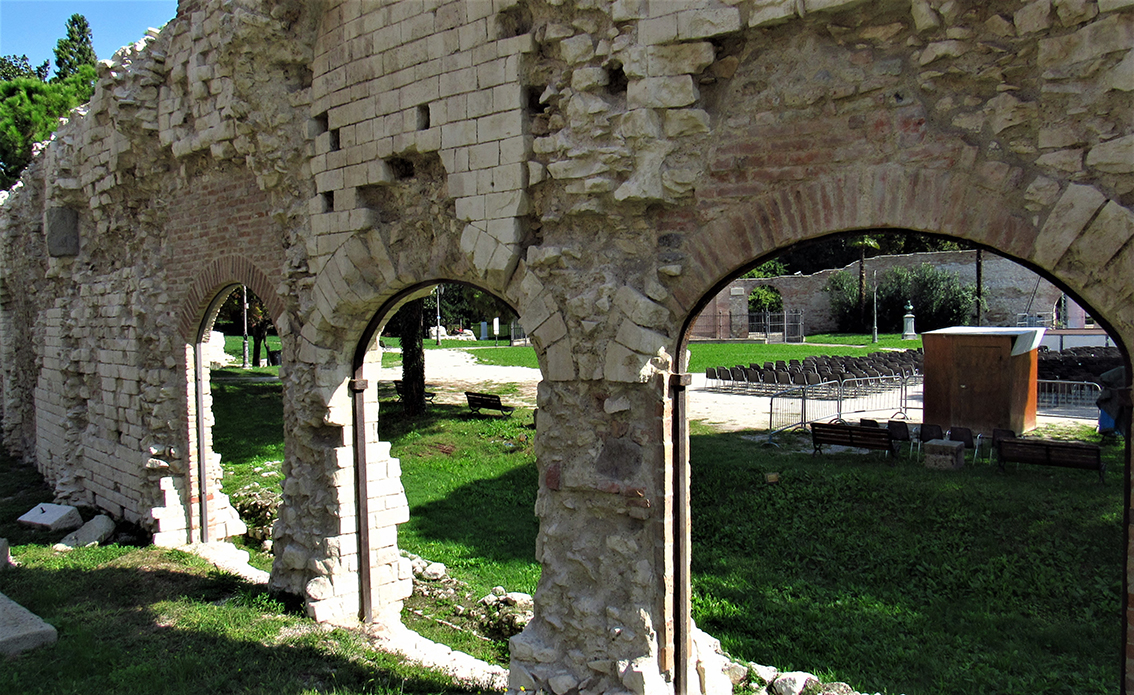

Nestled in the charming city of Padua (Padova), the ancient Roman theatre stands as a testament to the city’s rich historical tapestry. This remarkable site, often referred to as the arena, whispers tales of gladiators, theatrical performances, and the vibrancy of life in the Roman Empire.
The origins of the theatre trace back to around 70 A.D., during the reign of the Claudio-Flavian dynasty, a period marked by significant architectural advancements and urban prosperity. The theatre mirrored the grandeur of the famed arena of Nîmes in France, boasting an impressive elliptical wall constructed from limestone blocks that once formed the base of seating steps. It is believed that this theatre, with a capacity rivaling that of the Arena of Verona, served not only as a venue for gladiatorial contests but also for theatrical performances, showcasing the cultural life of Padua during its zenith.
As the centuries rolled on, the theatre witnessed myriad events, including jousts and tournaments that entertained citizens during the tumultuous times of the barbarian kings Alaric, Attila, and Agilulf. However, the theatre's fate took a tragic turn in the Middle Ages when it was largely demolished and repurposed as a stone quarry, leading to the loss of its once-magnificent structure. Had it survived intact, Padua would undoubtedly boast one of the best-preserved Roman theatres in Italy today.
The theatre's location is steeped in history, as the Scrovegni family, wealthy patrons of the arts, acquired the area in the 14th century. They constructed their palace and the renowned Scrovegni Chapel, which houses Giotto’s breathtaking frescoes. Visitors can still admire the remnants of this glorious past, including the marble monument to Giuseppe Garibaldi, crafted by Ambrogio Borghi in 1866, located at the entrance of the Gardens of the Arena.
Architecturally, the theatre showcases the Roman style prevalent during its construction. The use of limestone and the remaining elliptical shape are indicative of its original design, reflecting the engineering prowess of ancient Rome. Although much of the structure has been lost, walking through the site allows visitors to envision the vibrant life that once filled the arena, where art and architecture converged harmoniously.
Culturally, the theatre holds a special place in the hearts of Padovans. Local customs, such as theatrical festivals, often pay homage to this ancient site, celebrating the performing arts that flourished here. Events like the Padua International Theatre Festival draw participants and audiences from around the world, reinforcing the city’s commitment to its artistic legacy. The theatre is not just a relic of the past; it is a living part of the community’s cultural identity.
No exploration of Padua would be complete without indulging in its culinary delights. The region is famous for its delectable risi e bisi (rice and peas), a dish that reflects the agricultural richness surrounding the city. Another local specialty is bigoli, a thick pasta often served with duck sauce, showcasing the flavors of the Veneto region. Pair these dishes with a glass of Prosecco or a local Merlot, and you will have a taste of Padua’s gastronomic heritage that complements its historical allure.
For those seeking interesting tidbits, one lesser-known fact about the theatre is its connection to the St. Anthony of Padua, who was known for his sermons and teachings in the city. It is said that he may have delivered many sermons near the theatre, adding a layer of spiritual significance to this already historic site. Additionally, many visitors overlook the nearby Palazzo Cavalli, which houses the Geological Museum and offers insights into the region’s natural history.
When planning a visit to the ancient Roman theatre, consider exploring during the spring or early fall when the weather is mild, and the city’s festivals are in full swing. Take a leisurely stroll through the Gardens of the Arena, and don’t miss the opportunity to capture the beauty of the surrounding architecture, including the 16th-century Palazzo Zuckermann.
In summary, the ancient Roman theatre of Padua is more than just ruins; it is a vibrant piece of history that continues to inspire and engage. As you delve into the stories of the past, don't forget to consider using an AI itinerary planner to ensure you experience the best of Padua.


