
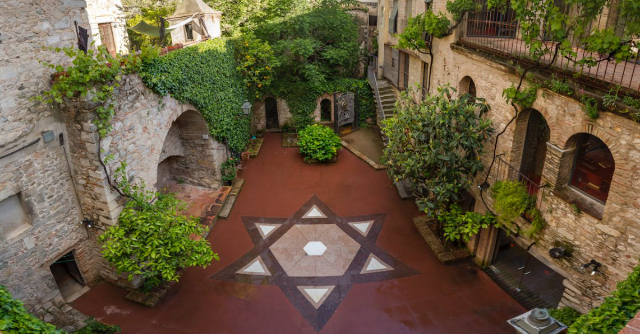

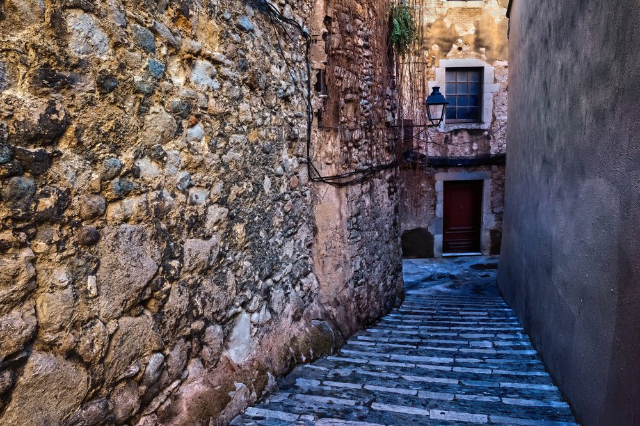
Tucked within the ancient Força Vella walls, Girona’s Jewish Quarter — known locally as El Call — is one of the best-preserved Jewish quarters in all of Europe. Stepping into its narrow, winding streets is like stepping back in time, into a world of silence, shadows, and centuries-old stories carved in stone.
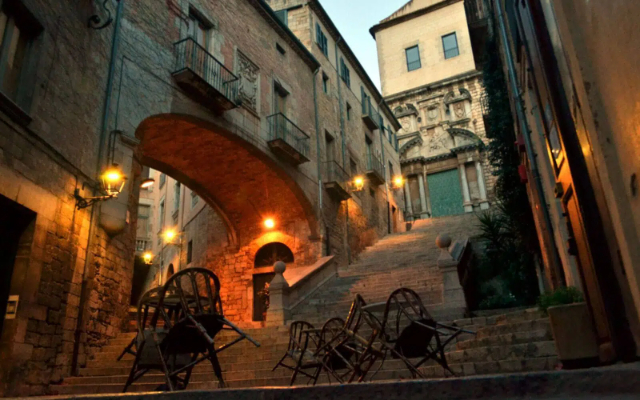
Dating back to the 12th century, this atmospheric district was once home to a flourishing Jewish community, whose scholars and merchants contributed greatly to Girona’s cultural and intellectual life. The passageways here are tight, enclosed, and steep, a layout designed for shade, protection, and community — and they remain remarkably untouched by modern development.
???? A Legacy Preserved: Bonastruc ça Porta
At the heart of the Jewish Quarter stands the Bonastruc ça Porta Center, located on the site of the last functioning medieval synagogue in Girona. In use until 1492, when the expulsion of Jews from Spain marked the end of an era, this space is now home to the Museum of Jewish History — a moving and beautifully curated tribute to the traditions, texts, and daily life of Girona’s Jewish heritage.
Visitors can view ancient tombstones, ritual objects, Hebrew manuscripts, and even personal stories of the Jewish families who once lived within these very streets.

???? Travel Tip: A Unique View from La Devesa
For a special perspective, head toward Parc de la Devesa, Girona’s vast urban park. From there, you can enjoy a unique panorama of the Jewish Quarter, nestled like a secret between the rooftops and ancient walls of the city.
Exploring El Call is not just a walk through a picturesque old town — it’s a journey through one of Europe’s most poignant historical landscapes, where architecture and silence preserve the memory of a once-vibrant community that helped shape Girona’s soul.


