
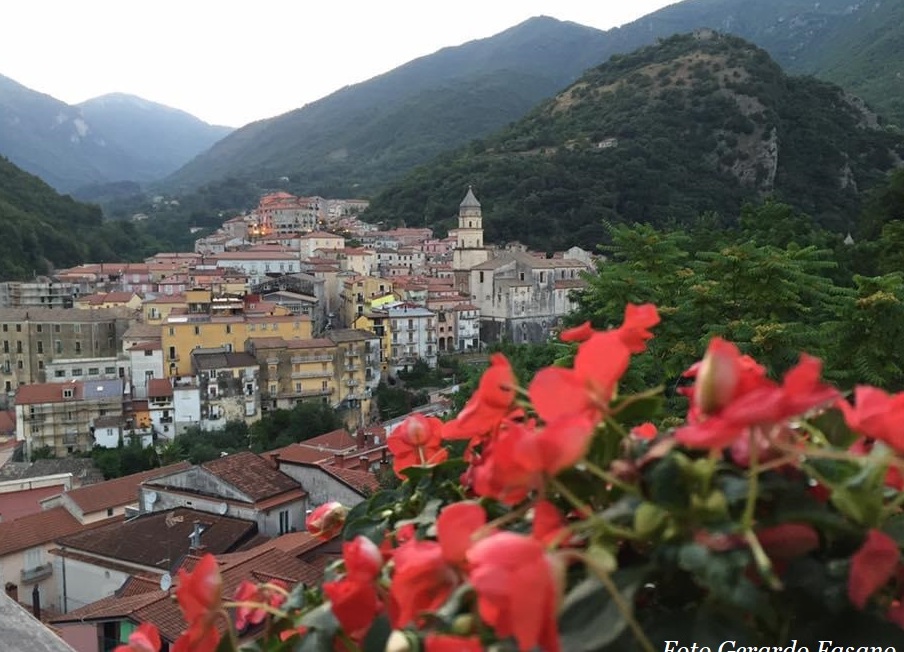

The fiefdom of Campagna played a very important role in Monegasque foreign policy in the 16th century. Why not the Basso dell'Olmo landfill, which will contain 420,000 m³ of rubbish. After the disused quarries of Puglietta, which were used as a landfill immediately after the 1980 earthquake, tons of waste will arrive in Campagna. Campagna, in the province of Salerno, is considered one of the most important minor historical centres in southern Italy. Already a Roman municipality at the time of Silla, its history has become increasingly full of important events. The Orsini of Gravina were counts of Campagna; it became a principality with the Caracciolo of Torrecuso and finally a dukedom with the Pironti. On 23rd July 1532, following the war between France and Spain, Charles V Emperor, in Regensburg, granted the title of marquisate to the city of Campagna and appointed Onorato II, Prince of Monaco, as marquis. The fief of Campagna, together with others in the Kingdom of Naples, was given by Charles V in exchange for his loyalty to Onorato Grimaldi of Monaco, whose descendants held it until 1641. The Marquisate of Campagna included the fiefs of Canosa, Monteverde, Poggiorsini, Ripacandida, Terlizzi and the Castle with the territories of the Gariglioni. Campagna was the capital of all the Monegasque fiefs in Italy. Campagna was the seat of Subintendency, Subprefecture, Military District. Dominican "Studium", university seat with the faculties of Philosophy and Theology and with the establishment of several cultural and legal academies. Campagna was the capital of the Principato Citeriore. In 1440 Campagna hosted San Bernardino da Siena. Campagna is the only municipality in Italy that has two WWF Oasis on its territory: the Oasis of Persano on the Sele river, with the otter as its symbol and the park of Mount Polveracchio, where wolves can still be found. In 1573 the heretic monk Giordano Bruno from Nola stayed in Campagna. In Campagna, in the Dominican convent of San Bartolomeo, the impenitent, pertinacious, obstinate monk and philosopher was ordained a priest and sang his first mass. With the plague of 1656 the bishop of Campagna, Monsignor Avila, also died. Juan Caramuel y Lobkowitz, a Cistercian monk, probabilist, architect, inventor of movable type in the world of printing, one of the inventors of the binary system, designer of the most beautiful square in the world and of the façade of the Cathedral of Vigevano, arrived in Campagna to govern the fate of the diocese. Since 1518 Campagna can boast the title of city. In 1525 it was elevated to a Diocese. In 1545 Campagna became a city of the art of printing, with the presence of the first printing house in all of central-southern Italy. In terms of territorial extension, the municipality of Campagna is second only to the neighbouring town of Eboli; in terms of olive groves, Campagna is the largest municipality in the Campania region, with many olive growers and the recognition of the DOP mark for the oil of the "Colline Salernitane". Campagna was the birthplace of many illustrious people among whom we remember MELCHIORRE GUERRIERO, Count Palatine with Popes Leo X and Clement VII, whose remains rest in the church of Trinità dei Monti in Rome; GIULIO CESARE CAPACCIO, who in 1600 was Secretary of the City of Naples: great man of letters, author of the treatises "Il Forastiero" and "Delle Imprese"; ANTONIO STASSANO, author of the book "Memorie storiche del Regno di Napoli" and the Bourbon general VITO NICOLA NUNZIANTE, jailer of Gioacchino Murat. During the Second World War and after the promulgation of the shameful racial laws, two concentration camps for civilian war internees were set up in Campagna. Thousands of Jews were hosted and they found the solidarity of the Bishop of Campagna Monsignor Giuseppe Maria Palatucci and of the whole population. The prelate was the uncle of Giovanni Palatucci, Righteous among the Nations, the last Quaestor of Italian Fiume, who saved the lives of thousands of Jews. ( by Carmine Granito) Text taken from the website of the Municipality of Campagna


