
← Back

The Church of Agia Theodora

Agias Theodoras, Arta 471 00, Greece ★★★★☆ 175 views
Corinne Falk
Arta
🏆 AI Trip Planner 2026

Get the free app

Discover the best of Arta with Secret World — the AI trip planner with 1M+ destinations. Get personalized itineraries, hidden gems and local tips. Free on iOS & Android.

🧠 AI Itineraries 🎒 Trip Toolkit 🎮 KnowWhere Game 🎧 Audio Guides 📹 Videos
Scan to download iOS / Android
Scan for AppGallery Huawei users

About The Church of Agia Theodora

The Church of Agia Theodora - Arta | Secret World Trip Planner

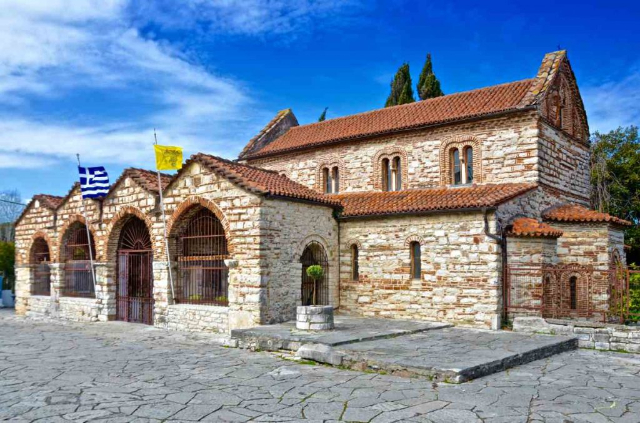
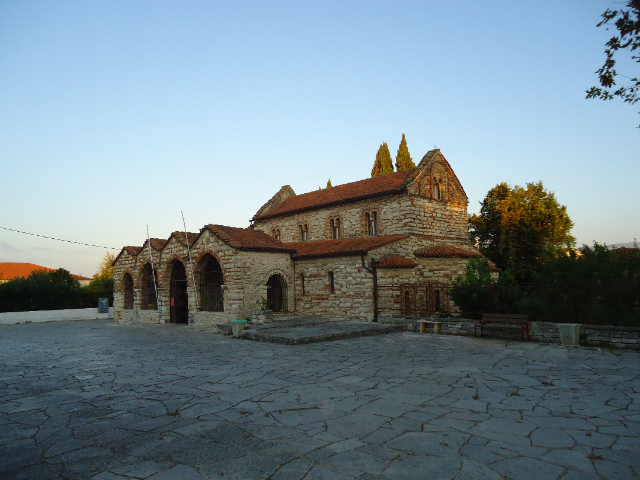
The Church of Agia Theodora is a historical and architectural marvel located in the heart of Arta, Greece. This magnificent structure is not only a testament to Byzantine heritage but also a living connection between the city's present and its Byzantine past.
The Church of Agia Theodora - Arta | Secret World Trip Planner

History and Significance: Situated in the vibrant lower city district, the Church of Agia Theodora was a bustling center of the Byzantine capital, Arta. This church holds immense importance for the people of Arta, serving as a direct link to the city's Byzantine past. It is dedicated to the city's beloved Saint Theodora, and this connection to the city's history is palpable.

Written records and historical accounts testify to the church's significance. Mention of the church dates back to the 13th century, with monk Job Melias providing an account in the context of Saint Theodora's biography. Even the Turkish traveler Evliya Celebi noted its grandeur in the 17th century, describing how it garnered donations from all over Francia. The church played a vital role in the city's religious and cultural life, with around two hundred priests offering food and shelter to passers-by.

Dating and Architecture: The construction of the church dates back to the mid-Byzantine period, before the establishment of the Despotate. It was originally a women's monastic community and was dedicated to Saint George. Built in the 12th century or possibly the late 11th century, it stands on the rectorate of ancient Amvrakia, a discovery made during a 2019 excavation by the Ephorate of Antiquities.

Over time, the church evolved in three construction phases:

Phase A: The original structure is a typical wooden-roofed basilica with a three-sided arch on the eastern wall. It was divided into three aisles by colonnades, with the central aisle higher than the side ones. Phase B: Around 1270, Queen Theodora renovated the church, adding a three-part vaulted narthex to the west. Low domes are present in the roof, and the western side features three pediments. Phase C: The final phase, dated to the late 13th and early 14th centuries, introduced a Π-shaped open entrance that surrounds the west, north, and south sides of the narthex. Masonry and Exterior Decoration: The church's masonry consists of irregular stones with bricks interspersed in a horizontal, irregular pattern. The high pediments of the central aisle exhibit intricate ceramic decoration, including decorative bands, plinths, and adornments created with broken vessels. The narthex, built around the same time, also boasts extensive ceramic embellishments, such as bands with crosses, suns, meanders, zigzag lines, and lattice patterns.

The Church of Agia Theodora stands as a testament to the enduring legacy of Byzantine architecture and art. Its rich history and architectural significance make it a must-visit for those seeking to connect with the essence of Arta's Byzantine past.

🗺 AI Trip Planner 2026

Plan your visit to Arta

Suggested itinerary near The Church of Agia Theodora

MAJ+
500.000+ travelers worldwide
  1. 🌅
    Morning
    The Church of Agia Theodora
    📍 Arta
  2. ☀️
    Afternoon
    CHURCH OF AGHIOS VASSILIOS
    📍 0.1 km · Arta
  3. 🌆
    Evening
    Arta: the Royal City
    📍 0.6 km · Arta

Buy Unique Travel Experiences

Powered by Viator

See more on Viator.com

Explore nearby · Arta

Frequently Asked Questions

The Church of Agia Theodora was constructed during the mid-Byzantine period, dating back to either the 12th century or possibly the late 11th century. The church underwent significant renovations around 1270 when Queen Theodora added a three-part vaulted narthex to the western side, marking an important architectural evolution of the structure.
The original structure is a typical wooden-roofed basilica divided into three aisles by colonnades, with the central aisle higher than the side ones and a three-sided arch on the eastern wall. During its renovation around 1270, low domes were added to the roof and the western side was enhanced, representing different construction phases that showcase the evolution of Byzantine architecture.
The Church of Agia Theodora is dedicated to the city's beloved Saint Theodora, serving as a direct link to Arta's Byzantine heritage and religious identity. The saint's connection to the city is documented in historical accounts, including monk Job Melias's account in the 13th century that mentions her biography in relation to the church.
The Church of Agia Theodora holds immense importance as a living connection between Arta's present and its Byzantine past, originally serving as a women's monastic community and a bustling center of the Byzantine capital. The church played a vital role in the city's religious and cultural life, with around two hundred priests offering food and shelter to passers-by, and it was even noted by Turkish traveler Evliya Celebi in the 17th century for its grandeur and donations from across Francia.
During a 2019 excavation by the Ephorate of Antiquities, it was discovered that the Church of Agia Theodora stands on the rectorate of ancient Amvrakia, revealing important information about the site's ancient history and its continuity as a sacred location. This archaeological finding deepened our understanding of how the church's location connects to the broader history of the region.
