
← Back

The church of San Domenico and the Crucifix by Cimabue

Piazza S. Domenico, 52100 Arezzo AR, Italia ★★★★☆ 325 views
Jessica Lyon
Arezzo
🏆 AI Trip Planner 2026

Get the free app

Discover the best of Arezzo with Secret World — the AI trip planner with 1M+ destinations. Get personalized itineraries, hidden gems and local tips. Free on iOS & Android.

🧠 AI Itineraries 🎒 Trip Toolkit 🎮 KnowWhere Game 🎧 Audio Guides 📹 Videos
Download on the App Store Get it on Google Play
Scan to download Scan to download
The church of San Domenico and the Crucifix by Cimabue - Arezzo | Secret World Trip Planner

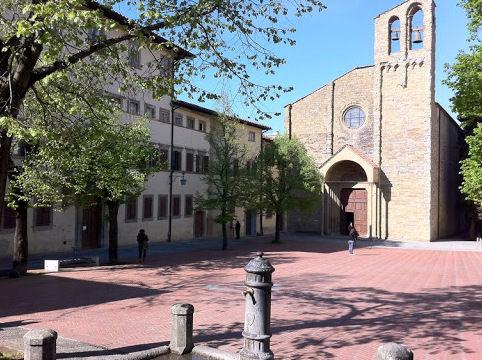
The church of San Domenico is one of the most famous sacred buildings in Arezzo for the presence, inside, of the wooden Crucifix painted by Cimabue, considered one of the masterpieces of thirteenth-century painting, dating back to the late sixties. In January 1276, in the place where it was still under construction, the church of San Domenico hosted what for the Church of Rome was the first conclave in history. In April 1960 Pope John XXIII elevated it to the dignity of a minor basilica.The church, in Romanesque style, was begun in 1275 and finished in the fourteenth century. The financial contributions of the Ubertini and Tarlati families contributed to its construction. The asymmetrical façade, in masonry, also includes a bell gable with two bells. The interior, with its trussed roof, has a single nave, which is lit by 12 single-lancet windows (6 on each side) whose reciprocal distance decreases as you approach the apse, thus giving a greater sense of depth to the hall. The fourteenth-century pictorial decoration of the interior is still well documented. Spinello Aretino's mature work (1395-1400) is the fresco with Saints Philip and James Minor and stories from their lives and that of Saint Catherine, on the inside wall of the façade. By Spinello's son Parri is the Crucifixion between saints, on the right of the inside wall of the façade: to the right of the Crucifixion are the Virgin and St Nicholas and to the left Saints John and Dominic. The Dragomanni chapel, a family whose coat of arms depicted a dragon, has a Gothic structure with a black stone altar sculpted by Giovanni di Francesco da Firenze (1368) and a fresco depicting the adolescent Jesus conversing with the doctors of the Temple, by the Sienese artist Luca di Tommè. In a niche a glazed terracotta by Giovanni and Girolamo della Robbia, made between 1515 and 1520 represents St. Peter of Verona. In the left chapel the triptych by Giovanni d'Agnolo, on the altar, represents: in the centre the Archangel Michael, on his right (left for the viewer) St. Dominic, and on his left St. Paul. In the chapel on the right, where the Eucharist is kept, there is a stone Madonna and Child, an anonymous work from Arezzo, once part of the series of sculptures that from 1339 decorated the ten gates of the city walls, and brought here to save it from the deterioration caused by exposure to the elements. The Renaissance painter Niccolò Soggi, mentioned by Vasari in his Le vite de' più eccellenti pittori, scultori e architettori, was buried in the church.

🗺 AI Trip Planner

Plan your visit to Arezzo

Suggested itinerary near The church of San Domenico and the Crucifix by Cimabue

MAJ+
500.000+ travelers worldwide
  1. 🌅
    Morning
    The church of San Domenico and the Crucifix by Cimabue
    📍 Arezzo
  2. ☀️
    Afternoon
    Church of San Domenico
    📍 0 km da Arezzo
  3. 🌆
    Evening
    Vasari House Museum
    📍 0.1 km da Arezzo

Buy Unique Travel Experiences

Powered by Viator

See more on Viator.com

Explore nearby · Arezzo

Frequently Asked Questions

The wooden Crucifix painted by Cimabue is one of the masterpieces of thirteenth-century painting, dating to the late 1260s, and is the main reason San Domenico is famous. This remarkable work is displayed inside the church and represents a significant achievement in medieval Italian art that draws art enthusiasts from around the world.
San Domenico was begun in 1275 and completed in the fourteenth century in Romanesque style, with construction financially supported by the prominent Ubertini and Tarlati families. The church features an asymmetrical façade in masonry with a bell gable containing two bells, and was elevated to the dignity of a minor basilica by Pope John XXIII in April 1960.
The interior features fourteenth-century pictorial decoration including mature works by Spinello Aretino (1395-1400) depicting Saints Philip and James Minor on the façade's inside wall, and a Crucifixion between saints by his son Parri. Additionally, you'll find a fresco by Sienese artist Luca di Tommè in the Dragomanni chapel and a glazed terracotta by Giovanni and Girolamo della Robbia representing St. Peter of Verona.
In January 1276, while the church was still under construction, it hosted what was the first conclave in the history of the Roman Church, making it a significant location in Catholic Church history. This event occurred before the church was even completed, highlighting its importance to the Church of Rome.
The interior features a single nave with a trussed roof lit by 12 single-lancet windows (6 on each side) that decrease in distance as they approach the apse, creating a greater sense of depth. The Dragomanni chapel showcases a Gothic structure with a black stone altar sculpted by Giovanni di Francesco da Firenze in 1368, demonstrating the craftsmanship throughout the building.
