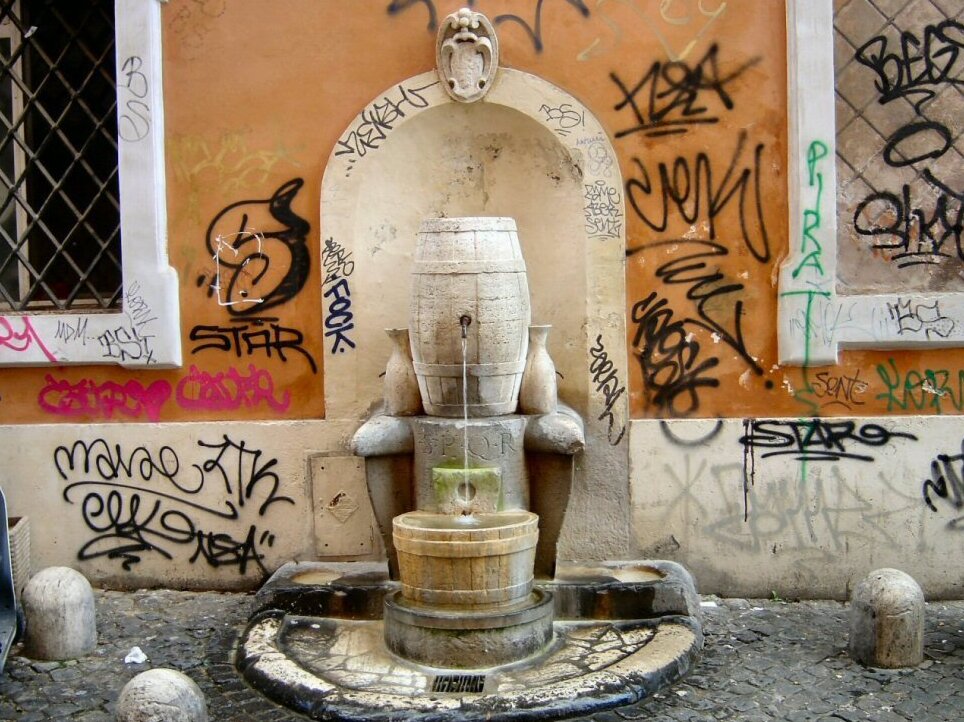

Nestled in the heart of Rome, the Fountain of the Barrel—or Caratello—is a hidden gem that whispers tales of the city’s rich vinicultural history. This charming fountain, conceived by sculptor and architect Pietro Lombardi, captures the essence of Roman life, where wine was not merely a beverage but a vital part of social and cultural fabric.
### History and Origins
The origins of the Fountain of the Barrel date back to a period when public drinking fountains were essential for urban life. Commissioned by the Municipality of Rome, Lombardi’s artistic endeavor reflects the city’s historical reliance on wine as a staple of daily life. The barrel, or caratello, represents the ancient Roman practice of transporting wine in large wooden barrels, which were often moved by horse-drawn wagons during the bustling trade of the era.
Rome's winemaking roots can be traced back to ancient times, with significant vineyards flourishing around the region. Historical texts reveal that during the Republican and Imperial eras, wine was not just a drink but a symbol of hospitality and social status. Lombardi’s fountain, completed in the early 20th century, stands as a tribute to this heritage, skillfully merging utility with artistry.
### Art and Architecture
Architecturally, the Fountain of the Barrel is a delightful example of early 20th-century Roman design. It is set against a rustic brick wall, crowned by a graceful travertine arch that frames the composition beautifully. The focal point of the fountain is the barrel, from which water flows into a basin, symbolizing the vat of must, a byproduct of winemaking.
Flanking the barrel are two one-litre measures of wine, known as sospiro or sottovoce, from which water also springs. These measures reflect the local terminology for wine portions, revealing the intricacies of Roman viticulture. Lombardi’s attention to detail and the harmonious integration of the natural materials underscore the fountain’s significance as both a functional water source and an enduring work of art.
### Local Culture and Traditions
The fountain is more than just an aesthetic fixture; it embodies local customs and traditions. In Rome, wine has long been intertwined with community gatherings, festivals, and feasts. The celebration of Festa della Vendemmia (Grape Harvest Festival) exemplifies this connection, where locals partake in grape-picking and wine-tasting, echoing the practices of ancient Romans.
As you wander through the cobblestone streets near Via della Cisterna, it’s common to see locals filling up their containers with the fresh water from the fountain, a tradition that continues to this day. This blend of historical significance and daily use creates a vibrant cultural tapestry that defines the area.
### Gastronomy
No exploration of the Fountain of the Barrel would be complete without delving into the region's gastronomy. The nearby trattorias and osterias serve a delightful array of traditional Roman dishes that pair perfectly with local wines. One must-try dish is Cacio e Pepe, a simple yet flavorful pasta made with Pecorino Romano cheese and black pepper, often enjoyed with a glass of Frascati or Castelli Romani, both of which have deep roots in the surrounding countryside.
Furthermore, the practice of sharing wine during meals, a tradition dating back to ancient Roman banquets, can still be experienced in the bustling eateries nearby. Here, the communal spirit of dining embodies the essence of Italian culture, where food and wine are shared among friends and family.
### Lesser-Known Curiosities
While many tourists flock to the more famous fountains of Rome, the Fountain of the Barrel often goes unnoticed. One of its lesser-known curiosities is the historical reference to the various measures of wine used by the Romans, such as the chirichetto (1/5 litre) and quartino (1/4 litre). Each term carries with it a slice of history, connected to the social customs of the time.
Additionally, the fountain sits quietly amid the bustling urban landscape, often overlooked by those rushing to more prominent landmarks. Yet, it serves as a poignant reminder of the simple pleasures of Roman life and the artistry that can be found in everyday objects.
### Practical Visitor Information
To truly appreciate the Fountain of the Barrel, the best time to visit is early morning or late afternoon, when the soft Roman light bathes the fountain in a golden hue. It’s also a perfect opportunity to observe local life as residents stop by to fill their containers.
When planning your visit, be sure to bring a camera to capture the intricate details of Lombardi's work. As you linger, take a moment to enjoy the sounds of water trickling and the lively chatter of locals, which create a unique ambiance that embodies the spirit of Rome.
For a more immersive experience, consider exploring the Secret World app, which can help you craft a personalized itinerary, ensuring that you uncover the hidden treasures of Roma, including this charming fountain.
