
← Back

The Holy Trinity Cathedral Church

GHC7+2P6, Sialkot Cantonment, Sialkot, Punjab, Pakistan ★★★★☆ 526 views
Marta Botticelli
Sialkot
🏆 AI Trip Planner 2026

Get the free app

Discover the best of Sialkot with Secret World — the AI trip planner with 1M+ destinations. Get personalized itineraries, hidden gems and local tips. Free on iOS & Android.

🧠 AI Itineraries 🎒 Trip Toolkit 🎮 KnowWhere Game 🎧 Audio Guides 📹 Videos
Scan to download iOS / Android
Scan for AppGallery Huawei users

About The Holy Trinity Cathedral Church

The Holy Trinity Cathedral Church - Sialkot | Secret World Trip Planner

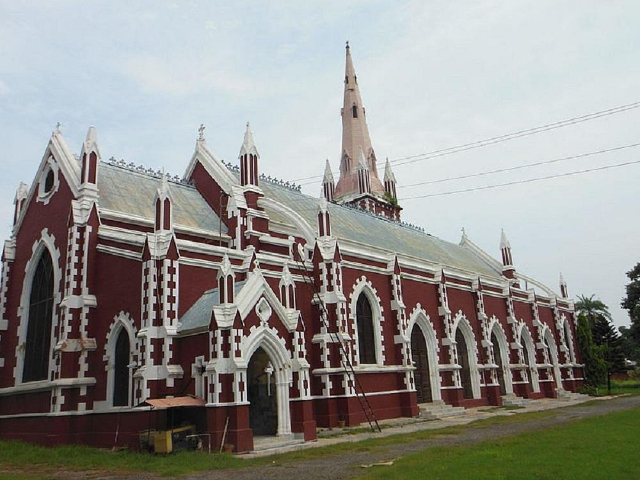
The Holy Trinity Cathedral Church, often referred to as Sialkot Cathedral, is a significant Anglican cathedral nestled in the cantonment area of Sialkot, Pakistan. Prominently located on The Mall, also known as Quaid-i-Azam Road, this cathedral holds a venerable place in the religious and cultural heritage of the region.

The cornerstone of this historic cathedral was laid on March 1, 1852, marking the beginning of a landmark that would become a spiritual foundation for many. It was consecrated on January 30, 1857, by the Rt. Rev Daniel Wilson, the Bishop of Calcutta, reflecting its importance within the Anglican community at a time when Sialkot was part of the Diocese of Calcutta.

Today, the Holy Trinity Cathedral Church is part of the Church of Pakistan, Diocese of Sialkot, following the unification of Anglican, Methodist, Presbyterian, and Lutheran denominations in Pakistan in 1970. This union formed the Church of Pakistan, making the cathedral not only a symbol of Anglican heritage but also a beacon of ecumenical unity.

The cathedral itself is an architectural marvel, embodying the Gothic style typical of many Anglican churches with its pointed arches and intricate stonework. It serves not only as a place of worship but also as a historical monument, drawing visitors and worshippers alike who are interested in its rich past and vibrant community life. The Holy Trinity Cathedral continues to play a vital role in the spiritual and social life of Sialkot, maintaining its legacy as a central point of faith and fellowship.

🗺 AI Trip Planner 2026

Plan your visit to Sialkot

Suggested itinerary near The Holy Trinity Cathedral Church

MAJ+
500.000+ travelers worldwide
  1. 🌅
    Morning
    The Holy Trinity Cathedral Church
    📍 Sialkot
  2. ☀️
    Afternoon
    The Sialkot Clock Tower
    📍 0.9 km · Sialkot
  3. 🌆
    Evening
    Shivala Teja Singh Temple
    📍 3.7 km · Sialkot

Buy Unique Travel Experiences

Powered by Viator

See more on Viator.com

Explore nearby · Sialkot

Frequently Asked Questions

The cornerstone of the Holy Trinity Cathedral was laid on March 1, 1852, and it was consecrated on January 30, 1857, by the Rt. Rev Daniel Wilson, the Bishop of Calcutta. This makes it one of the significant historical religious structures in Pakistan, with over 170 years of heritage.
The Holy Trinity Cathedral Church is situated in the cantonment area of Sialkot, prominently positioned on The Mall, also known as Quaid-i-Azam Road. Its prominent location makes it easily accessible and recognizable to visitors exploring the city.
The cathedral is an architectural marvel featuring the Gothic style typical of Anglican churches, characterized by pointed arches and intricate stonework. This distinctive architectural design makes it a notable historical monument worth viewing for those interested in colonial-era religious architecture.
Yes, the Holy Trinity Cathedral remains an active place of worship and is now part of the Church of Pakistan, Diocese of Sialkot, following the 1970 unification of Anglican, Methodist, Presbyterian, and Lutheran denominations. It continues to play a vital role in the spiritual and social life of Sialkot's community.
The cathedral stands as both a symbol of Anglican heritage and a beacon of ecumenical unity, representing the diverse religious traditions that merged to form the Church of Pakistan in 1970. It serves as a historical monument and spiritual center that draws visitors interested in understanding the region's rich religious and cultural heritage.
