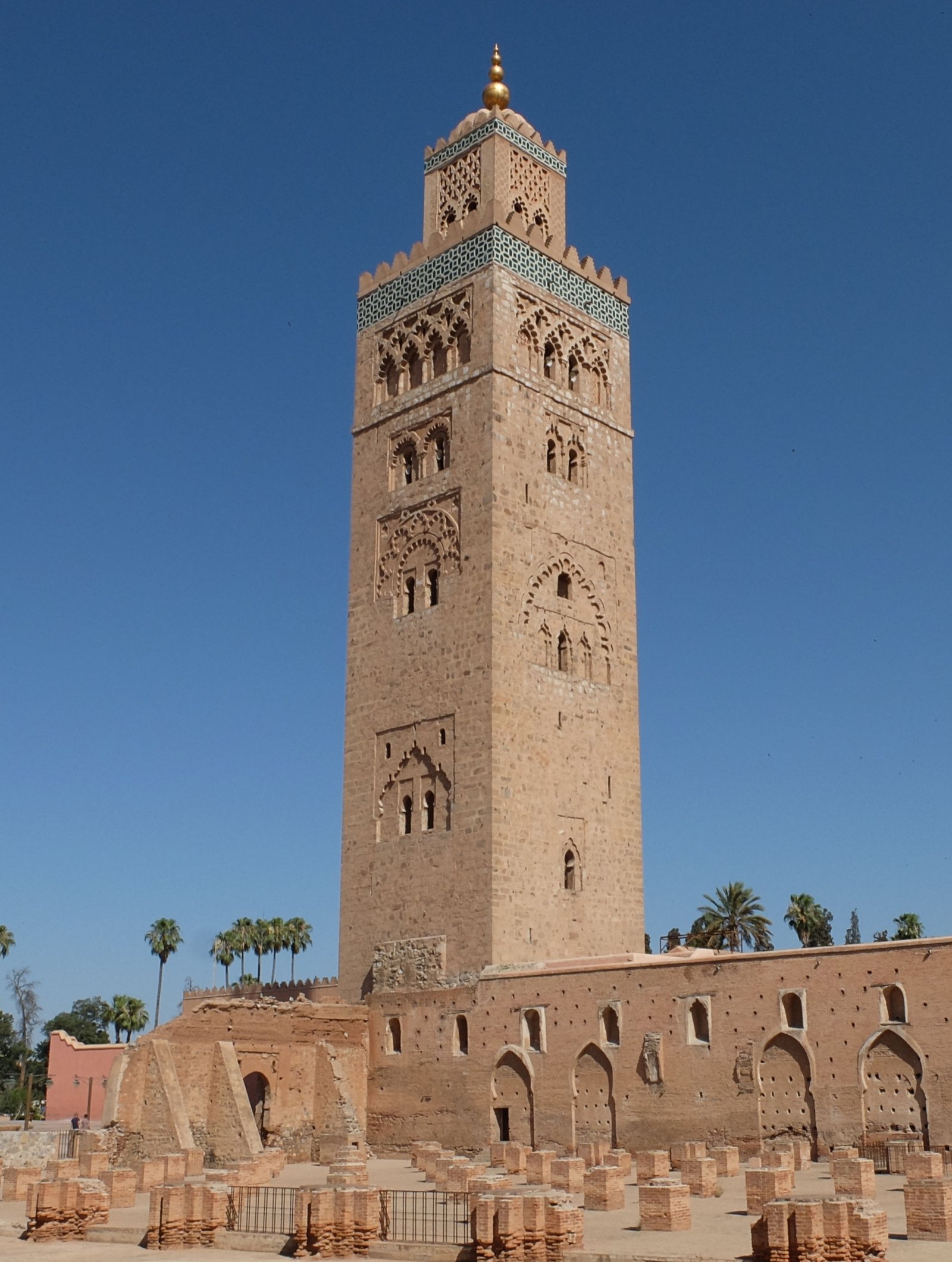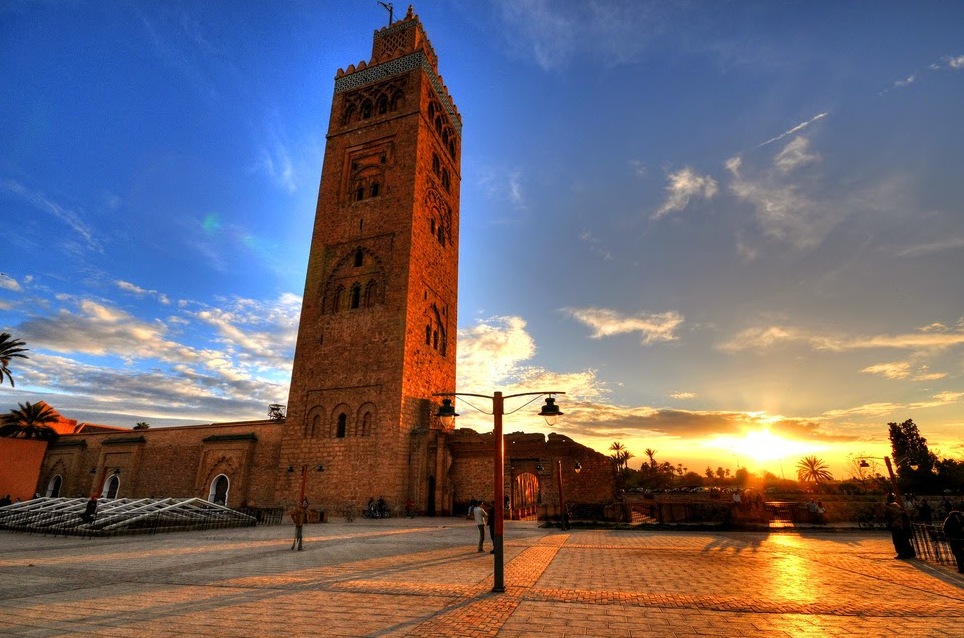

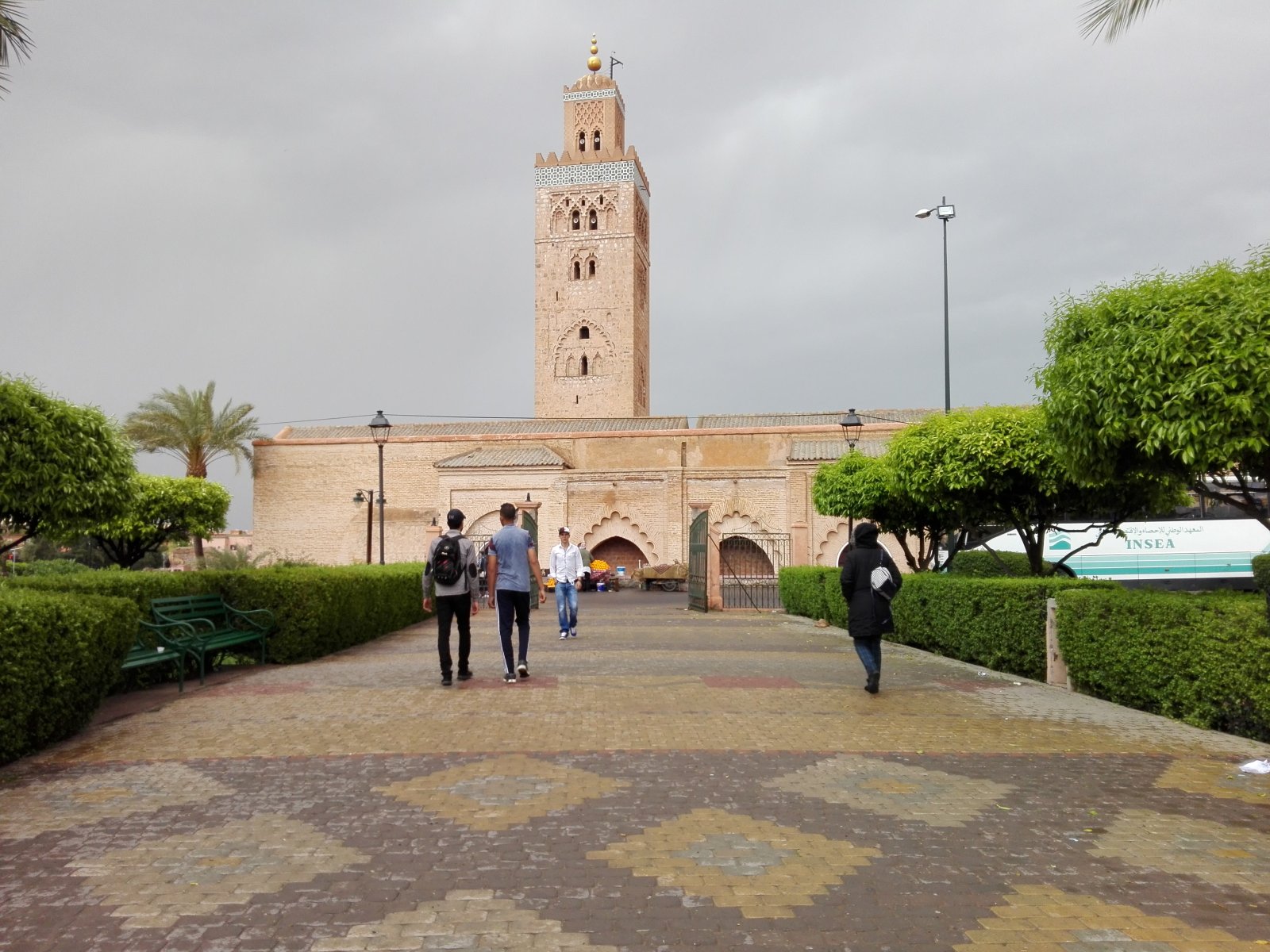
As the sun sets over Marrakech, the Koutoubia Mosque stands as a beacon of both history and spiritual significance, its silhouette casting an awe-inspiring glow against the vibrant Moroccan sky. This magnificent structure, with its rich history and architectural beauty, is not merely a place of worship but a symbol of Marrakech itself.
### History and Origins
The origins of the Koutoubia Mosque date back to the 12th century, during the reign of the Almohad Caliphate. Commissioned by Abdelmoumen, the first caliph of the Almohad dynasty, the mosque's construction was completed under the guidance of his grandson Yacoub el Mansour. Its name, which translates to 'Mosque of the Booksellers', originates from the bustling book trade that once thrived in its vicinity. The site where the mosque stands was originally chosen for its strategic location near the royal palace and the heart of the city's vibrant life.
### Art and Architecture
The Koutoubia Mosque is an exemplar of Almohad architecture, characterized by its simplicity, harmony, and grandeur. The mosque's most striking feature is its towering minaret, which reaches 69 meters into the sky, making it the tallest structure in Marrakech. Each of its four sides is uniquely decorated, a masterpiece of intricate craftsmanship. The minaret is crowned by three golden orbs, which symbolize the earthly, celestial, and spiritual worlds. The mosque's interior is just as impressive, although non-Muslims are not permitted inside, its grandeur can be appreciated from its expansive courtyards.
### Local Culture and Traditions
The Koutoubia Mosque is deeply embedded in the cultural fabric of Marrakech. It serves not only as a place of worship but as a gathering point for the community. The call to prayer, or adhan, echoes through the city's narrow streets, a reminder of the enduring spiritual life that pulses through Marrakech. The mosque plays a central role during Ramadan, when the faithful gather in large numbers, and the area around the mosque comes alive with food stalls and communal celebrations.
### Gastronomy
Marrakech is a city of flavors, and the area around the Koutoubia Mosque is no exception. The nearby Jemaa el-Fnaa square is a culinary hotspot where you can sample traditional Moroccan dishes. From aromatic tagines to savory couscous, the options are endless. Don't miss trying harira, a traditional soup often enjoyed to break the fast during Ramadan. Pair your meal with a glass of refreshing mint tea, a staple in Moroccan hospitality.
### Lesser-known Curiosities
One of the intriguing stories about the Koutoubia Mosque involves the golden orbs atop its minaret. Legend has it that these spheres were once made from the melted-down jewelry of Yacoub el Mansour's wife, a penance for her fasting lapse during Ramadan. Another lesser-known fact is that the mosque is aligned with the direction of Mecca, a feat of architectural precision that was achieved without modern technology.
### Practical Visitor Information
The best time to visit the Koutoubia Mosque is during the late afternoon, as the sun sets and bathes the minaret in a warm glow. For visitors, spending time in its gardens offers a serene escape from the bustling city. While non-Muslims cannot enter the mosque, the surrounding gardens and courtyards are open and provide ample opportunity for reflection and photography. Remember to dress modestly, respecting local customs, and enjoy the vibrant atmosphere of the nearby Jemaa el-Fnaa square.
For a truly personalized journey through Marrakech, consider planning your itinerary with the Secret World app.