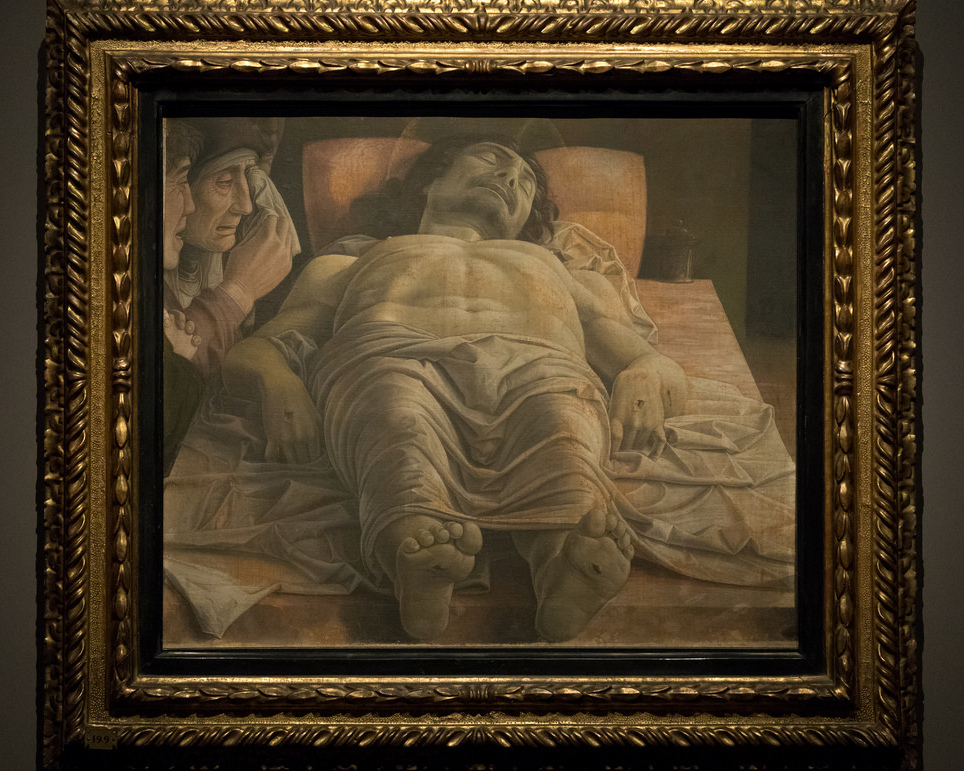

In the heart of Milano, a city known for its rich artistic heritage and cultural vibrancy, lies a poignant masterpiece that captures the essence of grief and devotion. The Lamentation of Christ, painted by the illustrious Andrea Mantegna around 1480, beckons art enthusiasts and casual visitors alike. This work, often referred to as the Lamentation over the Dead Christ or simply the Dead Christ, serves as a profound reflection of the human experience, brilliantly executed during the Italian Renaissance.
### History and Origins The Lamentation of Christ embodies the intricate evolution of religious art during the Renaissance. Created during a time of significant cultural rebirth in Italy, Mantegna's work stands out due to its unique perspective and emotional depth. Mantegna, born in 1431 in Isola di Carturo, was heavily influenced by the classical ideals of ancient Rome, which can be seen in his meticulous attention to anatomical detail and perspective.
The painting’s origins are rooted in the Christian tradition, depicting the moment when Christ's body is mourned by the Virgin Mary, Saint John, and Mary Magdalene. This theme has appeared in various forms throughout medieval art, but Mantegna's iteration is remarkable for its stark realism and dramatic foreshortening of Christ's figure, which heightens the emotional intensity.
### Art and Architecture Mantegna's use of light and shadow in the Lamentation enhances the viewing experience, creating a stark contrast that imbues the scene with a palpable sense of sorrow. The anatomical precision of Christ’s body, lying supine on a marble slab, draws the viewer's focus directly to the figure, making the pain of loss visceral.
The painting is housed in the Pinacoteca di Brera, a celebrated art gallery in Milano that showcases a diverse collection of Renaissance art. The gallery itself is an architectural gem, originally built in the 16th century. Its neoclassical façade and serene interiors provide a fitting backdrop for Mantegna's work, allowing visitors to appreciate the emotional weight of the painting in a tranquil setting.
### Local Culture and Traditions Milano is not only a hub for art but also a vibrant cultural center where traditions are alive. The Feast of Sant'Ambrogio, held on December 7, honors the city's patron saint and features street markets, music, and local delicacies. Participating in this festival allows visitors to experience the local customs that shape Milanese identity.
Additionally, Milano is renowned for its opera, particularly at the La Scala Theatre. Attending a performance here can deepen one’s understanding of the local culture and the artistic achievements that resonate through the city’s history.
### Gastronomy To truly experience Milano, one must indulge in its gastronomic offerings. The city is famous for Risotto alla Milanese, a creamy dish flavored with saffron, and Cotoletta alla Milanese, a breaded veal cutlet that is crispy on the outside and tender within. Pair these dishes with a glass of Franciacorta, a sparkling wine from the nearby region, for a complete culinary experience.
Don't miss the opportunity to sample Panettone, a traditional sweet bread that originated in Milan and is especially popular during the Christmas season. Each bite offers a taste of the city’s rich baking traditions.
### Lesser-known Curiosities One intriguing fact about The Lamentation of Christ is the innovative perspective Mantegna employed. His approach was groundbreaking for the time, as he foreshortened the figure of Christ in such a way that it appears almost to emerge from the canvas, a technique that would influence future generations of artists.
Moreover, Mantegna’s work is notable for its emotional depth, which diverges from the more detached depictions of Christ's death typical of earlier medieval art. The scene is filled with sorrowful expressions, and the mourners are depicted in a way that invites the viewer to share in their grief, a testament to Mantegna’s ability to convey complex human emotions.
### Practical Visitor Information Visiting Milano to see the Lamentation of Christ is best during the spring (April to June) or early fall (September to October) when the weather is mild, and the city is less crowded. The Pinacoteca di Brera is open from Tuesday to Sunday, with tickets available for purchase online to avoid long queues.
As you stand before Mantegna’s masterpiece, take time to observe the intricate details—the textures of the marble slab, the delicate expressions of the mourners, and the play of light that enhances the painting’s emotional gravity. Each element invites contemplation and connection, making the experience profoundly personal.
In a city as rich in culture and history as Milan, planning a visit can be made easier by utilizing the Secret World app to craft a personalized itinerary that captures all the essence of this remarkable destination.
