
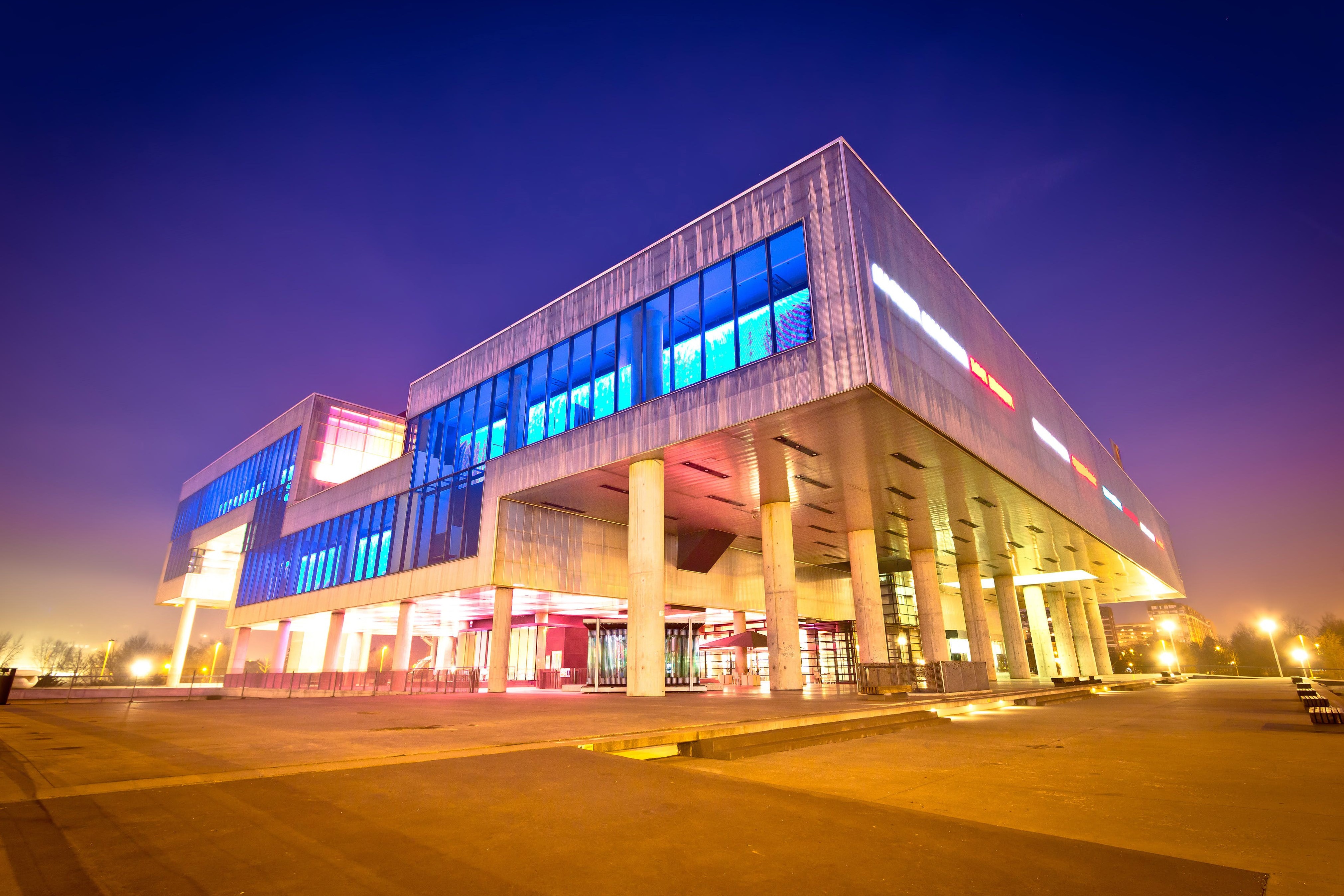

The Museum of Contemporary Art in Zagreb, Croatia, stands as a testament to the city's vibrant artistic landscape. Nestled in the heart of the city, this remarkable institution was inaugurated in 2009, marking a significant milestone in the cultural history of Croatia. The museum's origins can be traced back to earlier efforts to establish a contemporary art scene following the dissolution of Yugoslavia in the early 1990s. As Croatia sought to carve its identity in the post-war era, the need for a dedicated space to showcase modern artistic expressions became increasingly vital.
Architecturally, the museum is a stunning example of modern design, conceived by the Croatian architect Igor Franić. The building is characterized by its clean lines and expansive glass façade, which invites natural light into the galleries, creating an ambiance that enhances the viewing experience. The museum's layout is equally impressive, featuring a 90-meter-long LED screen that serves as a dynamic canvas for video artworks, captivating not only visitors but also passersby and drivers on nearby roads.
Housing an extensive collection of over 5,000 works of art, the museum emphasizes pieces created after 1950, showcasing both Croatian and international artists. The collection includes significant contributions from renowned figures such as Marina Abramović, Iva Troje, and Dražen Kovačević, each provoking thought and dialogue around contemporary issues. The museum’s exhibitions are curated to challenge perceptions, often addressing social, political, and existential themes through innovative artistic mediums.
Beyond its artistic offerings, the museum is a vibrant part of Zagreb's local culture. The city is known for its rich traditions, which manifest in various festivals and events throughout the year. One such event is the Zagreb Art Week, where the museum plays a central role by hosting exhibitions and workshops that engage the community and foster creativity. Additionally, local customs such as Advent in Zagreb transform the surrounding area into a festive wonderland, with art installations that harmonize with the seasonal celebrations.
Gastronomy is another facet of Zagreb's cultural tapestry. Visitors to the museum can indulge in local delicacies like štrukli (a baked or boiled pastry filled with cheese) and zagorski mlinci (flatbread served with duck). A visit wouldn't be complete without sampling a glass of plavac mali, a robust red wine that pairs beautifully with regional dishes. The nearby cafes often serve these culinary delights, allowing art enthusiasts to savor the local flavors.
For those who think they know everything about the museum, there are intriguing facts that often go unnoticed. For instance, the museum’s unique art installation called


