
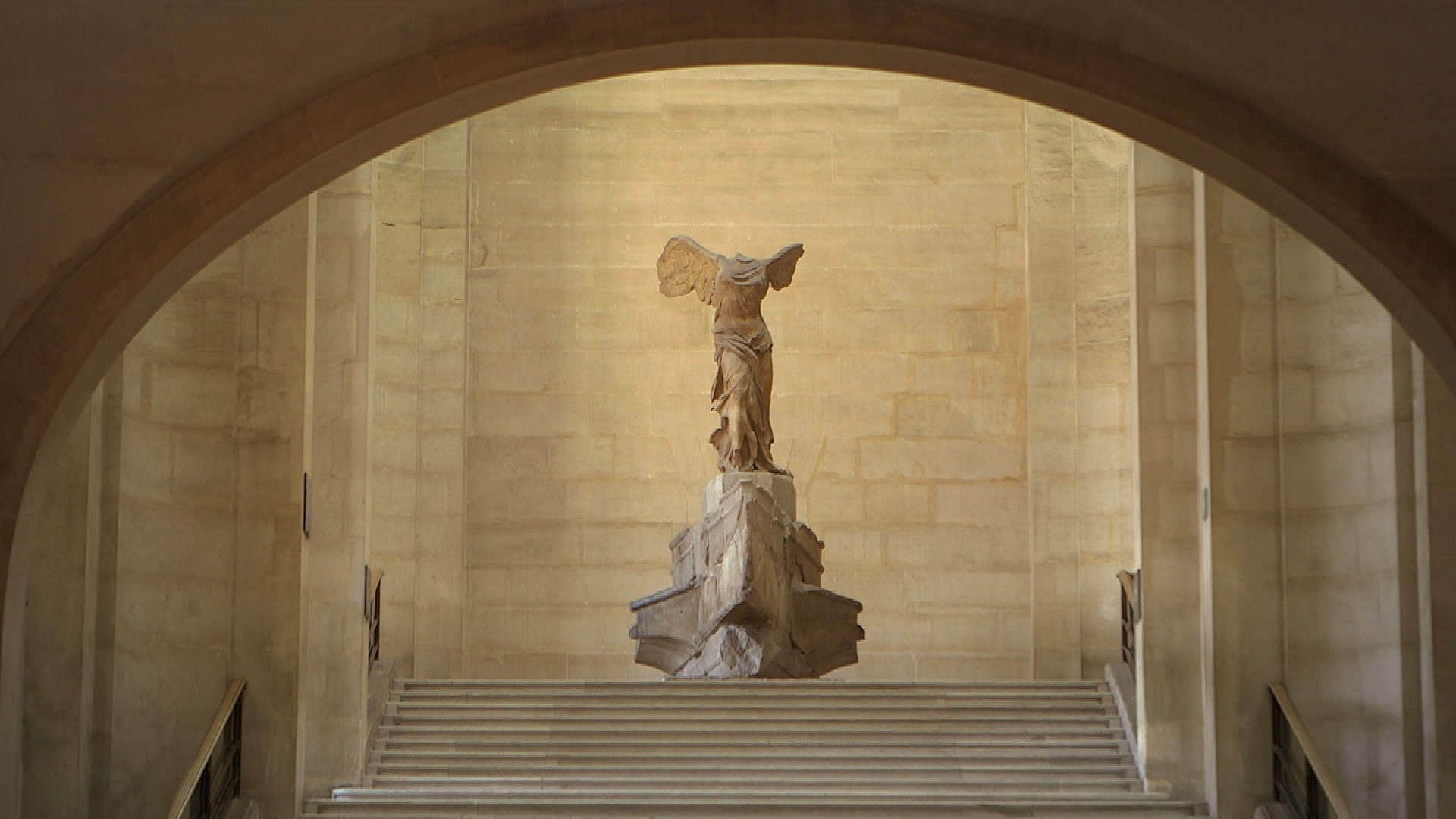

Perched elegantly atop the grand staircase of the Louvre Museum, the Nike of Samothrace captures the essence of triumph with its dynamic pose and intricate craftsmanship. This magnificent piece of art, attributed to the sculptor Pythocritus, dates back to 190 BC and stands at a height of 245 cm. The statue, carved from exquisite Parian marble, is a stunning representation of the goddess Nike, the embodiment of victory, and it has become one of the most celebrated masterpieces of ancient Greek art.

The origins of the Nike of Samothrace are steeped in a rich tapestry of history. Discovered in 1863 by French archaeologist Charles Champoiseau on the island of Samothrace in the Aegean Sea, this sculpture likely served as a commemorative offering in the sanctuary of the Great Gods, dedicated to the Kabiris. The statue was erected to honor naval victories won by the cities of Rome, Rhodes, and Pergamum against Syria. The significance of this sculpture extends beyond its artistic merit; it is a physical manifestation of the cultural exchanges and military alliances of the Hellenistic period.
Artistically, the Nike of Samothrace exemplifies the Rhodian school's skill in depicting movement and emotion. The statue is designed to evoke the sensation of wind rushing through the figure, with a dramatic lean forward and outstretched wings that suggest flight and freedom. The intricate detailing of her garments, which cling to her form as if wet, further enhances the statue’s lifelike quality. The chiaroscuro effects used to depict the feathers of her wings create a vibrant luminosity, drawing the eye and inviting deeper contemplation of the figure's grace and power.

The statue's placement on the grand staircase designed by Hector Lefuel enhances its visual impact. The sweeping architectural lines of the staircase lead visitors to the Galerie d'Apollon and the Salon Carré, where the Nike commands attention. As one ascends the stairs, the majestic figure seems to come alive, creating an unforgettable experience, inviting viewers to marvel at both the artistry and the history it represents.
When visiting the Louvre, it’s essential to immerse yourself in the local culture surrounding this iconic piece. The Parisian tradition of art appreciation and café culture complements the experience. Locals often engage in lively discussions about art over a cup of coffee or a glass of wine, particularly during the first Saturday of every month when many museums, including the Louvre, offer free entry after hours. This community interaction enriches the cultural landscape of the city, making the visit to the Nike of Samothrace not just an individual experience but part of a broader dialogue about art and history.
As you explore the Louvre and its treasures, don't miss the chance to indulge in French gastronomy. Nearby, you’ll find numerous cafes and bistros serving traditional dishes that resonate with the city's history. Try a classic croissant or a pain au chocolat for breakfast, and for lunch, savor a coq au vin or a ratatouille, which reflect the rustic flavors of the French countryside. Pair your meal with a crisp glass of Chablis or a robust Bordeaux to round out your culinary experience.
Among the lesser-known curiosities about the Nike of Samothrace is the fact that it was originally displayed on a pedestal that simulated the prow of a ship, aligning with her role as a symbol of naval victory. Moreover, the statue was intentionally left without arms, a choice that has sparked various theories about its original appearance. Some believe she once held a laurel wreath or a trophy, while others suggest she was designed to evoke a sense of motion, emphasizing the fleeting nature of victory.
For those planning a visit, the best time to experience the Nike of Samothrace is during the early weekday mornings or late afternoons, when the crowds are thinner, allowing for a more contemplative experience. Be sure to take your time observing the statue from different angles to fully appreciate the skill involved in its creation and the dramatic effects of light on the marble surface.
As you prepare for your journey through the art and history of Paris, consider using the Secret World app to craft a personalized itinerary that captures your unique interests and ensures you don’t miss the hidden gems of this magnificent city.


