
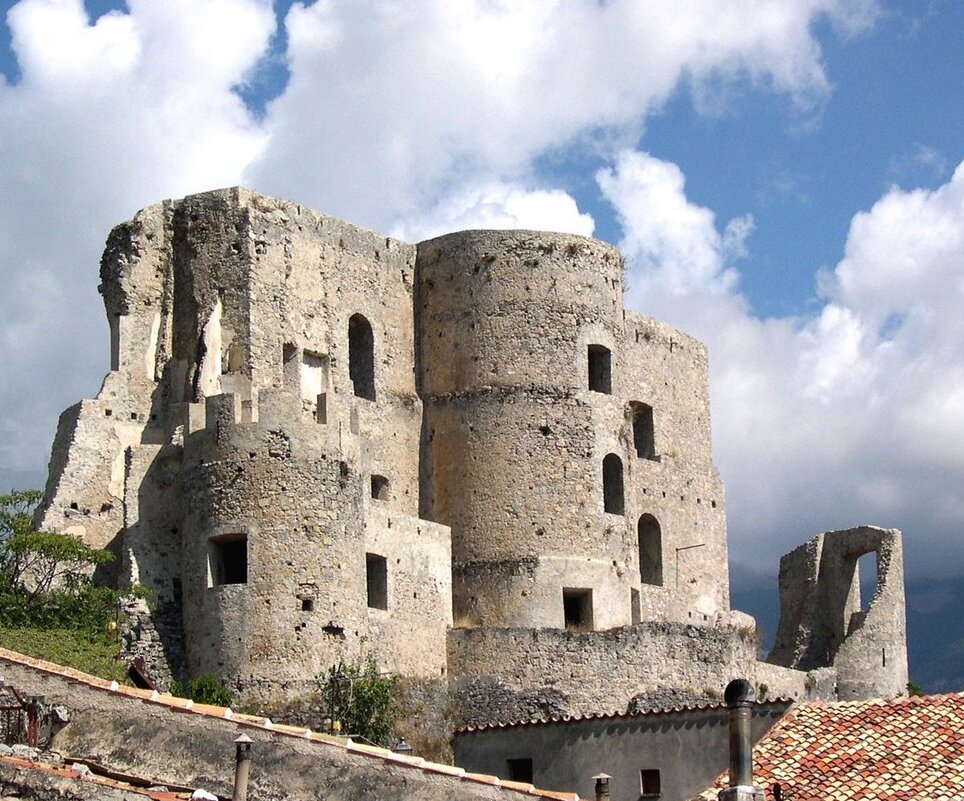

Perched on a rocky outcrop in the heart of Calabria, the Norman/Swabian Castle of Morano Calabro is a striking testament to Italy's medieval past. Built in 1064 by Robert Guiscard, a key figure in the Norman conquest of southern Italy, the castle stands on the remnants of an ancient Roman tower, embodying a rich tapestry of history that spans centuries. The structure was expanded in 1191 by Henry Halà, a general of the Swabian Emperor Henry VI, illustrating its strategic importance over the years. After a series of renovations, including a major rebuilding phase in 1500, the castle remained populated until the mid-1700s, when it began to fall into disrepair due to the decline of feudalism. Its decline continued with multiple plundering incidents, leading to its abandonment and partial destruction. By 1910, it had undergone archaeological excavations, transforming its subterranean sections into a municipal aqueduct, a role that continued for decades.
Today, the castle's striking Romanesque and Gothic features, evident in its sturdy stone walls and arched windows, invite visitors to explore its storied past. The recent restoration has unveiled a large multi-purpose hall, which serves as a venue for cultural events, bridging the gap between history and contemporary life.
The local culture surrounding Morano Calabro is vibrant, steeped in traditions that date back to medieval times. The Feast of St. Nicholas, celebrated on December 6th, is a highlight of the year, featuring a lively procession and traditional music that echoes through the narrow, cobblestone streets. Additionally, the Cervia Festival, held in August, showcases local craftsmanship, food, and folklore, giving visitors a taste of the region’s unique heritage.
Culinary delights await those who venture to this charming village. Morano Calabro is known for its 'nduja, a spicy spreadable salami that embodies the essence of Calabrian flavors. Another local specialty is the Pasta alla Moranese, a traditional dish made with homemade pasta and a rich tomato sauce, often accompanied by the region's excellent wines, such as Gaglioppo and Greco di Bianco. These culinary experiences are deeply intertwined with the local culture, making dining a celebration of Morano's heritage.
While exploring the castle and its surroundings, keep an eye out for lesser-known curiosities that enrich the experience. For instance, the castle's walls are adorned with unique carvings and inscriptions that tell stories of past inhabitants and significant events. Additionally, the panoramic views from the castle provide breathtaking vistas of the Pollino National Park, making it a photographer's paradise.
The best time to visit the Norman/Swabian Castle of Morano Calabro is during the spring and early autumn months when the weather is mild and the surrounding landscapes are in full bloom. Be sure to wear comfortable shoes for wandering through the quaint streets and climbing the castle's steep paths. Don’t miss the chance to interact with the locals, who are often eager to share stories and insights about their beloved town.
In conclusion, this historical gem not only offers a glimpse into Italy's medieval past but also embodies the rich culture and vibrant traditions of Calabria. For a truly personalized experience, consider using the Secret World app to plan your itinerary around Morano Calabro.


