
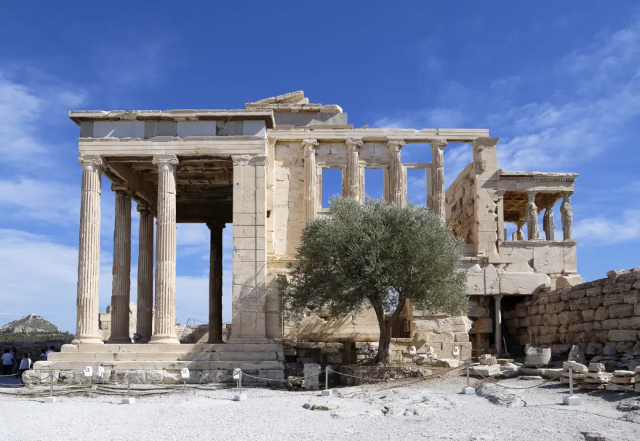

The Olive Tree of the Acropolis is more than just a tree; it's a living chronicle of Athens' ancient and modern history. Rooted in legend and nurtured by faith, this olive tree stands as a symbol of wisdom, peace, and prosperity, characteristics attributed to the goddess Athena herself.
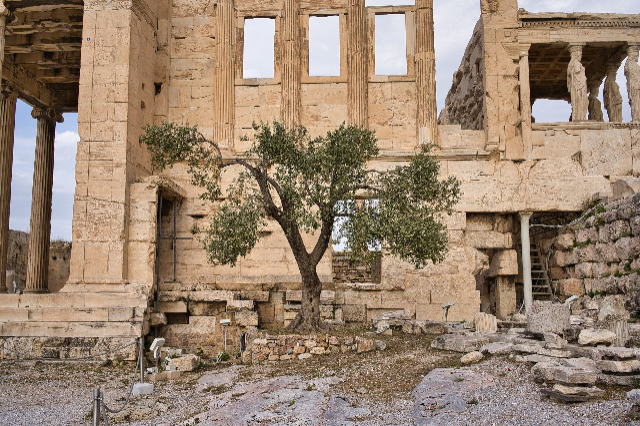
According to myth, the olive tree was Athena's divine gift in her contest with Poseidon for the favor of the Athenians. While Poseidon gave them a salt spring by striking his trident into the ground, Athena offered something far more sustaining—an olive tree. The Athenians chose Athena's gift, and thus she became the city's patron deity. To this day, an olive tree stands where the original is said to have been planted, making it a spiritual and cultural landmark.
Over the millennia, the tree has endured various trials. When the Persians burned Athens in 480 B.C., a new shoot was said to have sprouted from its charred stump on the same day, and its seeds were replanted across Attika. During World War II, the tree suffered at the hands of occupying German forces but was saved by the American School of Archaeology. In 1952, a cutting from that rescued branch was replanted by Queen Sophia of Spain (then Princess Sophia of Greece), ensuring the tree's lineage continued.
Nowadays, you can find the tree on the north side of the Acropolis, adjacent to the ancient temple of Erechtheion. It remains a poignant reminder of the city's resilience and the enduring nature of its myths.
Before visiting, be sure to check the Acropolis' opening hours and ticket information on official or tourist websites. As the Acropolis is located on an elevated terrain, prepare for a bit of a climb, including steep steps, to reach this storied olive tree and the other historical treasures that surround it.


