
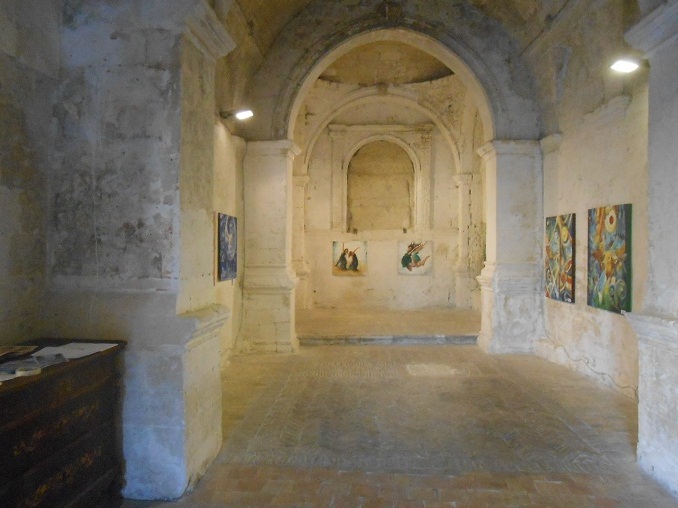

Nestled within the enchanting Sassi of Matera, the rock church of Santa Maria de Armenis stands as a testament to the city’s rich historical tapestry. Founded in the 11th century, this sacred site was established by Armenian Benedictine monks, making it one of the earliest religious edifices in the region. It holds significant historical importance, having been visited by Pope Urban II in 1093 during a turbulent period characterized by the presence of an antipope in Rome.
The architecture of Santa Maria de Armenis is a captivating blend of late Romanesque style, evident in its three-lobed portal and the beautifully crafted façade that greets visitors. This entrance leads into an inner courtyard, offering a glimpse of the rooms that once served the monastic community. Inside the church, one can admire the intricate architectural reliefs that adorn the crypt, showcasing the artistic craftsmanship of the era. The entrance is graced by a round arch, proudly displaying an engraving in Latin that reads “S.Maria De Armeniis.”
The church's cultural significance is deeply intertwined with the traditions of Matera. Local customs often reflect the Benedictine way of life, with annual festivals celebrating both the church and the broader community. The Feast of Santa Maria de Armenis, typically held in early September, draws locals and visitors alike, featuring processions, traditional music, and the sharing of local delicacies.
Speaking of gastronomy, Matera is renowned for its unique culinary offerings, many of which have roots in the area’s agrarian past. Visitors should not miss the opportunity to savor pane di Matera, a rustic bread made from ancient grains, alongside hearty local dishes such as cialledda (a bread salad) and peperoni cruschi (crispy fried peppers). Pair these dishes with a glass of Aglianico del Vulture, a robust red wine that perfectly complements the region's rich flavors.
While many tourists flock to the more popular sites in Matera, the rock church of Santa Maria de Armenis offers hidden treasures often overlooked. One lesser-known fact is that the church's crypt houses a series of frescoes that date back to its founding, illustrating scenes from the life of Christ and the Virgin Mary. These artworks not only provide a glimpse into the spiritual life of the community but also showcase the artistic evolution that occurred over the centuries.
For those planning a visit, the best time to explore Matera and the Santa Maria de Armenis church is during the spring (April to June) and fall (September to October) months. The weather is mild, and the landscape is vibrant, making it ideal for wandering through the ancient streets. Make sure to arrive early in the morning or later in the afternoon to avoid the crowds and experience the serene atmosphere of this historic site.
Visitors should also take note of the local artisans who sell their crafts in the vicinity. From handwoven baskets to pottery that echoes the earth tones of the Sassi, these creations reflect the enduring spirit of Matera’s culture.
In conclusion, the rock church of Santa Maria de Armenis is not just a place of worship but a cornerstone of Matera’s cultural and historical identity. As you plan your journey to this remarkable destination, consider using the Secret World app to create a personalized itinerary that will help you uncover the rich tapestry of Matera’s past and present.


