
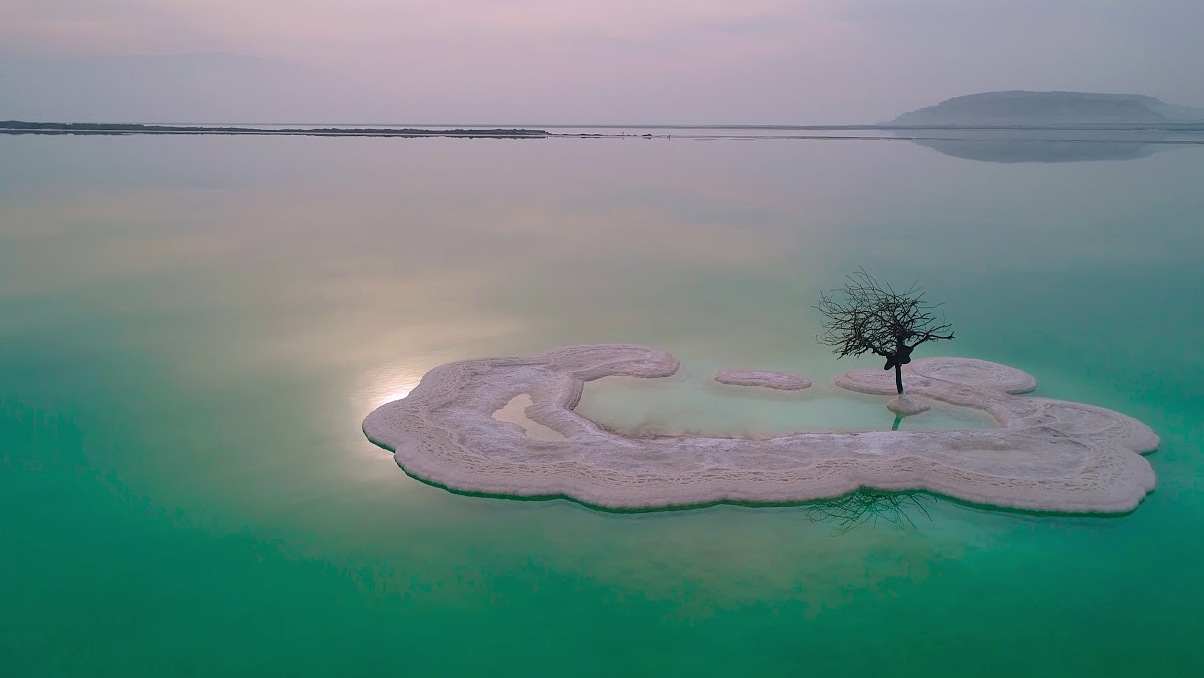

In the heart of the Dead Sea, a remarkable spectacle awaits those adventurous enough to seek it out—the salt island, gleaming under the sun like a gem amidst the shimmering waters. Here, the vivid contrast between the dazzling white salt and the turquoise sea creates a surreal landscape that feels almost otherworldly. This small island, located 300 meters offshore and 415 meters below sea level, serves as a poignant reminder of the ecological changes affecting one of the world's most unique bodies of water.
The Dead Sea has a rich history that dates back thousands of years. It is mentioned in ancient texts, including the Bible, where it is referred to as the "Salt Sea." The region has been significant for its mineral-rich waters, believed to have therapeutic properties since antiquity. Herod the Great established a palace and spa there, taking advantage of the mineral-laden waters for both health and luxury. Over the centuries, the area has been a refuge for various communities, from the Essenes—a Jewish sect that lived in the nearby caves and produced the Dead Sea Scrolls—to various Bedouin tribes.
The salt island itself is a striking feature of the Dead Sea ecosystem. Its formation is a testament to the extreme salinity of the water, which is over ten times saltier than most oceans. While the island is devoid of life due to the harsh conditions, it serves as a canvas for artistic expression. The solitary tree planted in the center of the island is not a product of nature but an art installation by local artist Sivan Magazanik. This piece symbolizes the ongoing ecological crisis, as the Dead Sea shrinks due to water diversion and climate change.
Visitors to the island can experience a blend of art and nature. The tree stands as a stark contrast to the salt formations, inviting contemplation about the fragility of life in such a harsh environment. The artist paddles to the island regularly, nurturing the tree with mineral-rich mud, creating an ongoing dialogue between art and nature—a reminder of both the beauty and tragedy of the Dead Sea.
Local culture around the Dead Sea is steeped in rich traditions. The nearby town of Neve Zohar offers insights into modern Israeli life, yet the historical significance of the area cannot be overlooked. Festivals celebrating the region's unique geology and culture occur throughout the year, with events focusing on wellness and ecological awareness. The Dead Sea has long been a hub for those seeking healing through its mineral-laden waters, and this tradition continues with wellness retreats and spas dotting the coastline.
As for gastronomy, the region offers a unique culinary experience. Dishes often showcase local ingredients, including fresh vegetables, fish from the Jordan River, and a variety of herbs. Zaatar, a popular spice blend made from thyme, oregano, and sesame seeds, is commonly used in local dishes. Visitors can enjoy traditional meals in local eateries, where the flavors of the land come to life. Freshly caught fish, grilled and seasoned with herbs, paired with local bread and olive oil, create a delightful dining experience.
For those who delve deeper into the region, there are numerous lesser-known curiosities to uncover. One fascinating detail is that the mineral content of the Dead Sea allows visitors to float effortlessly, creating a surreal experience that many describe as "defying gravity." Moreover, the area around the Dead Sea is home to some of the oldest known archaeological sites, including the ruins of Qumran, where the Dead Sea Scrolls were discovered.
For practical visitors' information, the best time to visit the Dead Sea is during the spring (March to May) or fall (September to November) when temperatures are milder and more comfortable for outdoor activities. Be prepared for a challenging swim to the salt island, as it takes about 20 minutes from Neve Zohar beach. Wearing water shoes is advisable to protect your feet from sharp salt crystals, and don’t forget to bring ample water to stay hydrated.
Exploring the salt island of the Dead Sea is not just a journey to a stunning natural wonder; it’s an invitation to reflect on the delicate balance between art, nature, and human impact. Each visit offers a new perspective on the beauty and fragility of this unique environment.
To make the most of your visit, consider using the Secret World app to create a personalized itinerary that fits your interests and needs.


