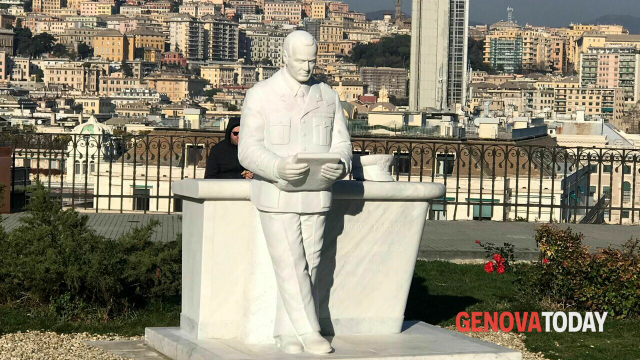
The Cappuccine Walls, belonging to the "Miage de Zena" (walls of Genoa), were built beginning in 1546 under the direction of Milanese architect Giovanni Maria Olgiati. These new ramparts were necessary because the old fourteenth-century walls were unable to withstand the attack of an enemy army equipped with firearms. The walls were named after the large convent where the Capuchin Poor Clare nuns lived in the Carignano area for centuries, which they had to leave in 1880 for the construction of Galliera Hospital. For many years, the area was abandoned until the City of Genoa recently carried out a major restoration, which allowed the aesthetic recovery of the patrol path that extends from the Capuchin walls to the Prato walls. This area has been transformed into a pleasant promenade, with two belvederes provided with picnic spaces with stone benches and tables, benches for relaxation, and panoramic views of the mountains surrounding the city as seen from the mouth of the Bisagno stream. While many Genovese have enthusiastically welcomed the restoration of this area, there has been some controversy over the location of the statue of Giorgio Parodi, one of the co-founders of the Moto Guzzi motorcycle company, placed in one of the flower beds along the walls. Giorgio Parodi, in addition to being an entrepreneur, was also a valiant aviator pilot in World War I. However, the depiction of Parodi in sculptor Ettore Gambioli's fascist aviator uniform has sparked some controversy since Italy was a fascist regime for two decades, and many people prefer to forget that period. However, some argue that it is important to remember both the bad and the good in our history. As Primo Levi said, "Those who forget their past are condemned to relive it."