
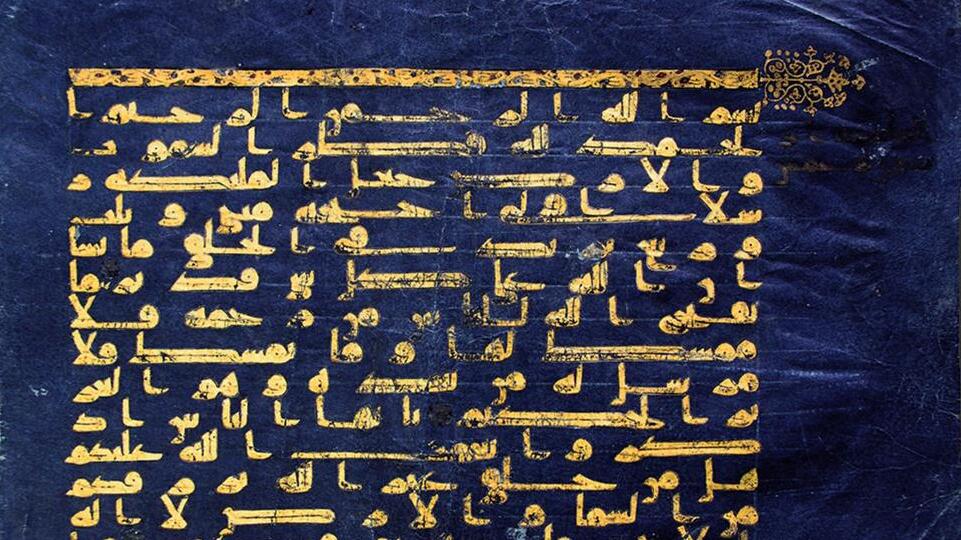

In the heart of Tunis, the capital of Tunisia, lies a treasure that speaks volumes about the rich tapestry of Islamic art and history: the Blue Quran. This exquisite manuscript, revered as one of the most beautiful Qurans in existence, invites visitors to delve into its fascinating history and artistic significance.
The Blue Quran dates back to the late 9th century to the early 10th century, with some scholars suggesting it may have been completed as late as 1020 AD. It is believed to have been commissioned for the Great Mosque of Qairawan, a pivotal center of Islamic learning and culture in Tunisia. The mosque itself, established in 670 AD, played a crucial role in the spread of Islam across North Africa. The creation of the Blue Quran highlights the cultural exchanges that occurred during this period, particularly between the Islamic world and the Christian Byzantine Empire, whose elaborate official documents likely inspired the manuscript's unique design.
Crafted on vellum dyed in a deep indigo hue, the pages of the Blue Quran are adorned with text written in gold ink, creating a striking visual contrast that captures the eye and the imagination. This artistic choice not only showcases the skill of the artisans but also reflects the wealth and status associated with the commission. The manuscript serves as a testament to the blending of cultures and the high regard for calligraphy and ornamentation in Islamic art.
The Bardo National Museum in Tunis, housing a significant portion of the manuscript, stands as a guardian of this cultural heritage. Here, visitors can witness the intricate details and craftsmanship of the Blue Quran, alongside other remarkable artifacts that narrate the story of Tunisia's diverse history. Additionally, 67 folios reside in the Musée de la Civilisation et des Arts Islamiques in Raqqada, while a single folio is held at the Los Angeles County Museum of Art in California, USA. The global presence of the Blue Quran underscores its importance not just to Tunisia, but to the world.
Exploring Tunisia is not only about the visual splendor of its art; the local culture and traditions are equally captivating. The people of Tunisia celebrate a variety of festivals, reflecting their deep-rooted Islamic customs and traditions. One of the most significant is Eid al-Fitr, marking the end of Ramadan, during which families come together to share meals and give gifts. The atmosphere is vibrant, filled with traditional music, dance, and the preparation of special dishes.
Speaking of dishes, Tunisian gastronomy is a delightful fusion of flavors, influenced by Mediterranean, Berber, and Arab cuisines. A must-try is couscous, often served with a meat stew and vegetables, showcasing the country's agricultural bounty. Another local specialty is brik, a thin pastry filled with egg, tuna, or meat, and deep-fried to golden perfection. To wash it down, indulge in a refreshing glass of mint tea, a staple in Tunisian hospitality.
Beyond the well-trodden paths, there are lesser-known curiosities about the Blue Quran and its surroundings that many tourists may overlook. For instance, the manuscript is not only an art piece but also a symbol of the intellectual legacy of the Fatimid Caliphate, during which it was created. Furthermore, some scholars believe that the unique blue color of the vellum may have been chosen for its spiritual significance, representing tranquility and divine wisdom.
As for practical visitor information, the best time to explore Tunisia is during the spring (April to June) and autumn (September to November) when the weather is mild and conducive to outdoor activities. When visiting the Bardo National Museum, be sure to allocate sufficient time to fully appreciate the myriad of artifacts and exhibitions. Guided tours can enhance your understanding of the complex history behind the exhibits, including the Blue Quran.
In conclusion, the Blue Quran is not just a manuscript but a portal into the rich history, art, and culture of Tunisia. Its intricate beauty and profound significance offer a glimpse into the past, reminding us of the interconnectedness of civilizations. As you plan your journey, consider using the Secret World app to create a personalized itinerary that captures the essence of this enchanting destination.


