

Descending the steps that lead to the tomb of Ramses VI means crossing three thousand years in a few seconds. The walls close around you, covered in golden hieroglyphs and cosmological scenes that tell the journey of the sun through the realm of the dead. The air is dry, almost still, and the artificial lighting casts shadows on the figures of the gods as if they were painted yesterday. This is the moment when the Valley of the Kings stops being a historical concept and becomes something physically real.
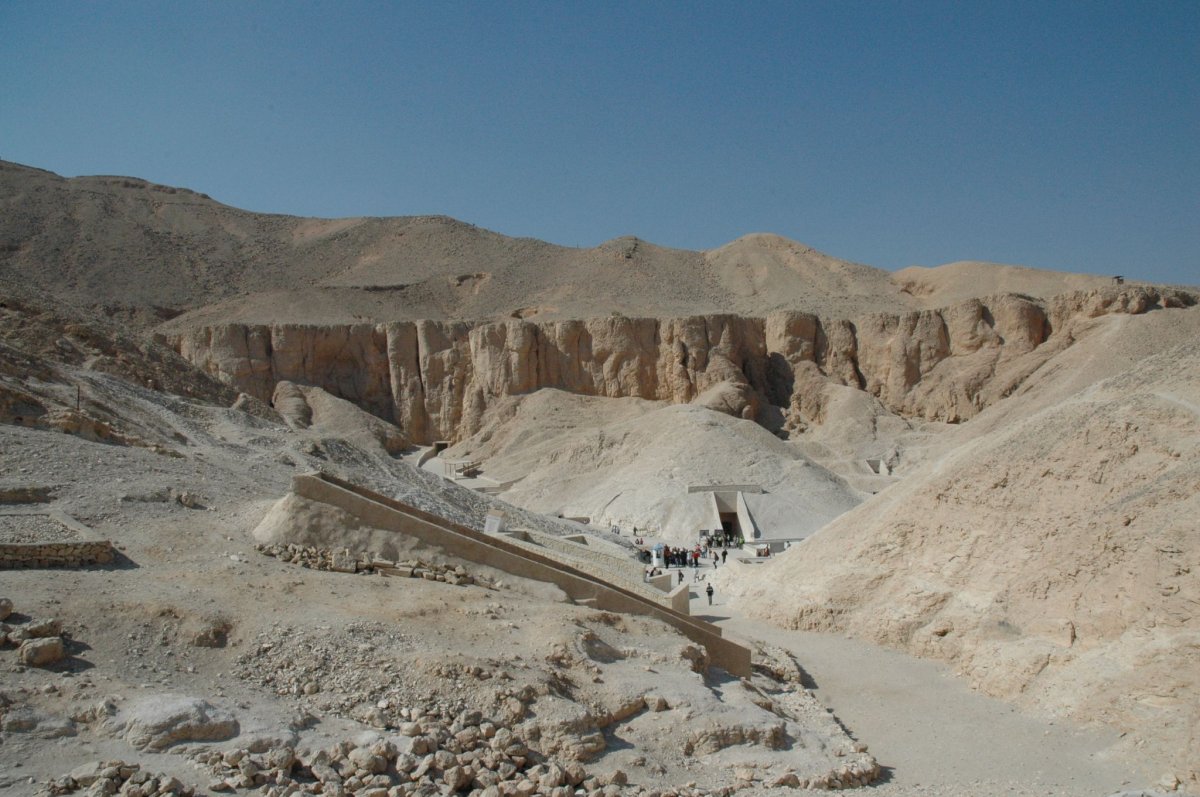
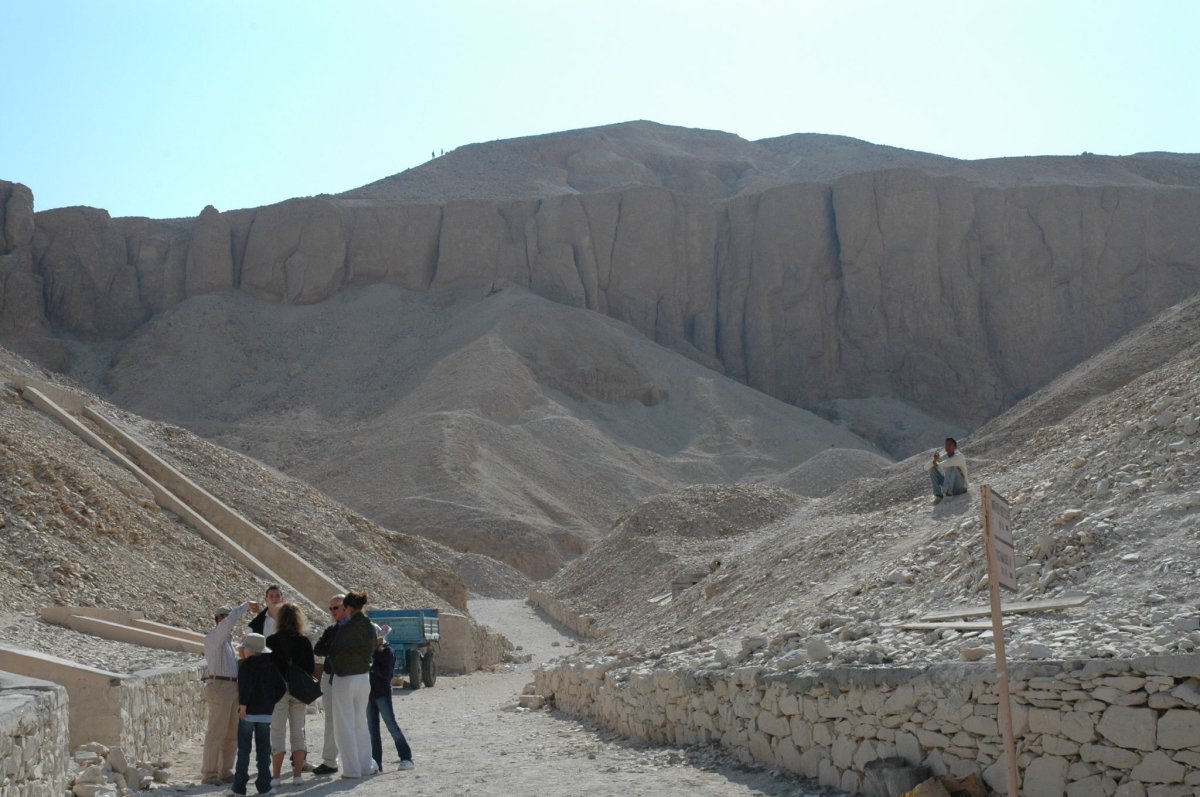
Located on the western bank of the Nile, opposite modern Luxor, the Valley of the Kings was the main burial place of the pharaohs of the Egyptian New Kingdom, a period that roughly spans from 1550 to 1070 BC. During this time frame, about five centuries, more than sixty tombs were carved into the limestone of the Theban hills, many of which were intended for the rulers of the XVIII, XIX, and XX dynasties. These are not pyramids visible from the outside: all the grandeur is hidden underground, protected by the mountain itself.
The story that changed modern archaeology
The name that resonates most strongly in this place is that of Tutankhamun, the young pharaoh of the XVIII dynasty who died around 1323 BC. His tomb, cataloged as KV62, was discovered on November 4, 1922, by the British Egyptologist Howard Carter, who was working under the patronage of Lord Carnarvon. It was the only royal tomb found almost intact, with the funerary goods still in place. The famous golden mask of Tutankhamun, now housed in the Egyptian Museum in Cairo, comes from this site. The tomb itself, relatively small compared to others in the valley, is open to visitors but now contains few original elements.
Far more spectacular from a decorative point of view is the tomb of Seti I (KV17), father of Ramses II, discovered in 1817 by the Italian explorer Giovanni Battista Belzoni. With over 130 meters in length, it is one of the largest and best-preserved in the entire valley. Its painted reliefs, which illustrate the texts of the Amduat and the Book of the Dead, are considered among the masterpieces of Egyptian art. Access to this tomb requires a separate and additional ticket compared to the standard entrance.
What to see concretely on site
The basic ticket for the Valley of the Kings includes access to three tombs of your choice among those open to the public at that time, out of a total that varies but is around twenty visitable tombs. Some tombs of particular significance — such as those of Tutankhamun, Seti I, or Ramses V and VI — require additional fees that can range from 100 to 300 Egyptian pounds, depending on the period and local tariff variations.
What physically strikes is the variety of decorations: each tomb reflects the taste and resources of the pharaoh who commissioned it. In the tomb of Ramses III (KV11), for example, there are scenes of daily life and musicians painted in the side corridors, an unusual detail compared to the dominant cosmological repertoire. The colors — ochre, Egyptian blue, chalky white — still resist with surprising vibrancy despite the millennia.
How to Organize the Visit Effectively
The best time to visit the Valley of the Kings is early in the morning, ideally at opening time around 6:00 AM. Afternoon summer temperatures exceed 40 degrees Celsius, and the smaller tombs become suffocating with the accumulation of visitors. Bringing water is essential: there are refreshment points within the site, but prices are high. The average visit takes between two and three hours, considering the movements between the tombs and the queues at the entrances.
To reach the Valley of the Kings from the east bank of Luxor, the most convenient solution is the local ferry that crosses the Nile to the west bank, followed by a taxi or tuk-tuk service to the site entrance. Alternatively, many hotels organize guided tours that include transportation. It is strongly recommended to avoid visits on Egyptian holidays or during peak winter tourism, when organized groups make it difficult to linger in the tombs with the necessary calm.
The broader context of the Theban necropolis
The Valley of the Kings is not an isolated site but is part of a much larger funerary system that includes the Valley of the Queens, where Nefertari, the wife of Ramses II, was buried, and the tombs of the nobles of Sheik Abd el-Qurna. The mortuary temple of Hatshepsut at Deir el-Bahari, reachable in a few minutes from the main entrance of the valley, completes an itinerary that spans centuries of Egyptian history within a limited geographical range. Dedicating at least two full days to the west bank of Luxor is the most sensible choice for those who want to understand the extent of this funerary landscape without rushing.


