
← Back

Vernaccia di San Gimignano

San Gimignano SI, Italia ★★★★☆ 334 views
Monique Bell
San Gimignano SI
🏆 AI Trip Planner 2026

Get the free app

Discover the best of San Gimignano SI with Secret World — the AI trip planner with 1M+ destinations. Get personalized itineraries, hidden gems and local tips. Free on iOS & Android.

🧠 AI Itineraries 🎒 Trip Toolkit 🎮 KnowWhere Game 🎧 Audio Guides 📹 Videos
Scan to download iOS / Android
Scan for AppGallery Huawei users

About Vernaccia di San Gimignano

Vernaccia di San Gimignano - San Gimignano SI | Secret World Trip Planner

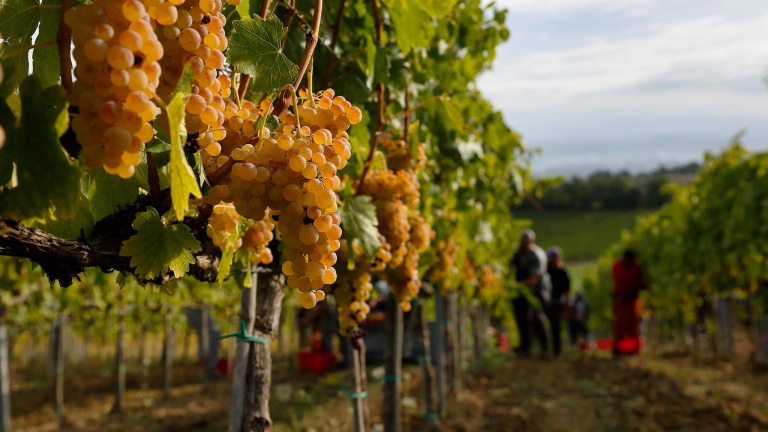
Vernaccia di San Gimignano is considered one of the oldest wines in all of Italy. It is produced from the grapes of the native vine of the same name, typical of this area located in the Sienese hills. The history of this white wine is closely linked to the origins of the town of San Gimignano, a village that saw its heyday in medieval times.

Historians believe that the Vernaccia grape variety was brought to Tuscan soil from Liguria around the 13th century; however, the origins are obscure and will probably always remain shrouded in mystery. From an etymological point of view, the name of the vine most likely derives from the Latin word vernaculum, meaning "local."

The very first written references to Vernaccia date from around 1200; in particular, a document dated 1276 contains a description of a tax of "three soldi" levied on wine sold outside the territory of San Gimignano.

The wine's fame had evidently crossed the borders of the municipality, and written mentions multiply in the documents of the following centuries, from 1300 to 1600. As evidence of the wide appreciation for this wine, suffice it to say that even Dante Alighieri mentions it in his Divine Comedy:

"These," and he showed with his finger, "is Bonagiunta, Bonagiunta da Lucca; and that face Beyond him more than the others quilted Had the Holy Church in his arms: From the Torso was, and purges by fasting The eels of Bolsena and the Vernaccia." (Divine Comedy, Purgatory, Canto XXIV) Vernaccia di San Gimignano holds a small but significant record, having been the first Italian wine to receive DOC status. The crowning achievement was finally followed, in 1993, by the recognition of the prestigious DOCG (Denominazione di Origine Controllata e Garantita).

According to data for 2009, Vernaccia di San Gimignano is produced on an area of nearly 770 hectares located at altitudes between 250 and 400 meters above sea level; there are as many as 177 Vernaccia producers, who in 2009 harvested 5,500 tons of grapes for a total of 3.8 million liters of wine. A total of more than 5 million bottles were produced.

About 60 percent of the wine produced is destined for Italian consumption, although a good portion (about 20 percent of the total) remains in the San Gimignano area. The remaining 40% of production is sold on foreign markets, and the two main buyers are Germany and the United States (40% and 35% of exports, respectively); followed by Japan, Great Britain

🗺 AI Trip Planner 2026

Plan your visit to San Gimignano SI

Suggested itinerary near Vernaccia di San Gimignano

MAJ+
500.000+ travelers worldwide
  1. 🌅
    Morning
    Vernaccia di San Gimignano
    📍 San Gimignano SI
  2. ☀️
    Afternoon
    Tuscany | San Gimignano
    📍 0.5 km · San Gimignano SI
  3. 🌆
    Evening
    San Gimignano: The Polo Museale di Santa Chiara
    📍 0.7 km · San Gimignano SI

Buy Unique Travel Experiences

Powered by Viator

See more on Viator.com

Explore nearby · San Gimignano SI

Frequently Asked Questions

Vernaccia di San Gimignano is one of Italy's oldest wines and holds the distinction of being the first Italian wine to receive DOC status, followed by DOCG recognition in 1993. The wine's history dates back to around 1200, and it was even mentioned by Dante Alighieri in his Divine Comedy, proving its widespread fame and appreciation across medieval Italy.
Historians believe the Vernaccia grape variety was brought to Tuscany from Liguria around the 13th century, though the exact origins remain unclear. The name itself likely derives from the Latin word 'vernaculum,' meaning 'local,' reflecting its significance to the San Gimignano region.
As of 2009, there were 177 Vernaccia producers in San Gimignano, cultivating nearly 770 hectares of vineyards at altitudes between 250 and 400 meters above sea level. This demonstrates the wine's substantial importance to the local economy and the region's wine industry.
The very first written references to Vernaccia date from around 1200, with a specific document from 1276 describing a tax of 'three soldi' levied on wine sold outside San Gimignano's territory. This early taxation record proves the wine's commercial importance and its popularity beyond the local area.
San Gimignano, located in the Sienese hills of Tuscany, became renowned for its native Vernaccia grape variety, which thrived in the region's medieval times and continued to grow in reputation through the 13th-16th centuries. The town's heyday during the Middle Ages coincided with the wine's rising fame, as documented references to Vernaccia multiplied throughout this period.