
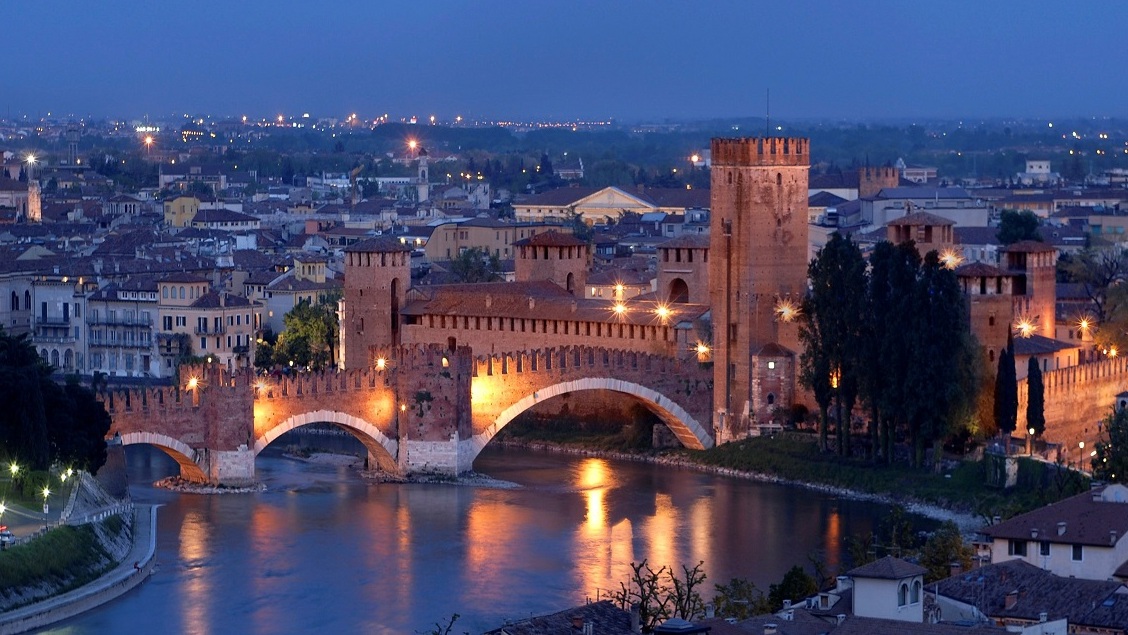

In the heart of Verona, the majestic Castelvecchio stands as a testament to the city’s turbulent past and artistic brilliance. This fortress, built in the mid-14th century, offers visitors a unique glimpse into both the architectural ingenuity of the era and the cultural richness of the region.
History and Origins
Constructed between 1354 and 1376 under the orders of Cangrande II della Scala, the castle served a dual purpose. While it was designed to protect against external threats, it primarily functioned as a stronghold for Cangrande himself, who ruled Verona with an iron fist. His reign, from 1351 to 1359, was marked by opulence for his family while the common people faced poverty. The castle’s imposing walls and towers symbolized his power and served as a physical reminder of his authority over the city.

Over the centuries, Castelvecchio has witnessed numerous historical events, including the struggles of the Scaliger family and the city’s eventual annexation by the Austrian Empire in the 18th century. Today, it stands not only as a fortress but as a cultural landmark, housing the Civic Museum since its reopening in 1964 after extensive renovations led by the renowned architect Carlo Scarpa.
Art and Architecture
The architectural style of Castelvecchio is a striking blend of Gothic and Renaissance elements. Its sturdy stone walls, battlements, and elegant arches encapsulate the defensive yet sophisticated nature of 14th-century military architecture. The Ronda walkway offers breathtaking views of the Adige River and the surrounding hills, allowing visitors to appreciate both the natural and constructed beauty of Verona.
Inside, the Civic Museum hosts an impressive collection of artworks that spans several centuries. Visitors can admire Romanesque sculptures, Gothic altarpieces, and Baroque paintings, showcasing the evolution of style and technique through the ages. Notable pieces include works by artists such as Pisanello and Mantegna, which highlight Verona’s significance as a hub of artistic innovation during the Renaissance.
Local Culture and Traditions
Verona is steeped in rich traditions and vibrant cultural practices. The city is famously associated with Shakespeare’s Romeo and Juliet, and every year, thousands of visitors flock to the Juliet’s House to partake in this romantic legacy. The Verona Opera Festival, held in the ancient Arena, is another highlight, drawing opera lovers from around the globe to enjoy stunning performances in a historical setting.
Cultural events flourish throughout the year, including the Verona Jazz Festival and the Christmas Market, which transforms the city into a winter wonderland. These festivities allow visitors to experience the local customs, music, and arts that define the Veronese spirit.
Gastronomy
No visit to Verona would be complete without indulging in its culinary delights. The region is known for its rich flavors and traditional dishes. Risotto all'Amarone, made with the famous local wine, is a must-try, as is Pastissada de caval, a slow-cooked horse meat stew that captures the essence of local cuisine.
Pair your meal with a glass of Valpolicella or Soave, both of which are produced in the nearby vineyards. For dessert, don’t miss out on Pandoro, a sweet bread traditionally enjoyed during the holidays, which reflects the city’s baking heritage.
Lesser-known Curiosities
While many tourists flock to the well-trodden paths, several hidden gems within Castelvecchio remain under the radar. For example, the garden at the entrance is a serene escape, designed to harmonize with the castle's architecture and the urban landscape. Here, visitors can explore decorative pools and manicured hedges that provide a peaceful contrast to the fortress's imposing structure.
Additionally, the Castelvecchio Bridge, a masterpiece of medieval engineering, was once the main access point to the castle. Its unique design, featuring pointed arches and a robust structure, offers a stunning viewpoint of the Adige River and the cityscape beyond.
Practical Visitor Information
To fully appreciate Castelvecchio and the Civic Museum, plan for at least two hours. The best time to visit is during the shoulder seasons of spring and fall, when the weather is pleasant and the crowds are thinner. Early mornings or late afternoons provide a quieter experience, allowing you to soak in the history and art without the rush.
As you explore, be sure to look for the hidden nooks and crannies within the museum, which often feature temporary exhibitions that highlight lesser-known aspects of Veronese culture and history.
For a personalized experience that captures the essence of this enchanting city, consider using the Secret World app to craft your ideal itinerary.


