
← Back

Villa Duchess of Galliera

Vico Nicolò da Corte, 2, 16158 Genova GE, Italia ★★★★☆ 274 views
Simona Illy
Genova
🏆 AI Trip Planner 2026

Get the free app

Discover the best of Genova with Secret World — the AI trip planner with 1M+ destinations. Get personalized itineraries, hidden gems and local tips. Free on iOS & Android.

🧠 AI Itineraries 🎒 Trip Toolkit 🎮 KnowWhere Game 🎧 Audio Guides 📹 Videos
Download on the App Store Get it on Google Play
Scan to download Scan to download

Palaces, Villas and Castles · Genova

Villa Duchess of Galliera - Genova | Secret World Trip Planner

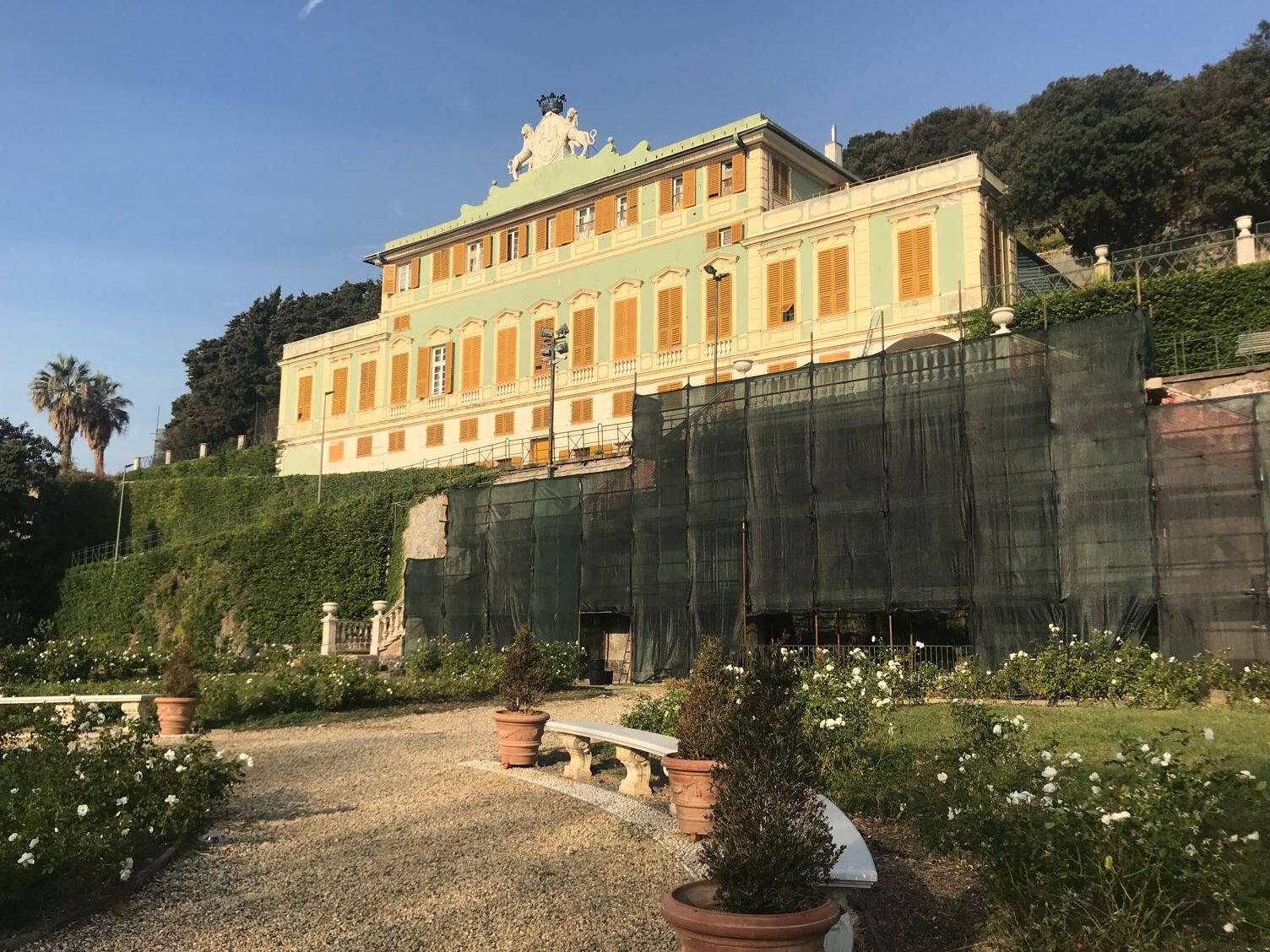
The building, built in neoclassical style by cleverly exploiting the slopes of the hill, stands at the foot of the hill of Castellara in Voltri. A large marble coat of arms of the Brignole Sale family (a noble shield with two lions rampant on its sides) dominates the central part of the villa. The monumental villa is famous for its rococo decoration, made with incrustations of polychrome shells and sea pebbles. The Sala delle Conchiglie (Shell Room) and the small neoclassical theatre, in which the artist Giuseppe Canepa from Voltura worked, are of particular artistic interest. At the back of the building there is the winter garden with a suggestive nymphaeum cave with decorative sculpture. The two eighteenth-century statues depicting Bacchus and David are today transferred to the Museum of Sant'Agostino in Genoa. The name of the Villa "Duchessa di Galliera" comes from the last noble owner. In reality, according to the will of the Duchess, the name of this place should have been "Brignole-Sale", the name of the family that had owned it for so many centuries. The purchase of the villa, then called "il Paraxo", by Gio Francesco Brignole Sale dates back to 1675. From that moment on, the Brignole Sale family had the palace enlarged and the park embellished. At the end of the nineteenth century, Villa Brignole Sale reaches splendor and international fame and sees popes and royalty as guests. Duchess Maria had a particular fondness for the villa and, around 1876, had it enlarged by Luigi Rovelli. The surrounding park of 32 hectares has a mountain aspect, with groves of holm oaks and pines, grassy glades and a fauna of fallow deer, Maltese goats and peacocks: a splendid example of an English garden enriched with romantic and classical elements then in vogue. On the death of the Duchess (Paris, 9 December 1888), the Opera Pia Brignole Sale inherited the entire complex, but finding itself in serious financial difficulty, began negotiations with the Voltri Town Council to sell the site. In 1931 the Villa was rented to the Municipality of Genoa, which in the meantime had incorporated that of Voltri. Thanks to the financing obtained on the occasion of the Columbus celebrations in 1992, it underwent many interventions among which the restructuring of the artistic outbuildings (Café, Castle and Dairy), the restoration of some water games and the setting up of a gymnastic course.
Villa Duchess of Galliera - Genova | Secret World Trip Planner
🗺 AI Trip Planner

Plan your visit to Genova

Suggested itinerary near Villa Duchess of Galliera

MAJ+
500.000+ travelers worldwide
  1. 🌅
    Morning
    Villa Duchess of Galliera
    📍 Genova
  2. ☀️
    Afternoon
    Villa and Park Sauli Pallavicino
    📍 6.2 km · Genova
  3. 🌆
    Evening
    St. Anna Golf
    📍 9.1 km · Genova

Buy Unique Travel Experiences

Powered by Viator

See more on Viator.com

Explore nearby · Genova

Frequently Asked Questions

The Sala delle Conchiglie (Shell Room) is one of the villa's most artistically significant spaces, famous for its rococo decoration made with incrustations of polychrome shells and sea pebbles. This ornate room showcases the elaborate artistic style that made the villa renowned throughout the eighteenth and nineteenth centuries.
The villa was originally purchased as 'il Paraxo' by Gio Francesco Brignole Sale in 1675, and the Brignole Sale family owned and continuously enlarged it for centuries. The neoclassical building was constructed by cleverly exploiting the slopes of the Castellara hill in Voltri, with the family's marble coat of arms dominating the central facade.
The surrounding park spans 32 hectares with an English garden style enriched with romantic and classical elements, featuring groves of holm oaks and pines, grassy glades, and wildlife including fallow deer, Maltese goats, and peacocks. At the back of the building is a particularly suggestive winter garden with a nymphaeum cave decorated with sculptural elements.
The two eighteenth-century statues depicting Bacchus and David that originally adorned the villa have been transferred to the Museum of Sant'Agostino in Genoa for preservation and public viewing. These sculptures were among the most valuable artistic pieces within the villa's collection.
The villa's name comes from its last noble owner, the Duchess Maria, though according to her will the property should have been called 'Brignole-Sale' after the family that owned it for centuries. The Duchess had the villa enlarged around 1876 by architect Luigi Rovelli before her death in Paris in 1888, after which the Opera Pia Brignole Sale inherited the complex.
