
← Back

Zunftbrunnen ( Guild fountain )

Oberamteistraße, 72764 Reutlingen, Germania ★★★★☆ 179 views
Melissa Baroni
Reutlingen
🏆 AI Trip Planner 2026

Get the free app

Discover the best of Reutlingen with Secret World — the AI trip planner with 1M+ destinations. Get personalized itineraries, hidden gems and local tips. Free on iOS & Android.

🧠 AI Itineraries 🎒 Trip Toolkit 🎮 KnowWhere Game 🎧 Audio Guides 📹 Videos
Scan to download iOS / Android
Scan for AppGallery Huawei users

About Zunftbrunnen ( Guild fountain )

Zunftbrunnen ( Guild fountain ) - Reutlingen | Secret World Trip Planner

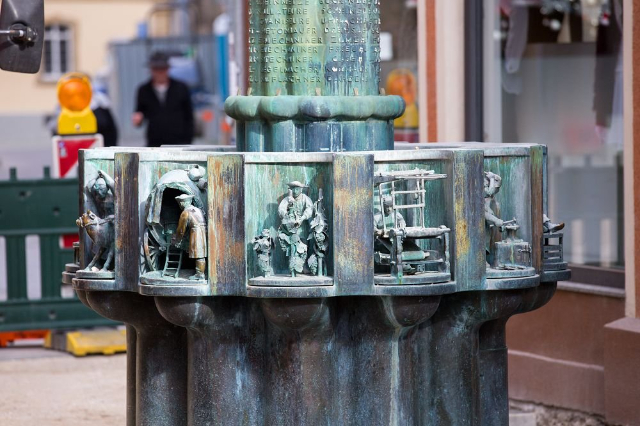
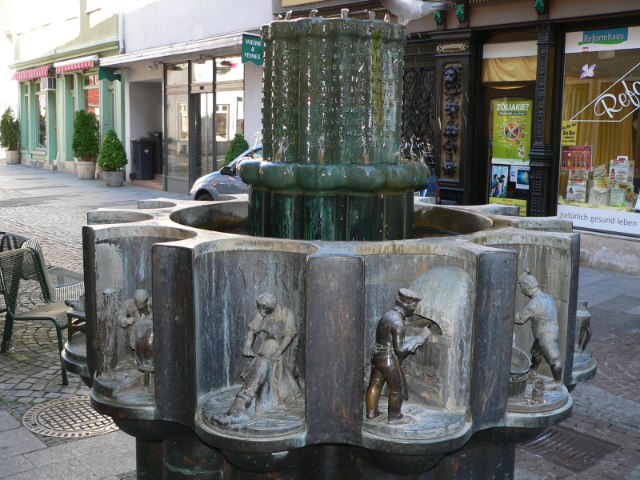
Small and beautiful fountain that you stumble across while strolling through Reutlingen. In 1983, the Aachen-born sculptor Bonifatius Stirnberg was given the task of building a fountain for the corner of Wilhelmstraße and Oberamteistraße near the portal of the Marienkirche. Its theme is the twelve imperial guilds that held economic and political power in the then free imperial city of Reutlingen from around 1500 until their dissolution in 1862. The guilds were the predecessors of today's handicraft guilds, which donated the fountain to the city.Twelve scenes are shown with bronze figures going about their typical guild activities. "On the one hand, these are professions such as bakers, butchers and wine gardeners, which are geared towards physical well-being. You can see how the baker takes the regional specialty, the Mutschel, out of the stone oven, while the butcher is just about to use the hammer to kill the beef. During the grape harvest, the vintner cuts the grapes off in order to then stow them in his Kipe, a basket made of woven willow branches on his back. Others produce materials such as leather, furs and fine woolen fabrics like the tanner, furrier and cloth maker or process them further like the tailor and the shoemaker. In the depiction of the tanner you can see how he fleshes the leather from the subcutaneous tissue and muscle tissue. In his scene, the furrier works on a skin with a small scraper, while the second man sews skins together. The weaver crouches at his handloom with a shuttle in his hand, the tailor sits cross-legged in his workshop on the table and sews a piece of clothing. A so-called tailor's bust, on which an unfinished tailcoat is hanging, can be seen in the background. In the image of the shoemaker, he is fitting a sole to the upper of the shoe. The Blacksmith and Cooper trades produce useful everyday items in the form of tools and barrels. The blacksmith can be seen in his depiction with an assistant working on a horseshoe with a hammer and tongs. The cooper, in turn, pulls a barrel hoop over the staves, next to him are washtubs and small buckets that have already been made. The Kärcher transports the goods in and on his covered wagon. His stock includes woven baskets as well as buckets and saucepans, which he is about to load. These goods are then sold by the grocer in the next town. An old cash register and scales can be seen on his counter, behind which stands a customer with a full shopping basket. Since women could not become master craftsmen in Reutlingen, the only woman depicted is a customer. As the wife of a master craftsman, however, she took care of sales, quality control, bookkeeping and looking after the apprentices and servants, among other things." (Alana Elise de Vooght)
Zunftbrunnen ( Guild fountain ) - Reutlingen | Secret World Trip Planner
🗺 AI Trip Planner 2026

Plan your visit to Reutlingen

Suggested itinerary near Zunftbrunnen ( Guild fountain )

MAJ+
500.000+ travelers worldwide
  1. 🌅
    Morning
    Zunftbrunnen ( Guild fountain )
    📍 Reutlingen
  2. ☀️
    Afternoon
    Perfect Reutlingen Itinerary with AI: Discover the City 2026
    📍 0.2 km · Reutlingen
  3. 🌆
    Evening
    Reutlingen
    📍 0.6 km · Reutlingen

Buy Unique Travel Experiences

Powered by Viator

See more on Viator.com

Explore nearby · Reutlingen

Frequently Asked Questions

The Zunftbrunnen is a decorative fountain created in 1983 by sculptor Bonifatius Stirnberg, located at the corner of Wilhelmstraße and Oberamteistraße near the Marienkirche. It commemorates the twelve imperial guilds that held economic and political power in Reutlingen from around 1500 until their dissolution in 1862, with the modern handicraft guilds donating it to the city.
The fountain is situated at the corner of Wilhelmstraße and Oberamteistraße near the portal of the Marienkirche (Mary's Church) in Reutlingen's city center. It's a small and beautiful fountain that you can discover while strolling through the historic streets of the city.
The twelve bronze figures depict the various imperial guilds and their typical activities, including professions like bakers, butchers, wine gardeners, tanners, furriers, cloth makers, tailors, shoemakers, blacksmiths, and coopers. Each detailed scene shows artisans engaged in their specific crafts, such as the baker removing Mutschel bread from a stone oven or the weaver working at a handloom.
Notable details include the butcher with his hammer preparing beef, the tanner scraping flesh from leather, the furrier sewing skins together, and the tailor sitting cross-legged with a tailor's bust displaying an unfinished tailcoat in the background. You can also spot the vintner harvesting grapes into a traditional woven willow basket called a Kipe, and the shoemaker fitting a sole to a shoe upper.
The fountain was created in 1983 by Bonifatius Stirnberg, a sculptor born in Aachen, who was commissioned to build this artistic tribute to Reutlingen's guild heritage. The modern handicraft guilds, which are the successors to the historical imperial guilds, donated the fountain to the city as a cultural monument.
