
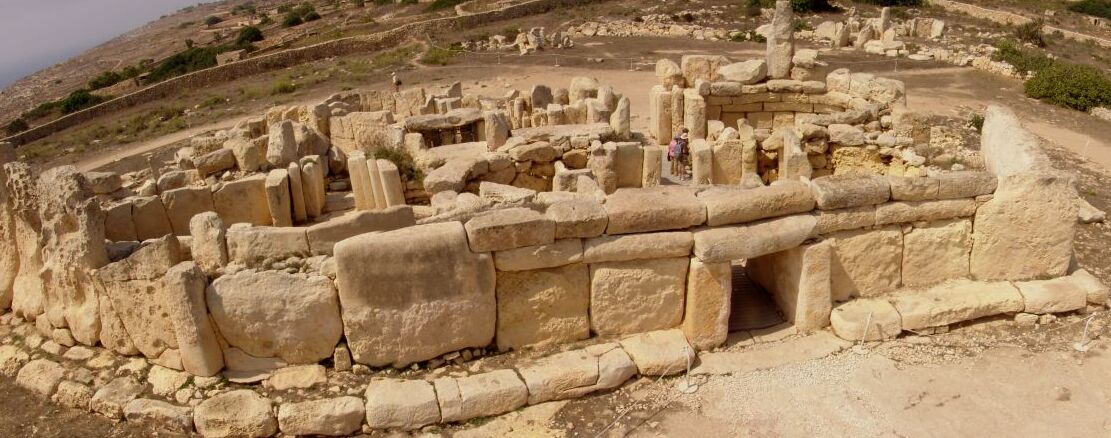

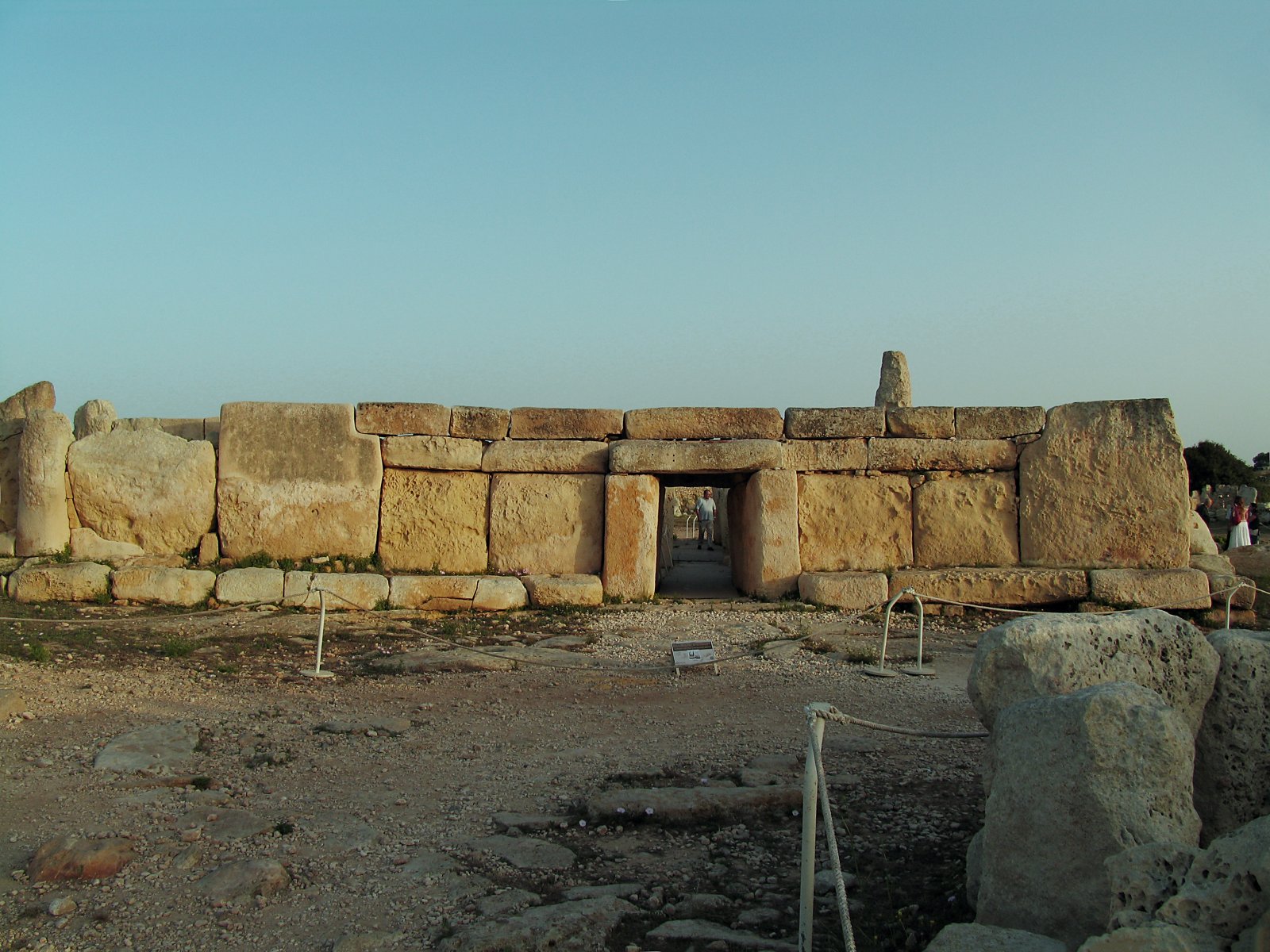
{ "title": "Ħaġar Qim: Ancient Megalithic Temple in Il-Qrendi, Malta", "description": "Nestled on the rugged cliffs of Il-Qrendi, Ħaġar Qim stands as a monumental testament to the ingenuity of Malta's prehistoric inhabitants. This ancient Megalithic Temple, dating back to approximately 3600 BCE – 3200 BCE, is one of the world's oldest free-standing structures and offers a glimpse into a civilization that thrived thousands of years ago.\n\nHistory and Origins \nThe origins of Ħaġar Qim are steeped in mystery, with its construction attributed to the Temple Period of Maltese prehistory. This era marked significant advancements in architectural techniques and social organization among the island's inhabitants. Archaeological evidence suggests that the temple was primarily used for ceremonial purposes, likely in connection with fertility rites and ancestor worship. The site was first excavated in 1839 by Captain Alexander H. M. M. D. P. A. A. M. Dezzani, revealing a trove of artifacts, including pottery and carved figurines, that shed light on the spiritual life of its people. In 1992, Ħaġar Qim was designated a UNESCO World Heritage Site, recognizing its cultural significance alongside four other megalithic structures in Malta, including the nearby Mnajdra Temples.\n\nArt and Architecture \nConstructed from globigerina limestone, Ħaġar Qim features massive stone blocks, some weighing over 20 tons, meticulously arranged in a series of interconnected rooms and altars. The temple complex is characterized by its unique architectural style, with curvilinear forms that echo the natural landscape. Notably, the southwest-facing façade boasts large stone slabs that rise majestically, creating a striking silhouette against the horizon.\n\nVisitors will find intricate carvings of spirals and animal motifs, which are believed to have held symbolic meaning, perhaps representing the connection between the people and the divine. One of the most significant artifacts unearthed at Ħaġar Qim is the **"
," a small statue thought to embody fertility and femininity, further emphasizing the temple's role in religious practices.\n\nLocal Culture and Traditions \nThe surrounding village of Il-Qrendi is rich in local culture, where traditions have been preserved through generations. Feast of St. Mary, celebrated in mid-August, is a vibrant festival that draws locals and visitors alike, featuring processions, traditional music, and delicious local cuisine. The community takes pride in its agricultural heritage, with farmers cultivating the fertile lands of the region, producing fresh vegetables and herbs that are integral to Maltese cuisine.\n\nGastronomy \nA visit to Il-Qrendi offers a delightful culinary experience. Local specialties include **"


