
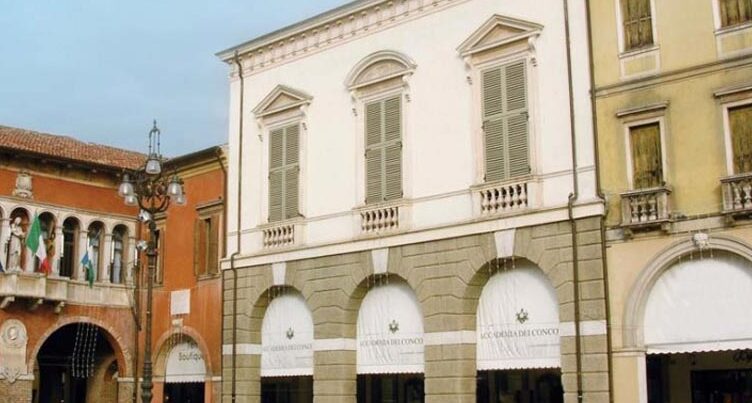

In the heart of Rovigo, Italy, the Accademia dei Concordi stands as a testament to the city’s rich intellectual and artistic heritage. Founded in 1580 by Count Gaspare Campo, this prestigious institution was born out of a desire to unite local men of letters and scholars. Within the opulent walls of his palace, Campo fostered discussions on literature, music, and art, creating a vibrant cultural hub that would echo through the ages.
The Academy thrived throughout the late 16th and 17th centuries, aligning itself with the cultural currents of the time. It was recognized by the Venetian Republic in the early 18th century, leading to a revitalization of its activities. The approval of a new Statute in 1739 marked a significant turning point, establishing the Academy as a cornerstone of local culture. Notably, it organized bi-weekly "gatherings" that delved into various fields, including science and agriculture, showcasing its commitment to intellectual growth.
As the 18th century drew to a close, the architectural vision of Sante Baseggio materialized in the form of the Academy's palace. Although the construction faced interruptions due to historical upheavals, it was finally completed in 1814, reflecting the neoclassical style that characterizes much of Rovigo's architecture. The façade, adorned with elegant columns and intricate details, invites visitors to explore its storied halls.

Inside, the Academy houses a collection of notable artworks and artifacts that speak to its artistic significance. Among these, paintings and sculptures from the Renaissance period stand out, showcasing the talents of local and international artists. The library, now located at Piazza Vittorio Emanuele II, 14, serves as a civic library, highlighting the Academy's ongoing commitment to education and scholarship.
The cultural tapestry of Rovigo is woven with local customs and traditions that reflect the region’s history and community spirit. Festivals such as the Festa di San Francesco, celebrated in October, draw locals and visitors alike to partake in religious processions, music, and traditional food. The vibrant atmosphere during these events encapsulates the warmth and hospitality of the people of Rovigo, inviting everyone to share in their heritage.
Gastronomy is another vital aspect of Rovigo’s identity. The region is famed for its polenta, a staple made from cornmeal that is often served with various sauces and meats. Bigoli, a type of thick pasta, is also a local favorite, typically paired with rich sauces like duck ragu. As you wander the streets, be sure to indulge in soprèsa, a traditional cured meat, and wash it down with a glass of Raboso, a robust red wine native to the area. These culinary delights provide a delicious window into the local culture.
Perhaps one of the lesser-known curiosities about the Accademia dei Concordi is its role as a meeting point for some of Italy's most prominent intellectuals. The Academy once served as a gathering place for notable figures, including Giovanni Battista Tiepolo, who was thought to have had connections with the Academy during its formative years. Furthermore, the Academy’s archives house rare manuscripts and documents that offer insights into the cultural life of Rovigo over the centuries, making it a treasure trove for historians and enthusiasts alike.
For those planning a visit, spring and fall are the best times to experience Rovigo’s charm. The moderate weather during these seasons allows for leisurely strolls through the city’s historic streets and the surrounding countryside. When visiting the Academy, take your time to explore the library’s collection and absorb the ambiance of scholarly pursuit that permeates the halls.
As you delve into the rich history, art, and culture of the Accademia dei Concordi and Rovigo, consider using the Secret World app to create a personalized itinerary that unveils the hidden gems of this enchanting Italian city.


