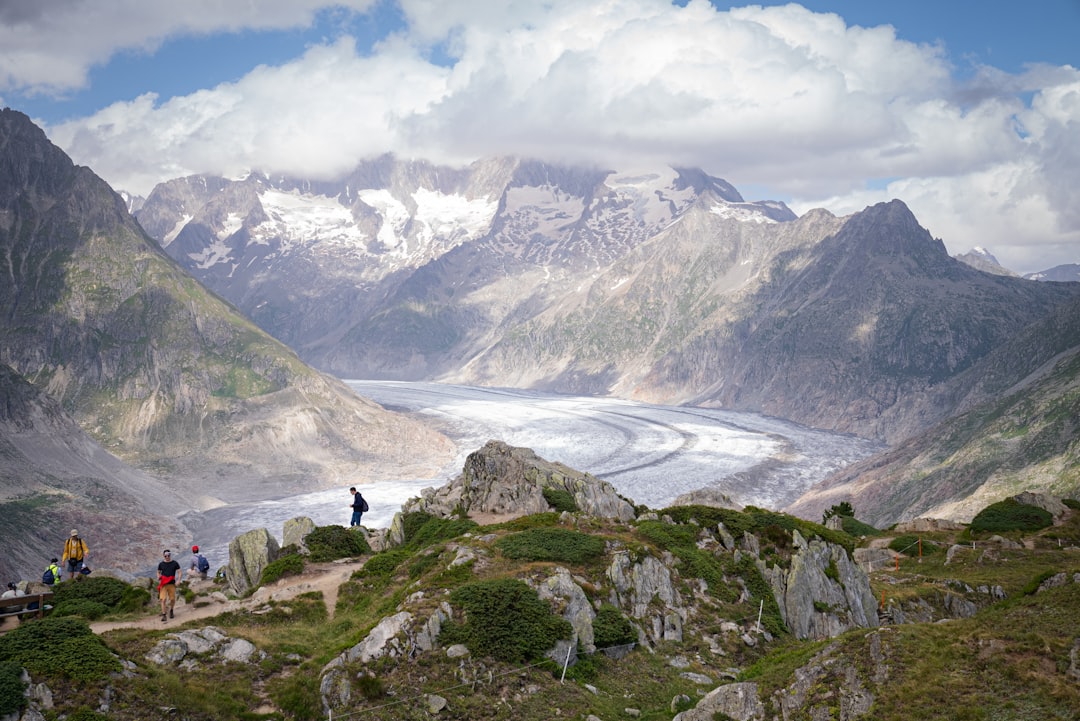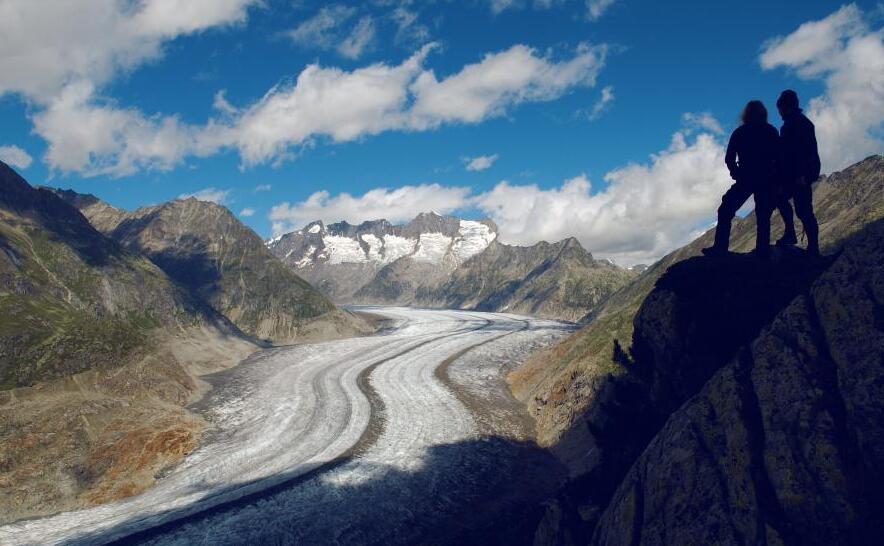

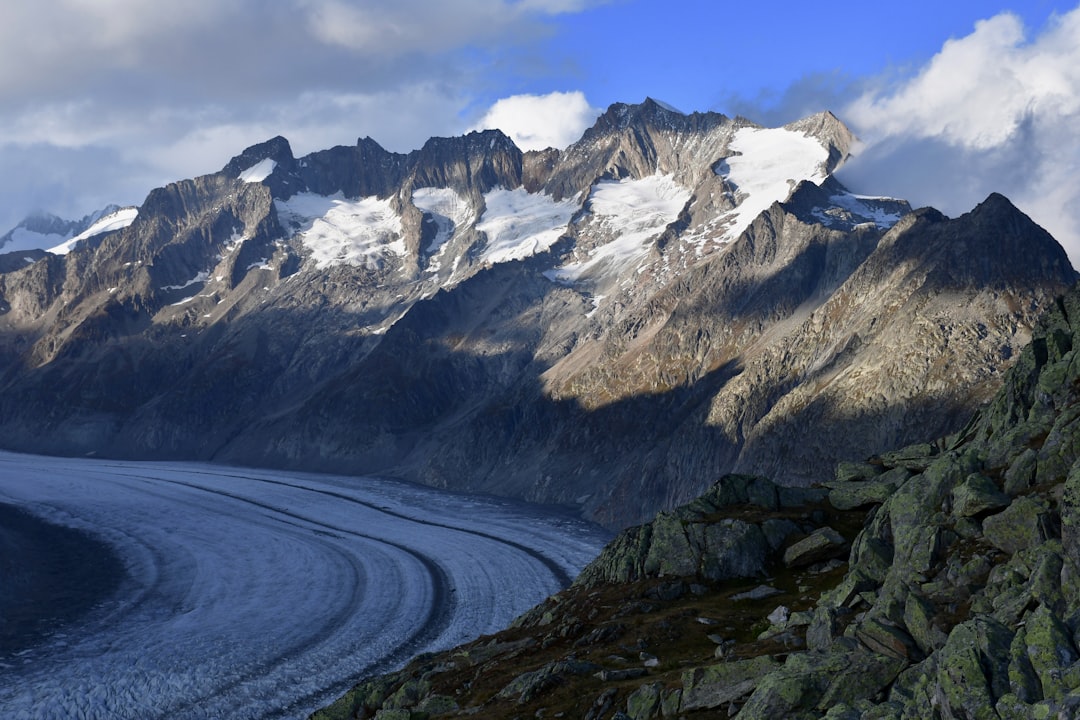
In the eastern Bernese Alps of southwest Switzerland, the Aletsch Glacier stands as a mesmerizing testament to nature's grandeur. Spanning over 35,000 hectares (135 square miles), it is not only the largest glacier in the Alps but also the most extensive glaciated area in Europe. With its breathtaking expanse, this glacier is cradled by towering peaks such as the Jungfrau and the formidable north wall of the Eiger. The highest mountain in the Bernese Alps, Finsteraarhorn, looms at an impressive 4,274 metres (14,022 feet), offering a stunning backdrop to this UNESCO World Heritage Site.
### History and Origins The Aletsch Glacier has been a subject of fascination for centuries. Its origins date back to the last Ice Age, approximately 18,000 years ago, when colossal ice masses shaped the landscape of the Alps. The name 'Aletsch' possibly derives from the Walser dialect, meaning 'the vast one'. Historically, the glacier has played a crucial role in the development of the surrounding regions, influencing trade routes and settlements. In the 19th century, as the Alps gained popularity among climbers and tourists, the glacier became an essential part of the burgeoning tourism industry. Pioneering mountaineers like Johann Wolfgang von Goethe and Edward Whymper are among those who have documented their encounters with this icy behemoth.
### Art and Architecture The architecture in the Aletsch region is a harmonious blend of traditional Swiss styles and modern design. The nearby village of Fieschertal features rustic wooden chalets that embody the charm of Alpine architecture. The Fieschertal Church, with its simple yet elegant structure, showcases local craftsmanship and offers a stunning view of the glacier. Additionally, the region is not without artistic significance; local artists often draw inspiration from the dramatic landscapes, producing works that reflect the beauty and power of nature.
### Local Culture and Traditions The culture surrounding the Aletsch Glacier is deeply rooted in Swiss traditions. The Walser people, who settled in the region, have preserved many customs, including Alpine farming and cheese-making. Annual festivals, such as the Fieschertal Festival, celebrate local heritage with folk music, traditional dance, and culinary delights. The celebration of Alpabzug, or the return of cattle from summer pastures, is a vibrant event where locals dress in traditional attire, showcasing the region's agricultural roots.
### Gastronomy A visit to the Aletsch Glacier region is incomplete without indulging in its culinary offerings. Swiss cheese is a staple, with varieties like Gruyère and Emmental being particularly popular. The local dish, Rösti, a delicious potato dish, is often served with a side of Alpine herbs. For those with a sweet tooth, Nusstorte, a nut cake filled with caramelized nuts, is a must-try. Pair these delightful dishes with a glass of local wine or Swiss hot chocolate to complete your culinary journey.
### Lesser-known Curiosities While many tourists flock to the well-trodden paths, there are hidden gems around the Aletsch Glacier that often go unnoticed. One such detail is the Aletschbord, a viewpoint that offers stunning panoramic views of the glacier without the crowds. Additionally, the glacier is home to unique wildlife, including the elusive Alpine ibex and the majestic golden eagle, which are often spotted soaring above the icy expanse. The glacier also plays a pivotal role in scientific research, providing insights into climate change and glacial dynamics.
### Practical Visitor Information The best time to visit the Aletsch Glacier is during the summer months, from June to September, when the weather is mild and the trails are accessible. Visitors should come prepared with sturdy hiking boots and layered clothing, as temperatures can fluctuate dramatically. The Aletsch Arena, accessible via the cable car system, offers various hiking trails ranging from easy walks to challenging treks, each providing breathtaking views of the glacier. Don't miss the observation platforms, where you can capture stunning photographs of the glacial landscape.
In conclusion, the Aletsch Glacier is a remarkable destination that offers not only natural beauty but also a rich tapestry of history and culture. As you plan your adventure, consider exploring the hidden corners of this majestic region for a truly unforgettable experience. For a personalized itinerary to discover the wonders of Fieschertal, consider using the Secret World app for tailored recommendations.