
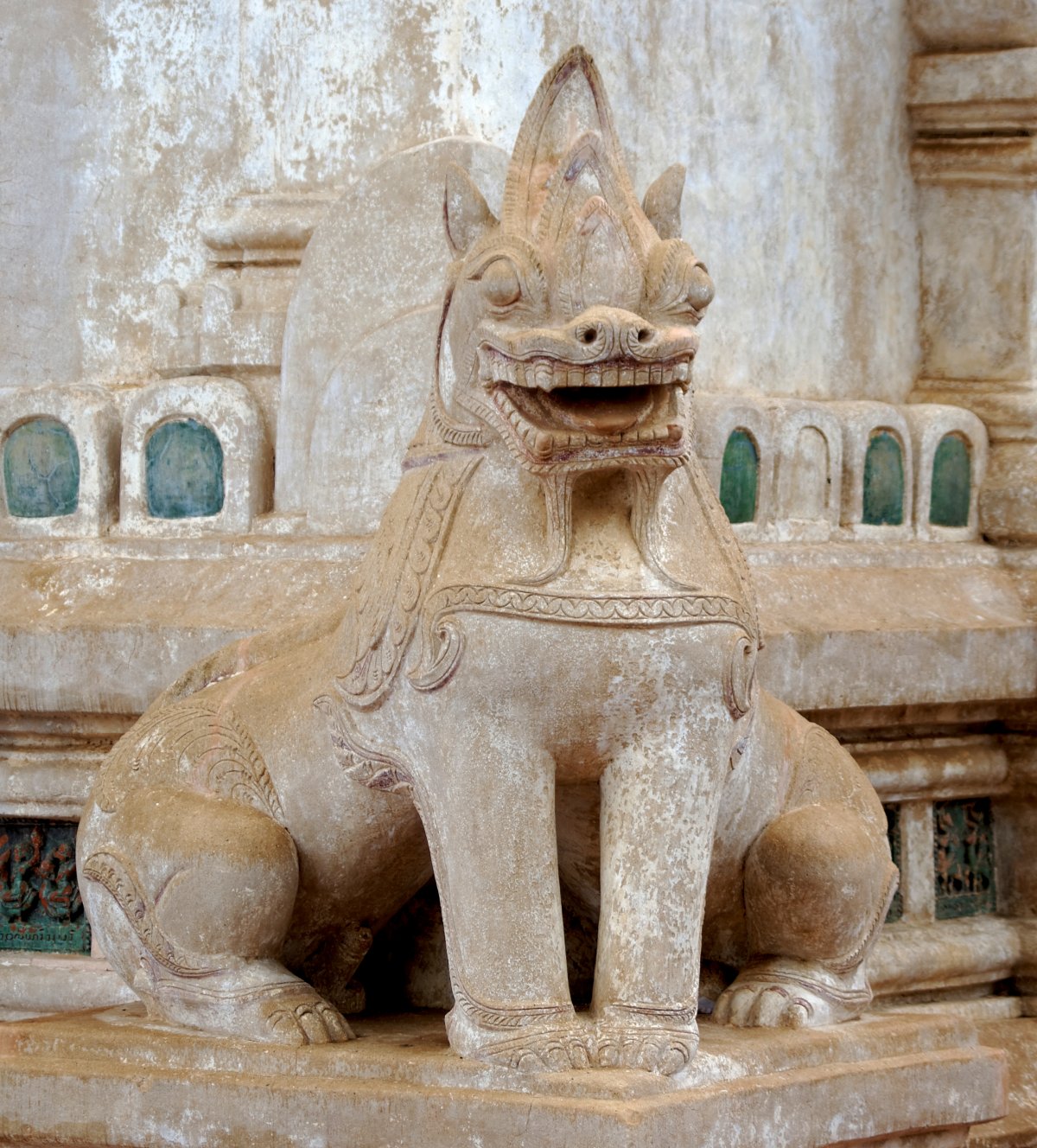

Four gigantic golden Buddhas stand in the dark corridors of the Ananda Temple, each about nine meters tall, each facing a different cardinal point. When light filters through the side openings and hits the golden surfaces, the effect is dazzling: it is not calculated scenery, but religious architecture that uses light as a tool of devotion. This is the first impact with one of the best-preserved temples in the entire plain of Bagan, in central Myanmar.
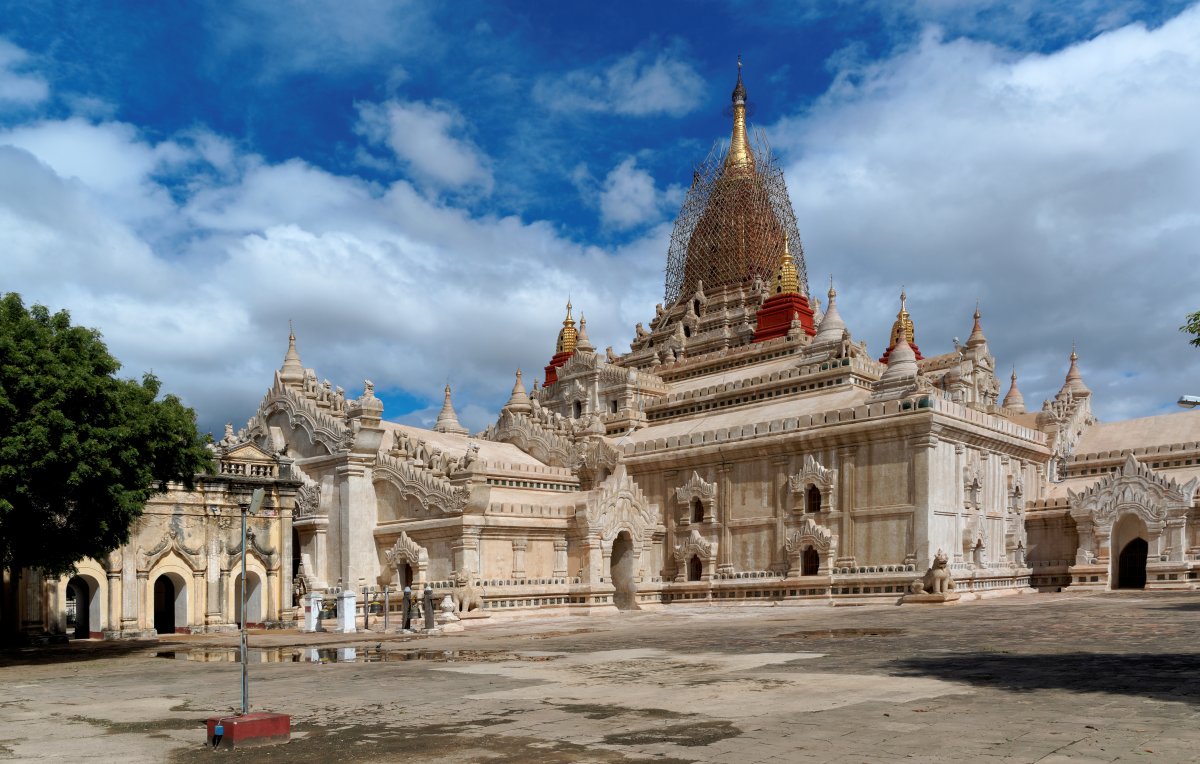
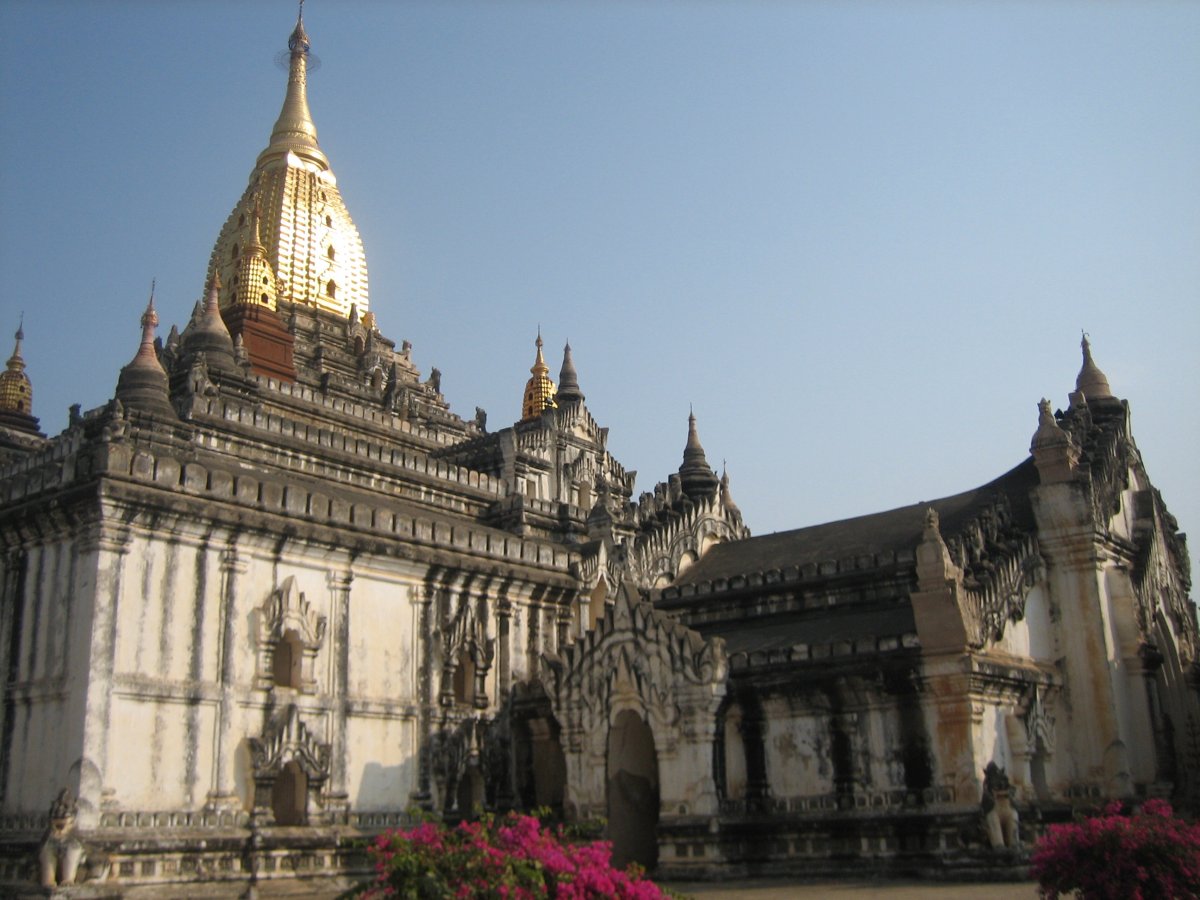
The Ananda Temple was built around 1105 AD at the behest of King Kyanzittha, one of the most powerful rulers of the Pagan dynasty. According to tradition, eight Indian monks who arrived at the king's court described the Himalayan cave of Nandamula, the legendary residence of Buddhist saints, and Kyanzittha ordered its shape to be replicated in stone. The result was a Greek cross building, with a central tower reaching about 51 meters in height, visible from kilometers away in the flat plain surrounding Bagan.
The architecture that blends India and Mon
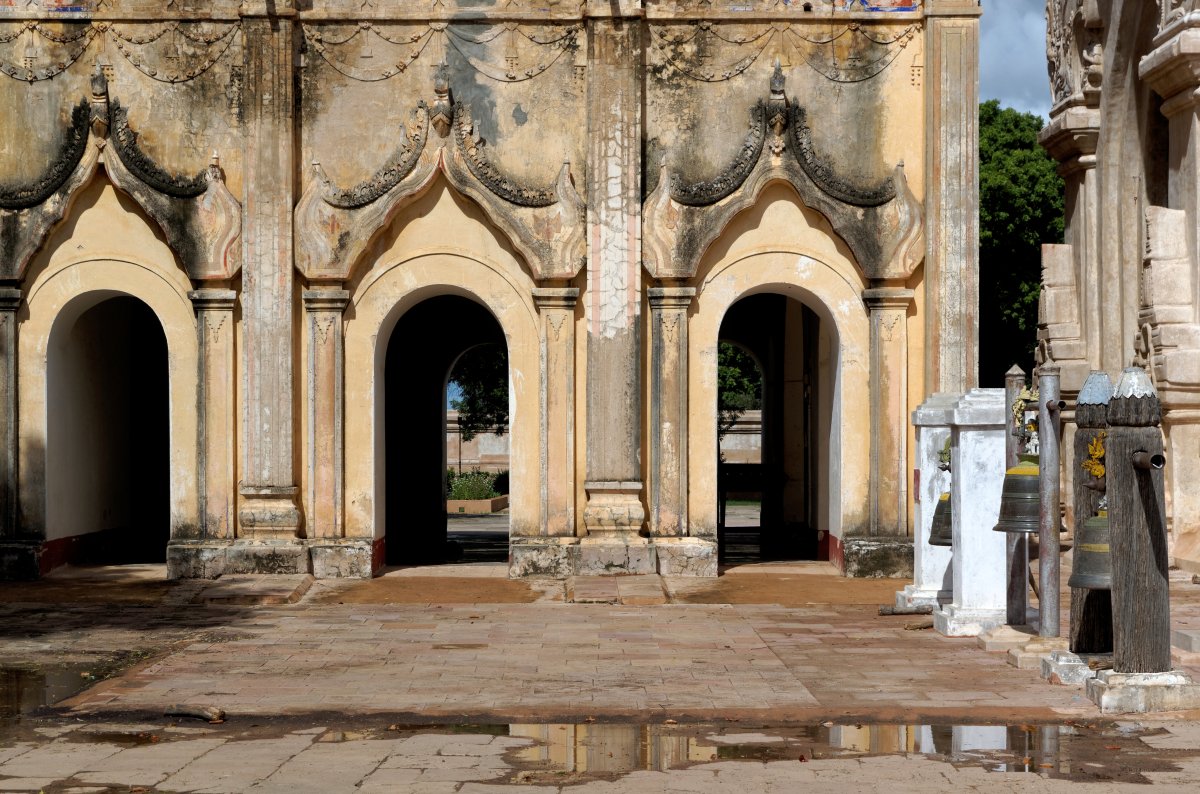
What makes the Ananda Temple architecturally extraordinary is its stylistic synthesis. The cross-shaped plan, the concentric corridors, and the Indian-derived shikhara tower merge with elements of Mon art, the dominant culture in southern Burma at the time. The four entrance portals are decorated with glazed terracotta depicting scenes from the life of the Buddha: small panels precisely aligned, still legible after almost a thousand years.
The internal corridors form a double ring around the central core. Walking along the darker outer corridor, one encounters hundreds of niches housing stone statues depicting episodes from the Jataka, the stories of the Buddha's previous lives. In the brighter inner corridor, the atmosphere changes: here one perceives the monumentality of the four main statues, visible through openings in the wall. Two of the original statues of Kyanzittha are still present — those facing north and south — while the other two were destroyed by a fire and replaced in later times.
The Four Buddhas and the Detail of the Hands
A detail worth observing closely concerns the two original Buddhas: if one positions themselves far from the statue, the face appears serene and smiling; as one approaches, the expression seems to change, taking on a more austere tone. This optical effect, likely intentional, is achieved through the modeling of the face and the play of shadows. The two replacement statues, made in more recent times, do not produce the same effect.
Each statue represents one of the four Buddhas of the Buddhist cosmic cycle: Kakusandha, Konagamana, Kassapa, and Gautama. The hands of each figure assume mudras — ritual gestures with precise meanings. The one facing east, Gautama, is the historical Buddha, and his statue is the one that receives the most offerings from local devotees: flowers, banana leaves, incense sticks.
When to visit and how to get around
The Ananda Temple is located about three kilometers from the center of Nyaung-U, the main city in the Bagan area. The most convenient way to reach it is by electric bicycle, which can be easily rented in Nyaung-U or in the village of Old Bagan for a fee of around 5,000-8,000 kyat per day (the price may vary). Alternatively, local rickshaws and taxis are always available.
The best time to visit is early in the morning, between 7:00 and 9:00, when the light is soft and organized groups have not yet arrived. The temple is generally open from 6:00 to 18:00. Every year, during the month of Pyatho in the Burmese calendar (which usually corresponds to December or January), a large religious fair is held around the temple that attracts thousands of pilgrims from all over the country: a completely different experience from the ordinary visit, more chaotic but extraordinarily lively. It is mandatory to remove shoes at the entrance, as in all Burmese sacred places.
Why a long visit is worth the time
Many visitors to Bagan dedicate less than an hour to the Ananda Temple, attracted by the number of structures present in the plain — it is estimated that there were originally over 10,000 temples, of which about 3,000 still stand. That would be a mistake. The terracotta panels of the corridors, the details of the niches, the proportions of the interior spaces require time to be understood. At least two hours allow for a calm observation of both the exterior — with its layers of white terraces — and the interior, where the architecture works with light in a way that no photograph can truly capture.


