
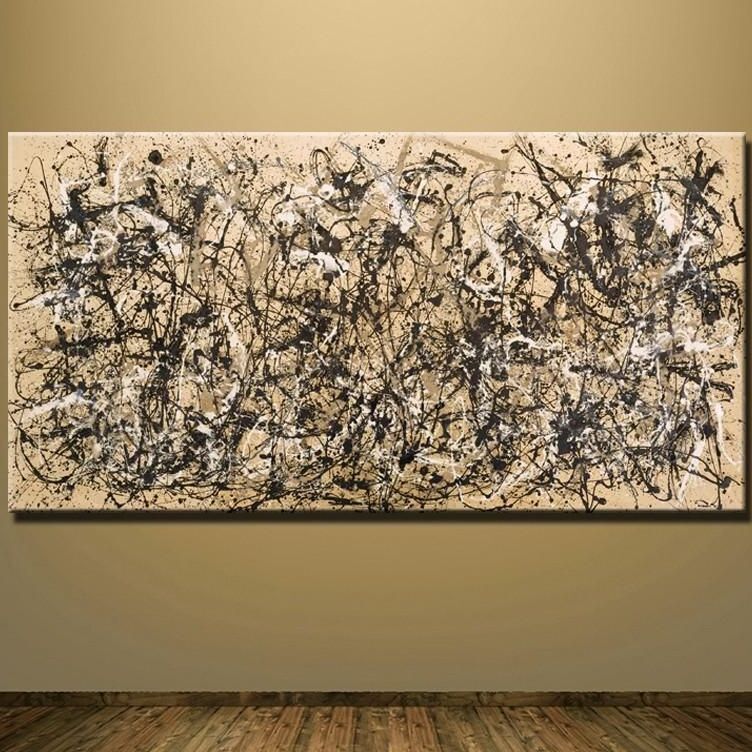

In the heart of New York City, amidst the bustling streets and towering skyscrapers, lies a masterpiece that encapsulates the raw, chaotic beauty of modern art: Autumn Rhythm (Number 30). Created by the iconic American painter Jackson Pollock in 1950, this artwork not only represents a turning point in his career but also serves as a profound reflection of the tumultuous era in which it was born.

History and Origins
To truly appreciate Autumn Rhythm, one must understand the backdrop of the Abstract Expressionism movement that emerged in the United States after World War II. Pollock, born in 1912 in Cody, Wyoming, struggled throughout his life with personal demons, including a turbulent relationship with alcohol. His artistic journey began in earnest in the 1930s, when he was influenced by Mexican muralists and the work of Pablo Picasso. By the time he created Autumn Rhythm, Pollock had perfected his revolutionary drip painting technique, which he developed starting in 1947. This method involved pouring and splattering paint onto canvases laid flat on the ground, allowing for an organic and spontaneous interaction between artist and medium.

Pollock's Autumn Rhythm is characterized by its intricate web of lines and layers, a visual representation of his internal chaos and emotional intensity. The painting, measuring an impressive 8 feet by 17 feet, is a culmination of his exploration into the unconscious mind. It showcases not only his innovative techniques but also the existential angst that permeated the post-war American psyche.
Art and Architecture
The architectural style of the Museum of Modern Art (MoMA), where Autumn Rhythm is housed, complements the artwork itself. The museum, designed in a modernist style by architects like Philip Johnson and Yoshio Taniguchi, provides a striking contrast to the organic forms of Pollock's art. Here, visitors can experience not only Autumn Rhythm but also a plethora of world-renowned works from artists like Vincent van Gogh, Andy Warhol, and Frida Kahlo.
Pollock's artistic significance cannot be overstated. His work challenged traditional notions of painting and redefined the role of the artist in the creative process. Autumn Rhythm is often lauded for its dynamic composition and emotional depth, making it a pivotal piece in the evolution of modern art.
Local Culture and Traditions
New York City is a melting pot of cultures and traditions, and this diversity is reflected in its vibrant art scene. The city hosts numerous festivals, such as the Tribeca Film Festival and the New York Film Festival, which celebrate creativity in various forms. Additionally, the area around MoMA is filled with street performers, musicians, and artists who contribute to the ever-evolving cultural landscape of the city.
Moreover, the Lower East Side and Brooklyn neighborhoods are home to a thriving art community, where galleries and studios showcase emerging artists and experimental works. This cultural dynamism creates an environment where Pollock's spirit of innovation continues to inspire.
Gastronomy
No visit to New York would be complete without indulging in its renowned culinary scene. While exploring the vicinity of MoMA, visitors can savor classic New York fare. Consider trying a slice of New York-style pizza, characterized by its thin crust and generous toppings, or a bagel with lox and cream cheese, a staple of the city's Jewish culinary heritage.
For those seeking a sweet treat, a stop at a local bakery for a black and white cookie or a New York cheesecake is a must. The city's diverse food scene also offers a plethora of international options, from dim sum in Chinatown to tacos in Brooklyn, reflecting the rich tapestry of cultures that coexist here.
Lesser-Known Curiosities
While Autumn Rhythm is well-known among art aficionados, many visitors may be unaware of its intriguing backstory. Pollock's studio, located in East Hampton, was where much of his creative energy flowed. The studio itself has become a pilgrimage site for artists and fans alike, offering a glimpse into Pollock's world.
Additionally, Pollock's paintings often contain hidden elements, like the use of commercial paint and unconventional tools, which add layers of complexity to his work. This technique not only underscores his innovative spirit but also challenges the viewer to reconsider the boundaries of artistic expression.
Practical Visitor Information
The best time to visit New York City is in the spring (April to June) or fall (September to November) when the weather is mild, and the city is alive with cultural events. For those specifically interested in Pollock and Abstract Expressionism, consider planning your trip around exhibitions at MoMA or other local galleries that often feature works by his contemporaries.
When visiting Autumn Rhythm, take your time to absorb the details of the painting. Notice the interplay of colors and textures that reflect Pollock's emotional struggles. Engage with the museum's educational programs and guided tours to deepen your understanding of Pollock’s revolutionary techniques.
In conclusion, Jackson Pollock’s Autumn Rhythm (Number 30) not only represents a significant milestone in the artist's career but also encapsulates the energy and tumult of mid-20th-century American art. To fully appreciate this masterpiece and the vibrant culture surrounding it, consider using the Secret World app to plan a personalized AI itinerary for your visit to New York.


