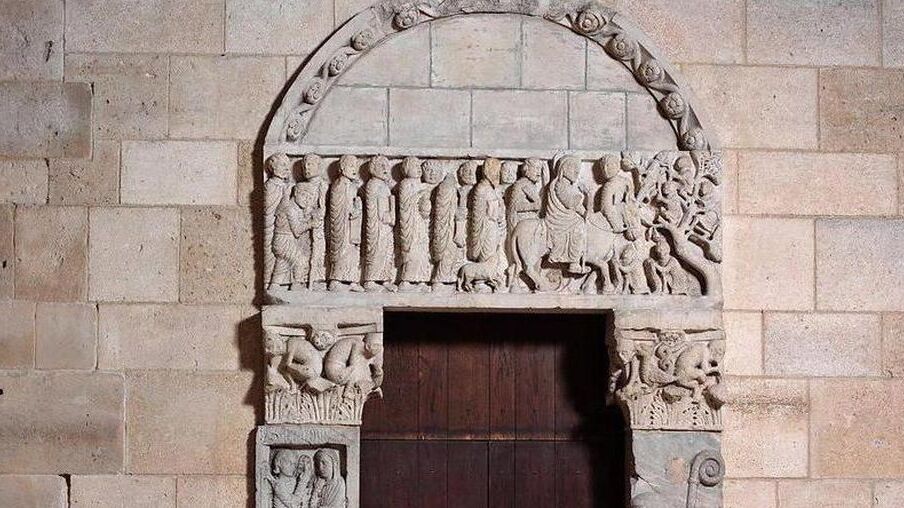

Nestled within the hallowed halls of the Metropolitan Museum of Art in New York is a gem of medieval artistry: the Biduino Portal. This exquisite piece, dedicated to Saint Leonard, the patron saint of prisoners, is a testament to the rich tapestry of history and artistry that spans centuries and continents.
### History and Origins
The Biduino Portal originates from the 12th century, specifically crafted in the latter half of the century by the renowned Italian sculptor Biduino. Originally serving as the main entrance to the Church of San Leonardo al Frigido, located on the banks of the Frigido River, it played a vital role in the spiritual life of the medieval community. The church itself was historically linked to the Hierosolimitan hospital of San Leonardo, which underscored its significance in caring for those in need.
In a twist of fate, the portal was removed from its original site in the late 19th century and transported to France. Its journey culminated in New York, where it now resides in The Cloisters, a branch of the Metropolitan Museum dedicated to medieval art and architecture. The portal’s relocation speaks to the broader historical movements of art during periods of upheaval and change, as well as the growing appreciation for medieval artistry in the modern age.
### Art and Architecture
Artistically, the Biduino Portal is remarkable for its intricate white marble reliefs, showcasing scenes of profound religious significance. On the left side, it depicts the Annunciation and the Visitation, while the right side features Saint Leonard himself, holding a prisoner in chains, a powerful symbol of hope and redemption.
The architectural style of the portal is rooted in the Romanesque tradition, characterized by its robust forms and expressive ornamentation. Biduino’s work reflects a synthesis of late imperial and early Christian influences, marking a transition in the artistic vocabulary of the period. His mastery is evident not only in the craftsmanship but also in the emotive expressions of the figures, which invite visitors to ponder the narratives they depict.
### Local Culture and Traditions
While the Biduino Portal may be thousands of miles from its original home, its presence in New York is an invitation to explore the rich cultural heritage of Tuscany. In the region where the portal was crafted, local customs often revolve around religious festivals and community gatherings.
One notable event is the Festa di San Leonardo, celebrated with fervor in early November. This festival honors the saint and is marked by processions, traditional music, and communal feasting, bringing together locals and visitors to celebrate their shared history and faith. Such traditions underscore the enduring importance of community and spirituality in daily life, even as the world evolves.
### Gastronomy
To truly appreciate the essence of Tuscany, one must indulge in its culinary offerings. The region is celebrated for its rich gastronomic traditions, and visitors to New York can find authentic Tuscan cuisine in various restaurants that pay homage to these flavors.
Classic dishes include Pici cacio e pepe, a simple yet delectable handmade pasta tossed with cheese and pepper, and Panzanella, a refreshing salad made from stale bread, tomatoes, and fresh basil. Pair your meal with a glass of Chianti, a robust red wine that embodies the spirit of the Tuscan landscape. These culinary delights not only tantalize the taste buds but also connect diners to the cultural roots of the region.
### Lesser-Known Curiosities
Despite its prominence in The Cloisters, many visitors may overlook the intricate details of the Biduino Portal. For instance, the craftsmanship illustrates a blend of devotional themes with elements of daily life in medieval Italy. The depiction of Saint Leonard with a prisoner serves not only as a religious symbol but also reflects the societal issues of the time, such as justice and mercy.
Another curiosity is the journey of the portal itself. Its transition from a church entrance in Tuscany to a centerpiece in a New York museum encapsulates the movement of art across borders and eras, revealing how history can reshape our understanding of cultural artifacts.
### Practical Visitor Information
For those wishing to experience the Biduino Portal, the best time to visit The Cloisters is during the spring and fall months when the gardens are in full bloom, providing a picturesque backdrop to the medieval art on display.
To make the most of your visit, consider taking a guided tour that delves into the stories behind the artworks. Look out for the intricate carvings and the emotional expressions of the figures, which are essential to understanding the artistic language of the time.
In conclusion, the Biduino Portal is more than just a relic of the past; it is a bridge connecting cultures, histories, and stories across time. To uncover the many layers of New York's rich artistic landscape, consider using the Secret World app to plan a personalized AI itinerary.
