
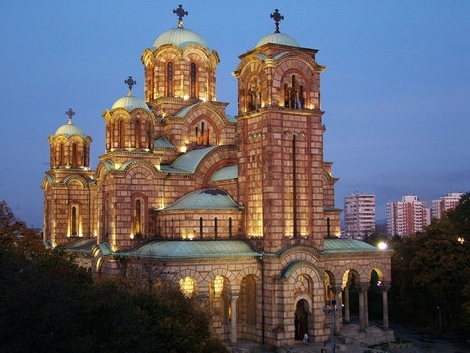

Nestled in the heart of Belgrade, the Church of St. Mark stands as a monumental testament to both faith and architectural grandeur. While it may not boast the centuries-long history of some of its European counterparts, this relatively modern structure is an integral part of Serbia's spiritual and cultural landscape.
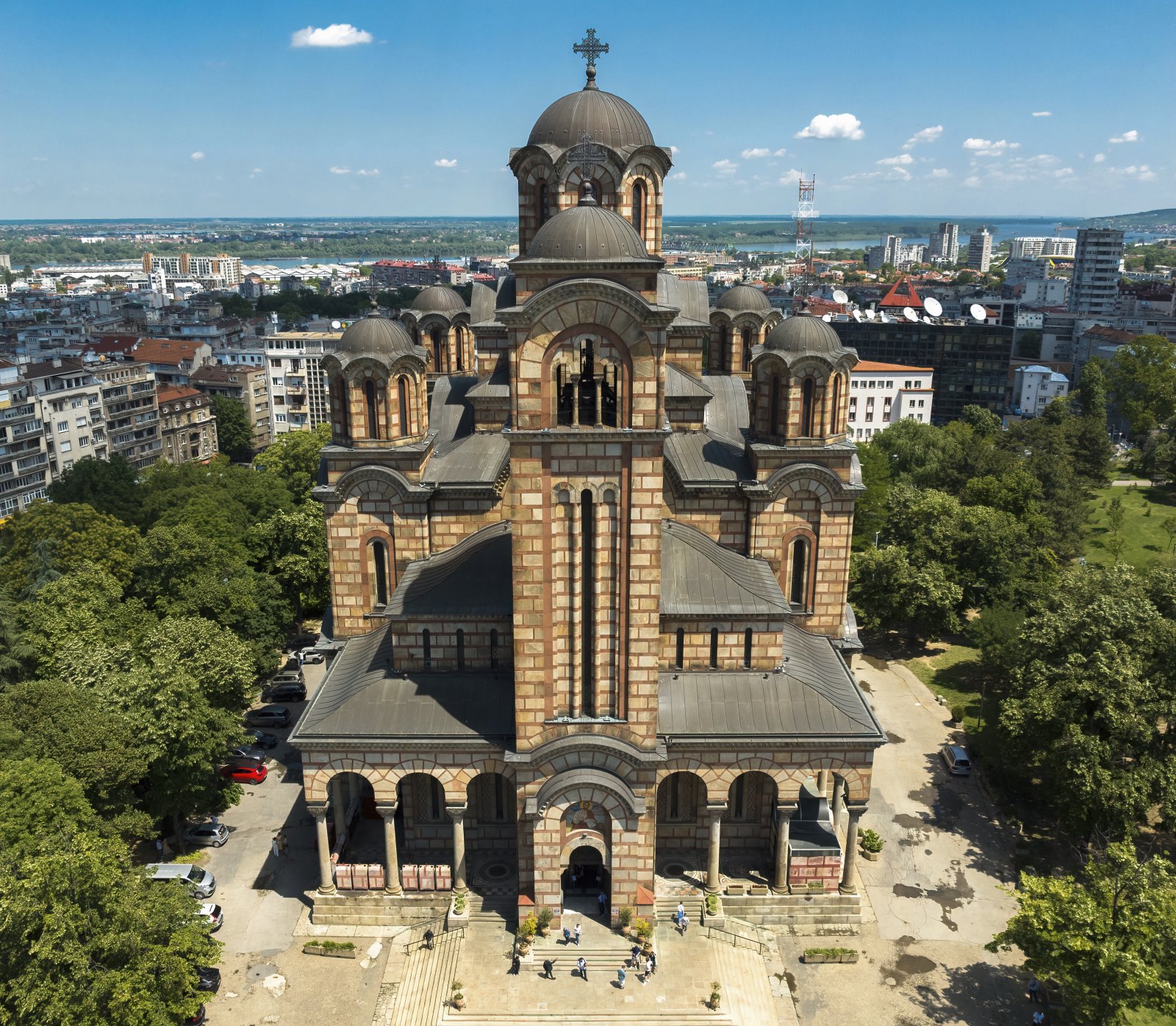
The origins of the Church of St. Mark date back to 1940, when its construction began under the guidance of architects Petar and Branko Krstić. Built on the site of an older church from 1835, which was destroyed during World War I, the new church sought to embody the resilience and continuity of Serbian Orthodoxy. Despite construction being interrupted by World War II, the church stands today as a beacon of the Neo-Byzantine architectural style. Its massive frame, characterized by red and yellow bricks, is inspired by the Gračanica Monastery in Kosovo, reflecting both historical reverence and architectural ambition.
Step inside, and you'll find yourself enveloped in a world of sacred artistry. The interior of the Church of St. Mark is adorned with magnificent frescoes and icons that capture the essence of Byzantine artistry. Amongst these are the works of the renowned Serbian painter Uroš Predić, whose depictions of saints and biblical scenes are imbued with deep spiritual resonance. The church is also home to the tomb of Tsar Stefan Dušan, a key figure in medieval Serbian history, adding a layer of historical significance to its spiritual atmosphere.
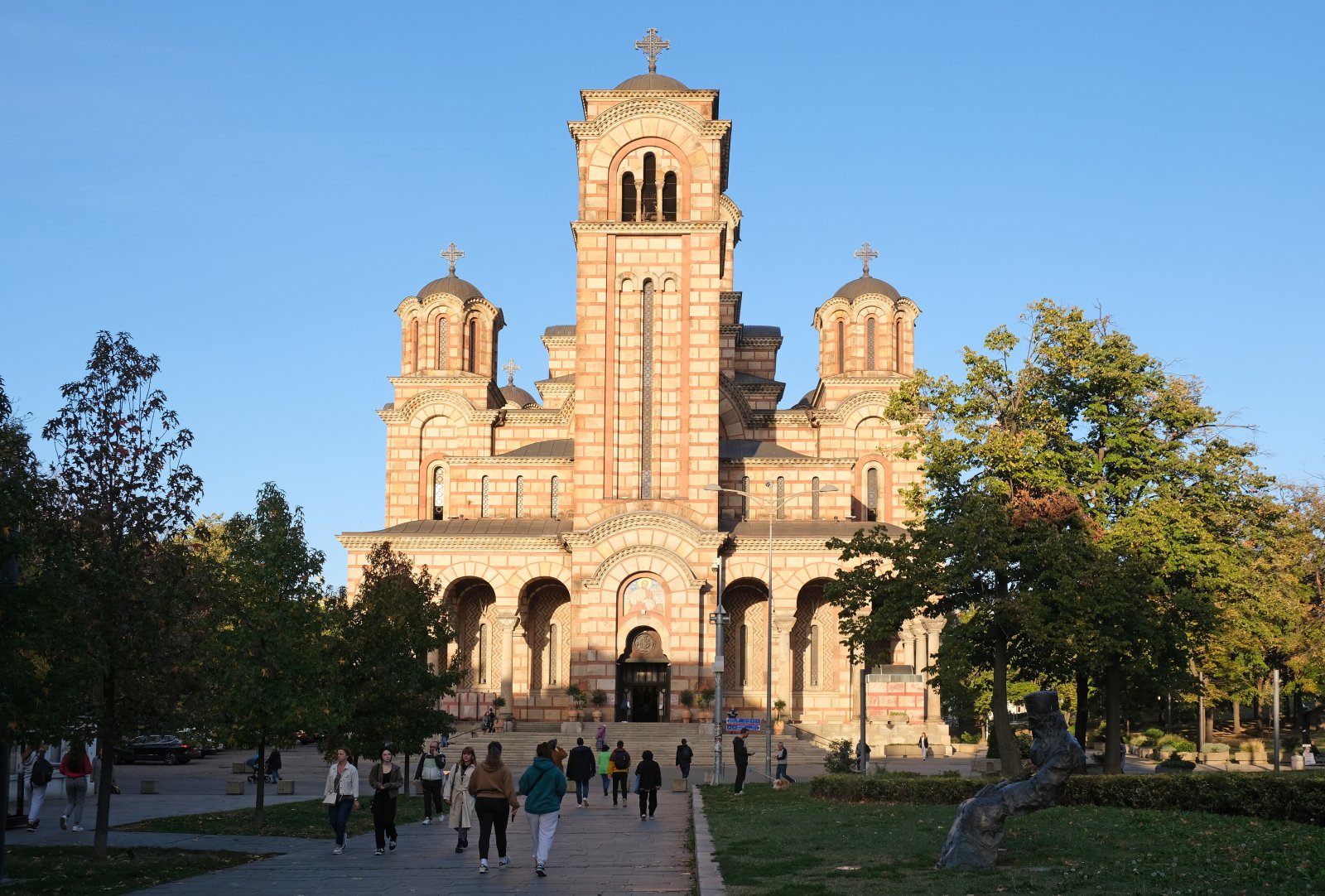
Beyond its architectural and artistic allure, the Church of St. Mark holds a special place in the cultural tapestry of Belgrade. As a focal point for religious ceremonies and gatherings, it plays a vital role in the celebration of Orthodox Christian festivals, notably Easter and Christmas. During these times, the church comes alive with the sound of hymns and the glow of candlelight, drawing locals and visitors alike into its solemn embrace. The church fosters a sense of community, serving as a meeting point for people from all walks of life to come together in celebration and reflection.
Gastronomy in the vicinity of the Church of St. Mark offers a delightful peek into the rich culinary traditions of Serbia. Just a short walk from the church, you can savor traditional dishes such as ćevapi (grilled minced meat), sarma (cabbage rolls), and gibanica (a savory pastry), at local eateries. Accompany these with a glass of rakija, a potent fruit brandy that is an integral part of Serbian hospitality. Each bite and sip is a journey through the flavors that define the region, making for a memorable culinary experience.
For those keen on delving deeper into the secrets of the Church of St. Mark, there are lesser-known curiosities that add to its mystique. One such detail is the church's bell tower, which houses a set of bells cast in the famous bell foundries of Austria. These bells, with their resonant chimes, have become an auditory symbol of the area, marking time and events with their melodious tones. Additionally, the church's crypt is a hidden gem that many visitors overlook. It contains relics and artifacts that offer insights into the historical and religious evolution of the region.
When planning a visit, the best time to experience the Church of St. Mark is during the spring or autumn months. The mild weather during these seasons allows for leisurely exploration of the church's exterior and the surrounding Tasmajdan Park, a lush green space perfect for a reflective stroll. Visitors are encouraged to attend a service to fully appreciate the spiritual ambiance and the acoustics of the church's interior. It is advisable to dress modestly, respecting the sacred nature of the site.
In conclusion, the Church of St. Mark is more than just an architectural landmark; it is a living chronicle of Serbia's spiritual journey. From its towering façade to the intricate details within, it invites travelers to explore not only its physical space but also the rich cultural and historical narratives it houses. Whether you are drawn by its artistic splendor, its historical significance, or its spiritual tranquility, a visit to this church promises a profound and enriching experience.


