
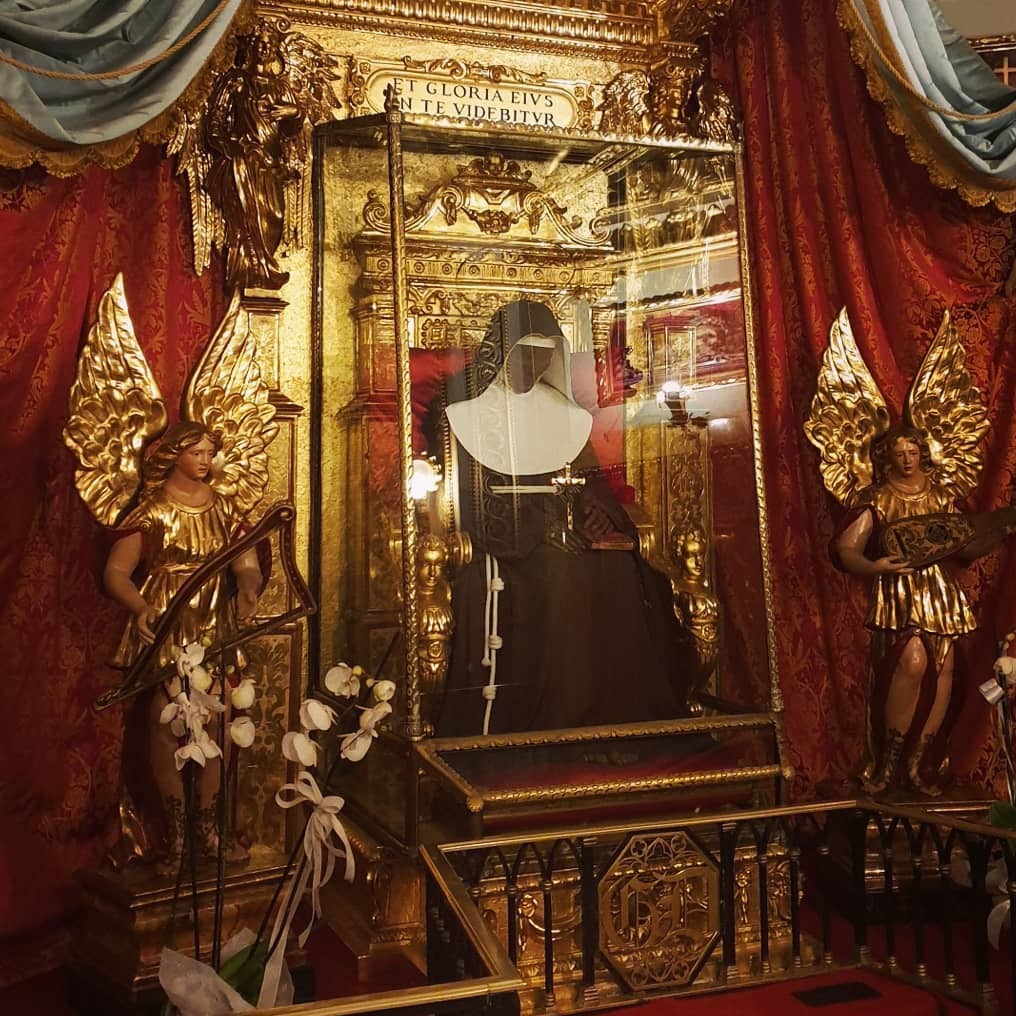

In the heart of Bologna, the story of Saint Catherine of Vigri unfolds, weaving a rich tapestry of spirituality, artistry, and cultural significance. Born in Ferrara in 1413, Caterina de Vigri, a lady-in-waiting to Margherita d'Este, found her calling in the monastic life, ultimately becoming the founder and first abbess of the Monastery of the Poor Clares of Corpus Domini in Bologna. Her dedication to women's education and her artistic contributions mark her as a pioneering figure in both religious and cultural realms.
The Monastery of Corpus Domini, nestled in a tranquil part of Bologna, is where her incorrupt body rests, attracting visitors intrigued by the miraculous preservation of her remains. This phenomenon, often regarded as a sign of holiness, draws countless worshippers and curious tourists alike. Upon entering the chapel, visitors are met with the sight of her mummified body, adorned with a simple habit, her hollowed gaze seemingly watching over her followers with serenity.
The architectural style of the monastery is a stunning example of Gothic architecture, characterized by its elegant arches and intricate stonework. The interior houses remarkable frescoes and artworks, many of which were created by Caterina herself. Among these, visitors can find vivid depictions of biblical scenes that reflect her deep spirituality and artistic talent. This dual role as an artist and a religious leader sets her apart in the annals of history.
Bologna is a city steeped in rich traditions, and the legacy of Saint Catherine is celebrated with reverence. Local customs often include processions and prayer gatherings, particularly on her feast day, March 9. During this time, the community comes together to honor her contributions to education and spirituality, and many women in Bologna look to her as an inspirational figure.
Culinary delights are an essential part of experiencing Bologna’s vibrant culture. The city is renowned for its gastronomic treasures, particularly the ragù alla bolognese, a rich meat sauce that has become iconic worldwide. Other local specialties include tortellini, delicate pasta stuffed with meats or cheese, and mortadella, a delectable cured meat that embodies the flavors of the region. Pair these dishes with a glass of Lambrusco, a sparkling red wine that complements the hearty Bolognese cuisine perfectly.
While Bologna is famous for its historical sites, many lesser-known curiosities add to its charm. One such fact is the Portico di San Luca, a remarkable covered walkway that stretches over four kilometers, leading to the Sanctuary of the Madonna di San Luca. This architectural marvel not only provides a picturesque route for pilgrims but also stands as the longest portico in the world. Additionally, the city is home to the University of Bologna, founded in 1088, which is considered the oldest university in the world, further enriching the cultural fabric of this fascinating city.
For those planning a visit, the best time to explore Bologna is during the spring and early autumn months when the weather is mild and pleasant. It is advisable to visit the monastery in the morning to avoid crowds and fully absorb the spiritual atmosphere. Be sure to take a moment in the chapel to reflect on Saint Catherine's life and her impact on the community.
As you wander through the streets of Bologna, take note of the vibrant markets and lively squares that come alive with local artisans and vendors. Engaging with local residents can also provide deeper insights into the rich traditions that define this historic city.
In conclusion, the story of Saint Catherine of Vigri is not just a narrative of a saint; it reflects the cultural and spiritual heartbeat of Bologna. Her legacy continues to inspire, making Bologna a must-visit destination for those seeking a connection to history, art, and gastronomy. For a personalized itinerary that captures the essence of Bologna, consider using the Secret World app to plan your journey.


