
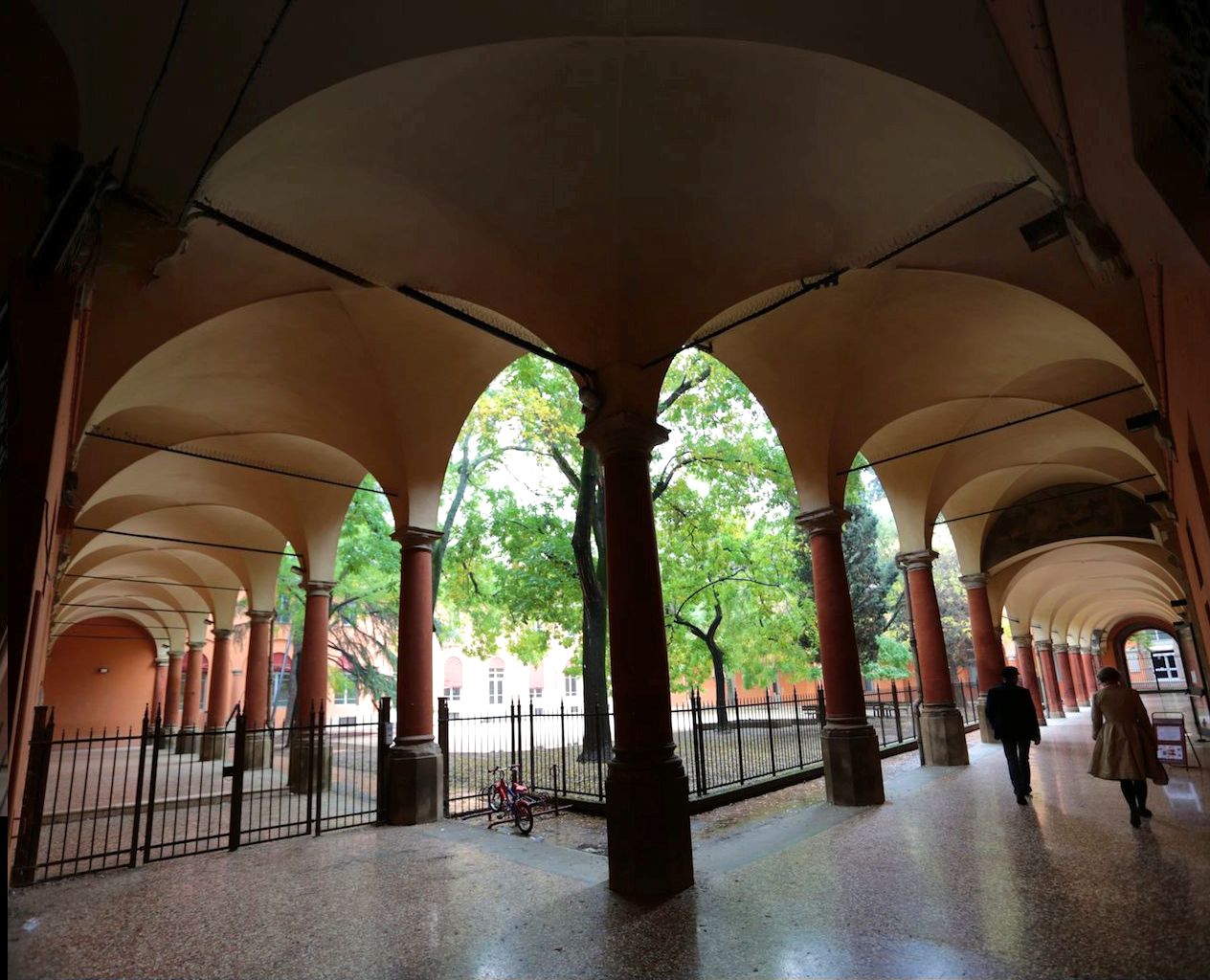

Nestled within the vibrant streets of Bologna, the Former Church of San Mattia stands as a testament to the city's rich religious and artistic heritage. Its history is woven into the fabric of Bologna's evolution, reflecting the city's resilience and adaptability over the centuries.

The church was founded in 1575 and consecrated in 1588, attributed to the architect Pietro Fiorini. Originally annexed to the Dominican Convent, it was purposefully positioned along Via Sant'Isaia, its understated façade seamlessly blending with the urban surroundings. This integration is enhanced by the portico that continues the architectural line of nearby buildings, creating a harmonious streetscape that captures the essence of Bologna's architectural philosophy.
As visitors step inside, they are met with a transformation that belies the simple exterior. The church underwent a significant modernization in the mid-18th century, spearheaded by the notable quadraturista, or perspective painter, Pietro Scandellari, along with artists Nicola Bertuzzi and Tertulliano Taroni. Their work introduced a sumptuous and theatrical quality to the interior, characterized by intricate stuccoes and vibrant frescoes that adorn the walls and ceilings. The sixteenth-century serliane and oculi were elegantly altered into rectangular windows, allowing natural light to flood the space and illuminating the rich artistry that surrounds visitors.
However, the church's fate took a dramatic turn in 1799 following the suppression of religious orders under the Napoleonic government. The church was deconsecrated and transformed into a storage facility, its artistic treasures left to languish in obscurity. It wasn’t until the restoration efforts initiated in 1981 and completed in 1994 that the hidden beauty of San Mattia was rediscovered. Funded by the Ministry of Cultural Heritage and Activities, the restoration revealed previously concealed stucco work and frescoes, breathing new life into the space.
Today, the Former Church of San Mattia serves as a cultural hub, entrusted to the Regional Directorate for Cultural Heritage and Landscape of Emilia Romagna. It hosts a variety of exhibitions, meetings, and conferences that delve into architecture, urban planning, and the historical-artistic landscape of the Emilia-Romagna region. This revival has made it a focal point for locals and visitors alike, showcasing Bologna's commitment to preserving its cultural heritage.
In addition to its artistic significance, the cultural landscape surrounding the church is rich with local traditions. Bologna, known as the "Food Capital of Italy," celebrates its culinary heritage through various festivals and events. From the annual Bologna Food Festival to the local Sagra di San Petronio, which honors the patron saint of the city, the vibrant customs reflect the deep connection between the residents and their gastronomic history. Visitors can savor traditional dishes like tagliatelle al ragù, tortellini, and lasagna, often paired with a glass of local Sangiovese or Lambrusco wine.
For the curious traveler, the Former Church of San Mattia holds lesser-known stories that add to its allure. Many visitors may overlook the small altar dedicated to Saint Matthew, which features a beautiful depiction of the saint painted by Nicola Bertuzzi. Additionally, the church's portico, often a place for locals to gather, has been a silent witness to countless stories and exchanges, echoing the communal spirit of Bologna.
When planning a visit, the best time to explore the Former Church of San Mattia is during the spring or early autumn months, when the weather is mild and the city is lively with outdoor events and festivals. Visitors should take the opportunity to admire the stunning frescoes, the harmonious blend of light and shadow, and the architectural details that speak to Bologna's artistic legacy.
To make the most of your trip, consider timing your visit to coincide with one of the city’s many cultural events, allowing you to experience Bologna's vibrant spirit firsthand. Be sure to look for the intricate details in the stucco work and the captivating frescoes that tell stories of faith and artistry.
Bologna is a city that invites exploration, and the Former Church of San Mattia offers a unique glimpse into its past. For a personalized itinerary that captures the essence of Bologna, using the Secret World app can enhance your travel experience.


