
← Back

Brescia | Slab with Peacock

Via dei Musei, 81/b, 25121 Brescia BS, Italia ★★★★☆ 367 views
Raffaella Bellanova
Brescia
🏆 AI Trip Planner 2026

Get the free app

Discover the best of Brescia with Secret World — the AI trip planner with 1M+ destinations. Get personalized itineraries, hidden gems and local tips. Free on iOS & Android.

🧠 AI Itineraries 🎒 Trip Toolkit 🎮 KnowWhere Game 🎧 Audio Guides 📹 Videos
Scan to download iOS / Android
Scan for AppGallery Huawei users

About Brescia | Slab with Peacock

Brescia | Slab with Peacock - Brescia | Secret World Trip Planner

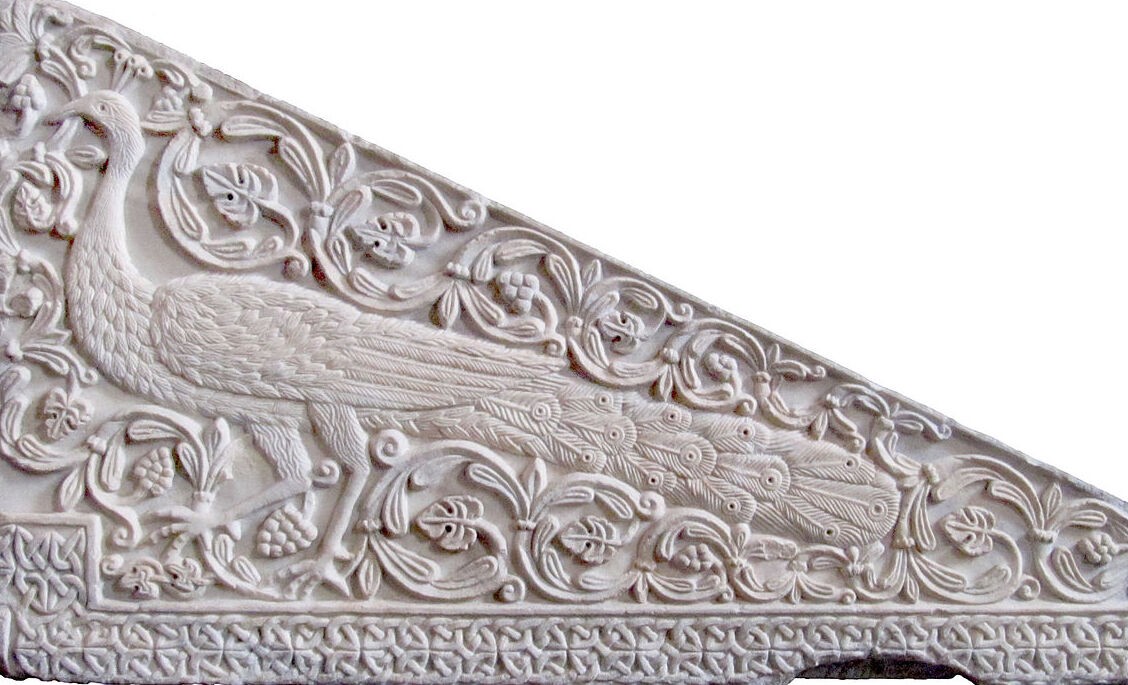
Among the rich sculptural furnishings of the Basilica of San Salvatore, symbol of a taste and artistic expertise that in the Lombard age had reached unexpected heights, stand out for refinement and precision two trapezium-shaped slabs in Proconnesian marble, representing two peacocks. While one slab has come down to us intact, the other has only a few fragments. The aristocratic peacocks, delicate and flexuous, seem to advance in the composition in a forest of vine leaves and shoots with bunches of grapes arranged in spirals, and contained by a sumptuous band of interlaced ribbons, which runs along the underside. The ornamental and geometric motifs cover the entire surface, creating a dense decorative weave, almost like lace, according to an artistic language recurring in the artefacts of the 8th and 9th centuries. The peculiarity of the composition lies in the refinement of the overall effect, which makes it one of the most important examples of bas-relief sculpture, in which the influence of motifs inspired by Byzantine art and late-antique naturalism blend with the dominant themes of medieval figurative culture. The work is rich in symbolic values, according to an iconography recurring in the early Middle Ages and of early Christian origin, which gives the peacock the allegorical meaning of the resurrection and immortality of the soul. The vines that surround them are, on the other hand, traditionally traced back to the symbol of the Passion of Christ. It is likely that the two slabs were supposed to compose parts of an ambo, placed inside the church, which lent itself to the reading of sacred texts and the recitation of homilies. It is believed that the artefacts adorned the sides of two stairs leading to the pulpit.

🗺 AI Trip Planner 2026

Plan your visit to Brescia

Suggested itinerary near Brescia | Slab with Peacock

MAJ+
500.000+ travelers worldwide
  1. 🌅
    Morning
    Brescia | Slab with Peacock
    📍 Brescia
  2. ☀️
    Afternoon
    The Cross of Desire
    📍 0 km · Brescia
  3. 🌆
    Evening
    Brescia | Santa Maria in Solario: Lipsanoteca
    📍 0.1 km · Brescia

Buy Unique Travel Experiences

Powered by Viator

See more on Viator.com

Explore nearby · Brescia

Frequently Asked Questions

The two trapezium-shaped slabs featuring peacocks are crafted from Proconnesian marble, a prized material imported during the Lombard age that demonstrates the exceptional artistic expertise of the period. While one slab has survived intact, the other remains only as fragments, yet both showcase the refined sculptural techniques of the 8th and 9th centuries.
According to early Christian iconography, the peacocks represent the resurrection and immortality of the soul, while the surrounding vine leaves and grape bunches symbolize the Passion of Christ. This rich symbolic language reflects the spiritual significance placed on these decorative elements during the medieval period.
The slabs were likely part of an ambo, a liturgical structure used for reading sacred texts and reciting homilies, with scholars believing they adorned the sides of two stairs leading to the pulpit. This placement would have made them prominently visible to congregation members during religious services.
The peacock slabs display a sophisticated blend of Byzantine art motifs with late-antique naturalism combined with dominant medieval figurative themes, creating a dense decorative weave that covers the entire surface. The interlaced ribbons and ornamental geometric patterns reflect an artistic language characteristic of Lombard-period masterpieces.
These bas-reliefs represent some of the most refined examples of Lombard age sculptural craftsmanship, demonstrating unexpected artistic heights through their delicate composition, precise execution, and the masterful integration of symbolic and decorative elements. The intricate details and sophisticated iconography make them essential pieces for understanding early medieval artistic development in Northern Italy.
Secret World Hidden places, real stories — plan your trip
Get the app
