
← Back

The Cross of Desire

Via dei Musei, 81/b, 25121 Brescia BS, Italia ★★★★☆ 205 views
Raffaella Bellanova
Brescia
🏆 AI Trip Planner 2026

Get the free app

Discover the best of Brescia with Secret World — the AI trip planner with 1M+ destinations. Get personalized itineraries, hidden gems and local tips. Free on iOS & Android.

🧠 AI Itineraries 🎒 Trip Toolkit 🎮 KnowWhere Game 🎧 Audio Guides 📹 Videos
Scan to download iOS / Android
Scan for AppGallery Huawei users

About The Cross of Desire

The Cross of Desire - Brescia | Secret World Trip Planner

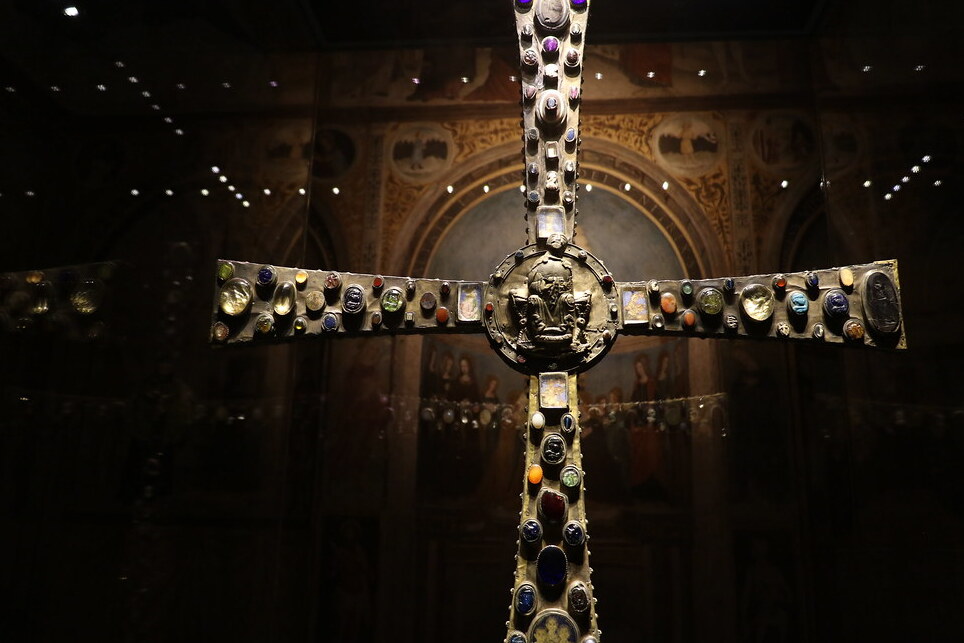
The Cross of Desiderio, one of the most representative and precious artefacts of the Museum of Santa Giulia, made of wood and covered with a metal foil embellished with gems, is one of the largest budded crosses that have come down to us. The cross was donated, according to tradition, by the Lombard king Desiderio and his wife Ansa to the monastery, which they themselves founded.It is covered with as many as two hundred and eleven gems set on the four arms and, unique case among the known crosses, has the largest number of reused ancient gems, about fifty, many of them from previous ornaments.

The Cross of Desire - Brescia | Secret World Trip Planner

At the intersection of the arms are two large medallions where stand out, on the recto, the Christ on the throne cantilevered, believed to be the work of the IX-X centuries, surrounded by four miniatures (X-XVI century AD), and, on the reverse, the Christ crucified, added in the sixteenth century. The stones of the Imperial and Late Antiquity ages are found mainly on the reverse of the cross and their high number testifies to the considerable availability of high quality glyptic material that must have come from ancient imperial treasures. The stones tell us about myths and fantastic stories, among them are particularly noteworthy: a sardonic cameo with the Muses and one with Pegasus, the winged horse, and Bellerophon; a chalcedony in two layers with the fight between Hercules and Onfale, the Queen of Lydia; a cameo with a laurel crowned Victory, very similar to the winged Victory in the museum; a cameo with an eagle, which in medieval times was probably interpreted as a symbol of Christ, and an onyx with a portrait of a Julio-Claudian princess. On the front, where medieval gems prevail, stands out the famous glass medallion with gold leaf portraits from the mid-third century AD: the medallion shows a family group, a mother with two children, and the inscription in Greek characters probably refers to the head of the family, Vunnerio Cerami.

The pieces attributable to the early medieval age constitute a very important nucleus as they are very numerous and probably contemporary to the working of the cross; among them two double layer pseudo-cameos (mid-eighth-ninth century A.D.) and eighteen moulded decorated glass paste gems, made in the same workshop, take on considerable significance. On them prevail portraits of classical echoes, in shades of blue and green, the predominant colour in the decoration of the cross. It is striking that there are no sacred subjects. Other rarities set in the "di Desiderio" cross are a portrait of Frederick II of Swabia, dating back to the 13th century A.D. and two very rare gems, produced by northern European craftsmen, of which only seven specimens exist in Italy and of these six are in Brescia: they are the so-called Alsengemme, two of which are set in the Cross of Desire and the other four in the Cross of the Field preserved in the old cathedral. This masterpiece of early medieval goldsmith's art can be dated

The Cross of Desire - Brescia | Secret World Trip Planner
🗺 AI Trip Planner 2026

Plan your visit to Brescia

Suggested itinerary near The Cross of Desire

MAJ+
500.000+ travelers worldwide
  1. 🌅
    Morning
    The Cross of Desire
    📍 Brescia
  2. ☀️
    Afternoon
    Brescia | Slab with Peacock
    📍 0 km · Brescia
  3. 🌆
    Evening
    Brescia | Santa Maria in Solario: Lipsanoteca
    📍 0.1 km · Brescia

Buy Unique Travel Experiences

Powered by Viator

See more on Viator.com

Explore nearby · Brescia

Frequently Asked Questions

The Cross of Desiderio is one of the most precious artifacts housed in the Museum of Santa Giulia, made of wood covered with metal foil and embellished with gems. According to tradition, it was donated by the Lombard king Desiderio and his wife Ansa to the monastery they founded, making it a remarkable piece of medieval religious art and one of the largest budded crosses to survive to modern times.
The Cross of Desiderio is covered with as many as two hundred and eleven gems set across its four arms, featuring the largest number of reused ancient gems among all known crosses, with approximately fifty ancient gemstones incorporated into the design. Many of these reused gems come from previous ornaments and ancient imperial treasures, indicating the considerable availability of high-quality glyptic material available during its creation.
The cross features remarkable carved gemstones depicting classical mythology, including a sardonic cameo with the Muses and one showing Pegasus with Bellerophon, a chalcedony depicting Hercules fighting Onfale, the Queen of Lydia, and a cameo with a laurel-crowned Victory. Additionally, there is an onyx portrait of a Julio-Claudian princess and an eagle cameo, which medieval interpreters likely saw as a symbol of Christ, demonstrating the blend of classical and Christian imagery.
The front of the cross features a famous glass medallion with gold leaf portraits dating from the mid-third century AD, showing a mother with two children and Greek inscriptions that likely reference the family head, Vunnerio Cerami. This unique portrait medallion represents an exceptionally rare survival of Roman glass art and provides a fascinating glimpse into a historical family from Imperial Rome.
At the intersection of the cross's arms are two large medallions featuring Christ on the throne in a cantilevered position on the front, believed to be from the IX-X centuries and surrounded by four miniatures from the X-XVI century AD. On the reverse side is a depiction of the Christ crucified, which was added during the sixteenth century, blending artwork from multiple historical periods.
Secret World Hidden places, real stories — plan your trip
Get the app
