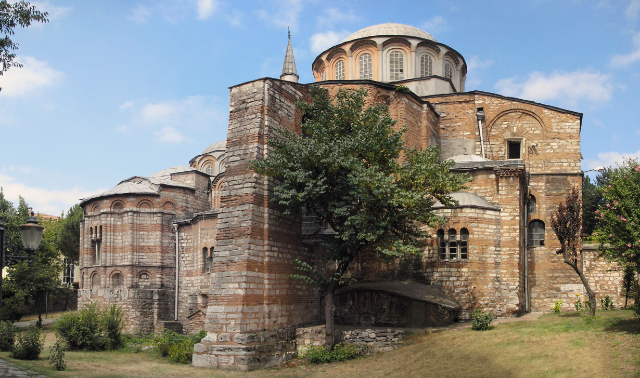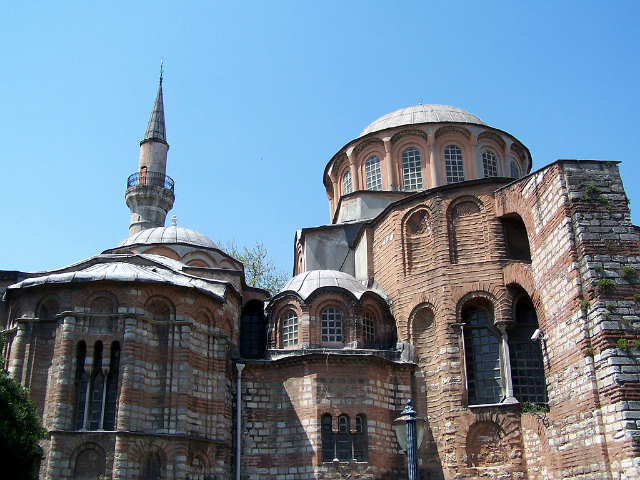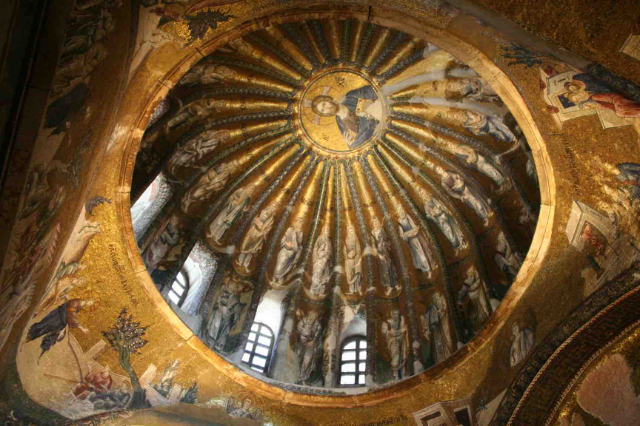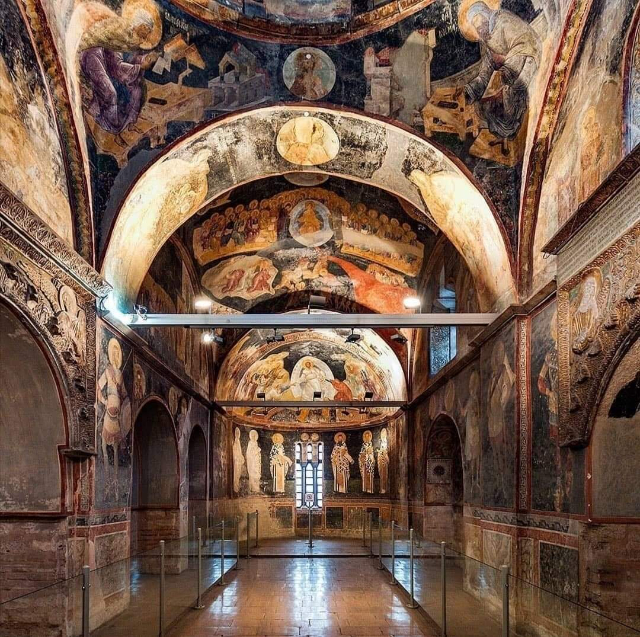

The Church of St. Savior in Chora, also known as Kariye Museum, is one of Istanbul's hidden treasures and a must-see for lovers of Byzantine art and history.The name "Church of St. Savior in Chora" has ancient origins and has a special meaning related to its history and geographical location.The word "Chora" in Greek means "countryside" or "outside the walls." The name of the church derives from the fact that it was originally built outside the city walls of Constantinople, the ancient name for Istanbul. The location "in Chora" indicated that the church was located in the countryside surrounding the city.The choice of the name "St. Savior" is related to the veneration of the Christian saint. "Saint Savior" is a title given to Jesus Christ, who is considered the Savior of humanity in the Christian tradition. Thus, the name "St. Savior in Chora" indicates that the church was dedicated to Jesus Christ as Savior.On the other hand, the name "Kariye Museum" is a more modern designation given to the church after its transformation into a museum. "Kariye" is a Turkish word meaning "within the city." The term "Kariye Museum" is often used as an alternative name to refer to St. Savior's Church in Chora.The dual designation, both "St. Savior's Church in Chora" and "Kariye Museum," is commonly used to refer to this important historical and artistic site in Istanbul.The original church, dating back to the 4th century, was built outside the walls of Constantinople. Over the centuries, the church underwent several transformations and was abandoned, but it was restored and converted into a mosque during the Ottoman period. In 1948, the structure was converted into a museum and became known as the Kariye Museum.The real attraction of the Church of St. Savior in Chora lies in its remarkably well-preserved mosaics and frescoes. These masterpieces of Byzantine art date back to the 14th century and are considered some of the best surviving examples of Byzantine art in the world.The mosaics and frescoes of the Church of St. Savior in Chora depict biblical scenes, portraits of saints, angelic figures, and episodes from the life of Christ. The images are characterized by finely crafted details, vivid colors and extraordinary expressiveness.One of the distinguishing features of the mosaics is the use of a technique called "golden tesserae," in which golden glass is used to create a luminous effect that lends a preciousness and divine aura to the images.In addition to the mosaics, the Church of St. Savior in Chora also has beautiful frescoes decorating the walls and vaults of the building. The frescoes depict religious and allegorical scenes, often accompanied by Greek texts that offer a deeper understanding of the symbolic meanings.A visit to the Church of St. Savior in Chora offers an immersive experience in the beauty of Byzantine art and allows you to appreciate the incredible craftsmanship of the artists who created these masterpieces centuries ago.It is important to note that due to restoration work, some mosaics and frescoes may be covered or partially inaccessible during the visit. However, despite the restrictions, the beauty and historical importance of this church-museum does not fail to amaze visitors.If you are interested in Byzantine art and religious history, a visit to St. Savior's Church in Chora will be an unforgettable experience that will allow you to discover the unique charm of Istanbul through its historical art and architecture.