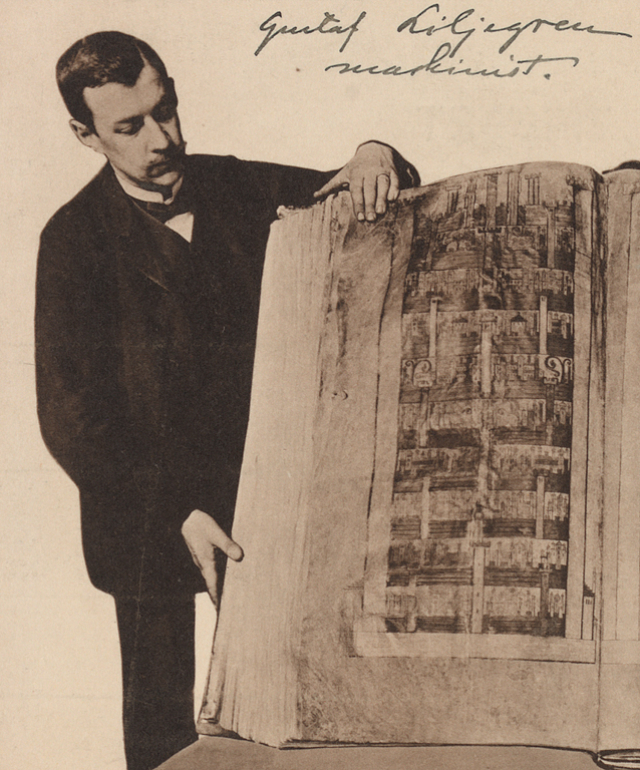
The Codex Gigas, also known as "The Devil's Bible," is a medieval manuscript dating back to the 13th century and containing a number of religious and scientific texts. The manuscript, named for its enormous size (measuring about 92 cm high, 50 cm wide and weighing about 75 kg), is considered one of the largest surviving medieval manuscripts in the world.The Codex Gigas was probably created in a monastery in the Bohemian region (present-day Czech Republic), and was written in Latin by a single anonymous scribe, who completed the manuscript in about 20 years. The book contains a variety of texts, including the Bible, apocryphal books, a Bohemian chronicle, and a number of medical and scientific treatises.The name "Devil's Bible" was given to the manuscript because of a legend surrounding its creation. It is said that the monk who wrote the manuscript had vowed to complete it in one year, but failing to do so, made a pact with the devil for help in its writing. In return, he was to place a large image of the devil inside the manuscript. The devil image is indeed present in the manuscript, but the legend has been largely debunked by scholars.The Codex Gigas has been preserved in several places over the centuries, including Podlažice Monastery in Bohemia, Karlštejn Castle, and the Strahov Monastery Library in Prague. In 1594, the manuscript was confiscated by Emperor Rudolf II and taken to Prague. The manuscript was eventually transferred to Sweden during the Thirty Years' War and then donated to the National Library of Sweden in the 17th century.The Codex Gigas is known not only for its large size and the legend of the devil, but also for its elaborate illustrations and decorations. The manuscript has been the subject of much research and study by scholars and enthusiasts of medieval history, art, and literature.