


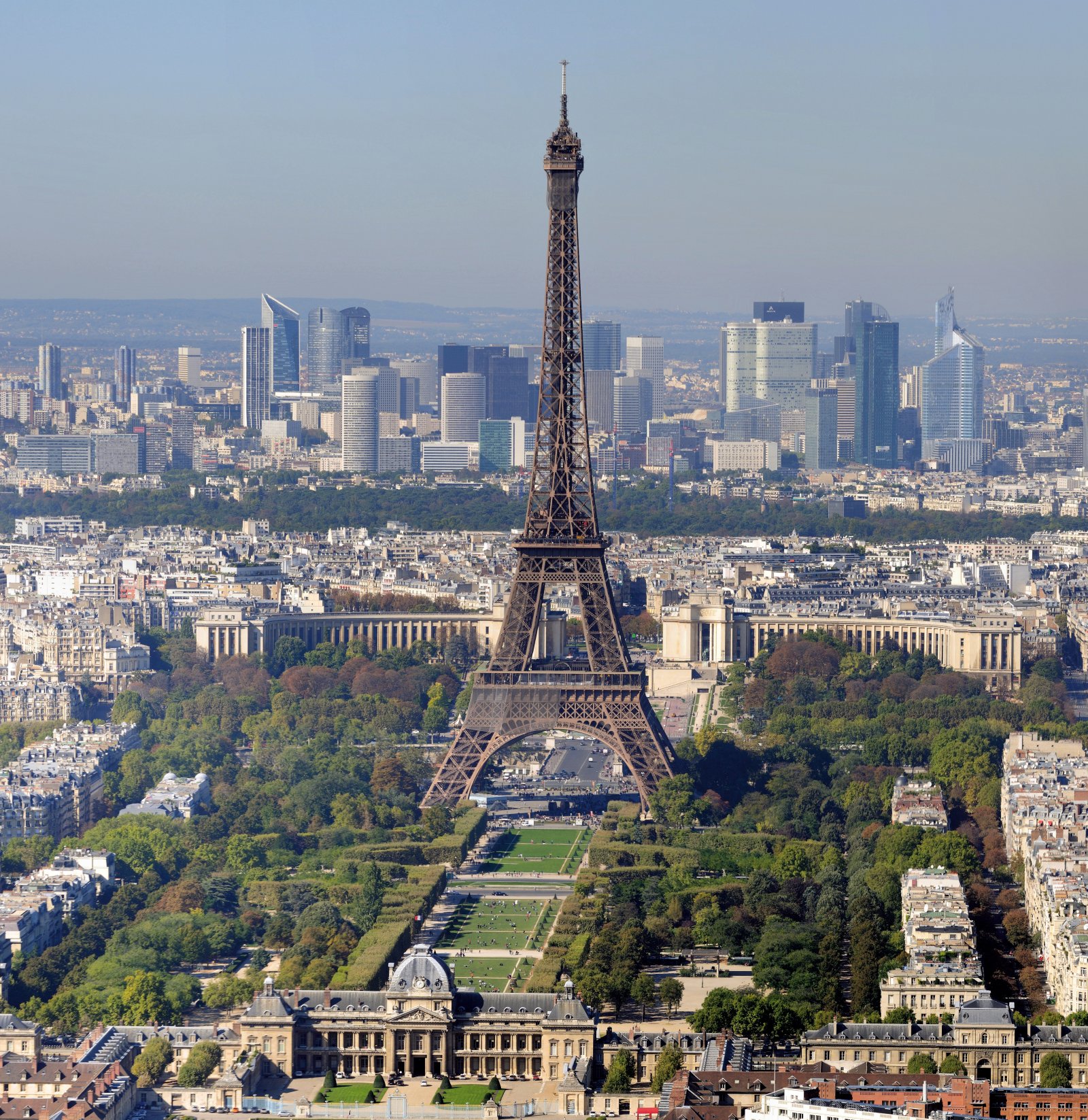
Gustave Eiffel's Private Apartment, Paris, France Nestled at the top of the Eiffel Tower, Gustave Eiffel's private apartment is one of Paris's best-kept secrets. Located on the third floor (the highest level open to the public), just below the spire, this roughly 100 m² space (part of which is occupied by the elevator and technical installations) was never a full-time residence. It served as a personal haven, an aerial office, and an exceptional salon that the engineer had reserved for himself.
A small cocoon amid the iron Contrary to the industrial image of the Tower, the apartment was surprisingly warm and “bourgeois-scientific”:
- A salon with a table, comfortable sofa, upright piano, three small work desks, chintz armchairs, carved wood panelling, and discreetly patterned wallpaper.
- A kitchen, a bathroom with sink, and even a small separate toilet.
- No bedroom: Gustave Eiffel did not sleep there (despite persistent rumours). It was a place for work, reflection, and carefully selected receptions.
Eiffel had designed it from the very beginning of the project (1887–1889) as a private space, sheltered from prying eyes and the noise of the city. There he carried out meteorological observations, aerodynamic experiments, and scientific measurements—the Tower was also a gigantic laboratory.
Prestigious guests… and astronomical offers refused From the inauguration in 1889, word of this apartment spread through fashionable Paris. The elite offered extravagant sums to spend a single night there (equivalent to a small fortune at the time), but Eiffel systematically refused. He preferred to reserve the space for exceptional guests:
- Thomas Edison (September 1889): the most famous encounter. The American inventor, visiting the Universal Exhibition, presented Eiffel with one of his first phonographs (a wax-cylinder sound-recording device). In the apartment’s “Golden Book” (where guests signed), Edison wrote a touching dedication: “To Mr. Eiffel the engineer, the courageous builder of so gigantic and original a specimen of modern engineering, from one who has the greatest respect and admiration for all engineers, including the Great Engineer, the Good God. – Thomas Edison”
- Among the other notable signatures in the Golden Book (now preserved): the Princess of Wales, Sarah Bernhardt, Paul Gauguin, Buffalo Bill, several European royal families…
Little-known details and fascinating anecdotes
- Eiffel’s granddaughter spent her wedding night there: in 1935, Gustave’s granddaughter Janine Eiffel and her husband Laurent Yeatman spent their honeymoon night in the apartment (the elevators stopped at 7 p.m. back then, so they were alone at 300 metres high!). No bed, but a comfortable sofa was enough.
- An adjacent secret laboratory: next to the salon were small rooms for scientific instruments (barometers, anemometers, seismographs). Eiffel studied wind, atmospheric pressure, and even earthquakes there—the Tower was a giant observatory.
- The Golden Book lost and then rediscovered: for decades people believed the precious register was lost. It reappeared in the archives and is occasionally exhibited.
- No panoramic view from inside: ironically, the windows were small and oriented to avoid violent drafts. Eiffel preferred the open terrace around it to admire Paris.
- Today: visitors cannot enter, but can view the reconstruction through a protective glass panel. The wax mannequins (Eiffel, his daughter Claire, and Edison discussing around the phonograph) date from a 1980s–90s staging, yet perfectly capture the spirit of the era.
This little apartment was not an ego trip: it was the ultimate symbol of Eiffel’s triumph. In an age when intellectuals mocked the Tower (“monstrous scrap-iron” according to Maupassant), its creator installed himself there as master, receiving Edison and turning down the money of wealthy Parisians. A silent gesture of pride: “I built the Tower; I live above you all.”
If you climb to the top, take a moment to look through the glass: behind it, 300 metres above Paris, a piece of history still breathes.


