
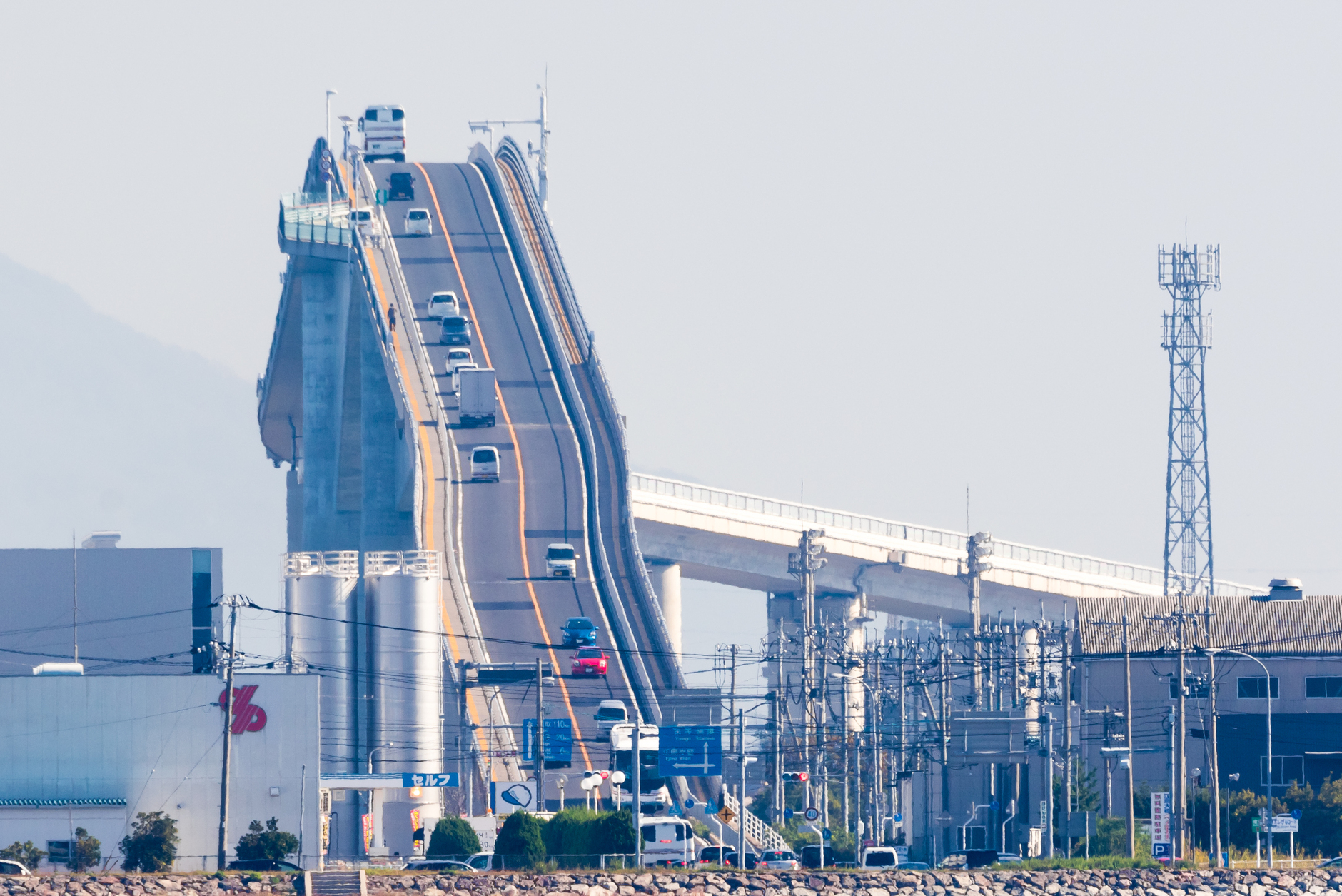

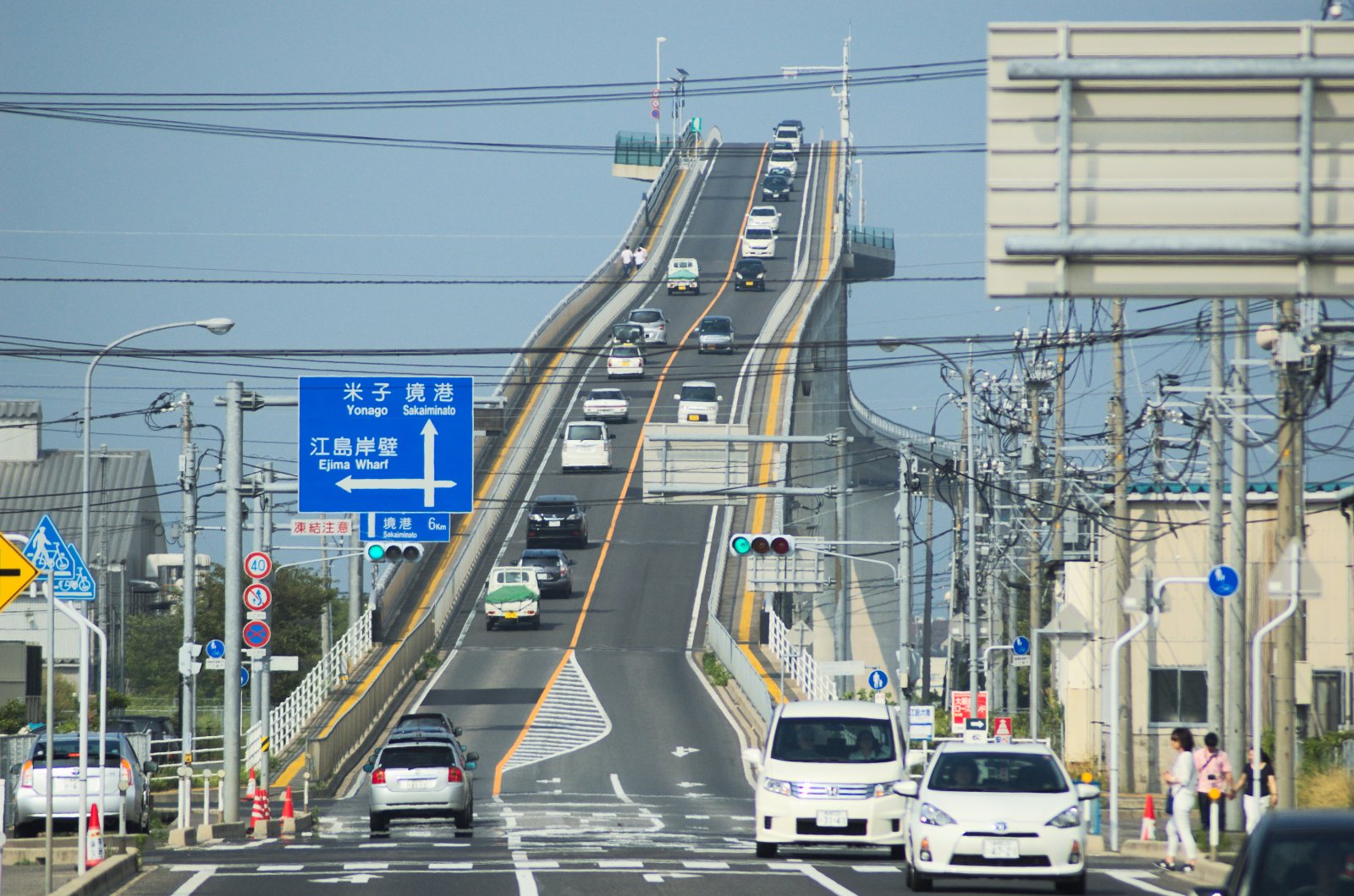
The Eshima Ohashi Bridge, often referred to as the "Rollercoaster Bridge," is a marvel of modern engineering that commands attention and inspires awe. Spanning Nakaumi Lake, this bridge connects the cities of Matsue in Shimane Prefecture and Sakaiminato in Tottori Prefecture. When viewed from a distance, its steep gradient gives the illusion of a daunting, almost vertical climb, reminiscent of a thrill-seeking amusement park ride. However, there is more to this architectural wonder than its rollercoaster-like appearance.
The history of Eshima Ohashi is relatively recent, as the bridge was completed in 2004. Its creation was driven by the need for a robust and reliable connection across Nakaumi Lake, replacing an older, less efficient ferry system. The bridge's construction reflects Japan's post-war era of rapid development, a period marked by ambitious infrastructure projects that aimed to enhance connectivity and economic growth across the country.
Though its origins are modern, the region it serves is steeped in ancient history. Matsue, known as the "City of Water," boasts a rich cultural heritage that dates back to the Edo period. The city is home to the historic Matsue Castle, one of Japan’s few remaining original castles, and is often associated with the English writer Lafcadio Hearn, who lived there in the late 19th century. Hearn's writings famously introduced Japanese culture to the Western world.
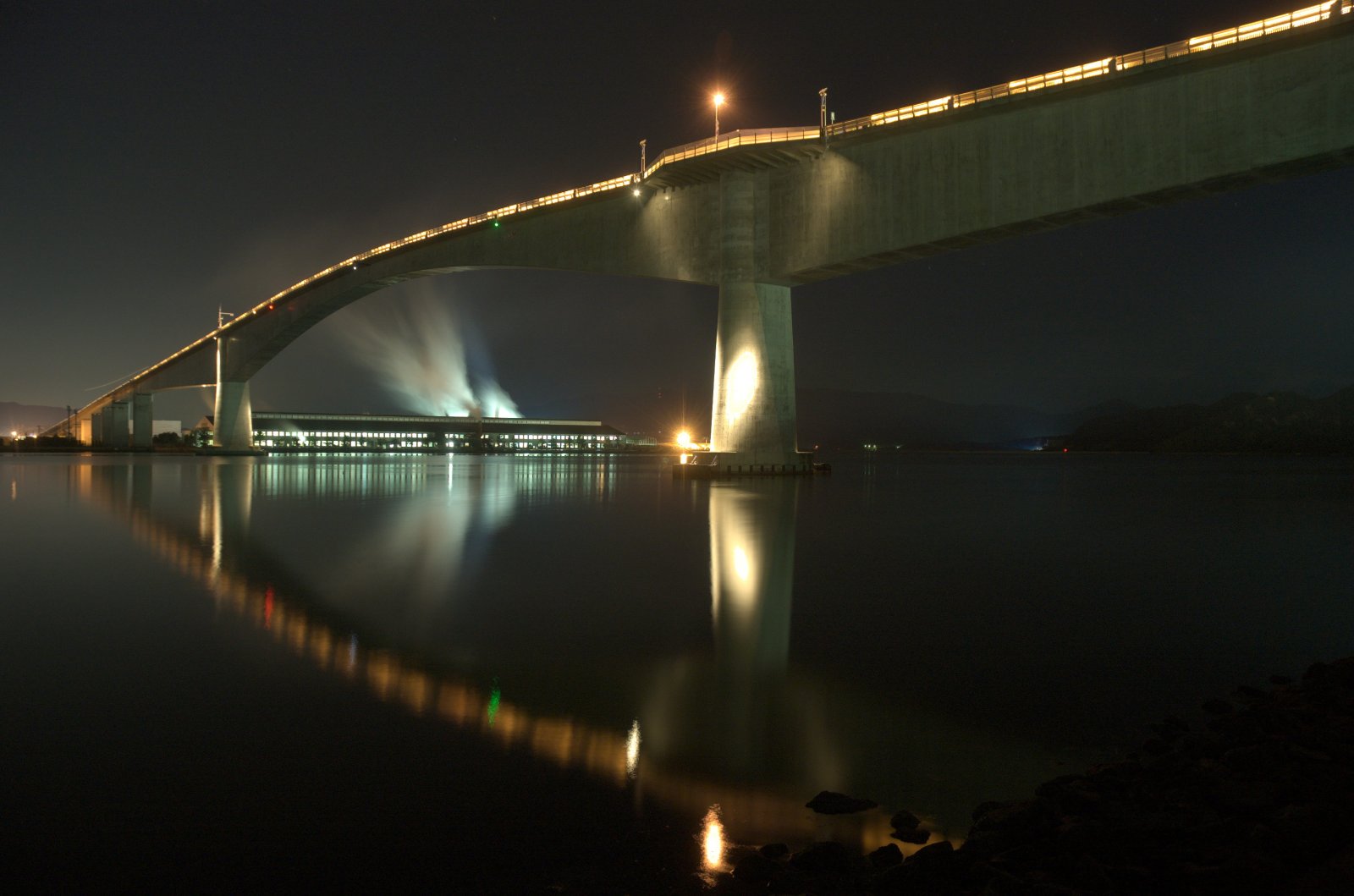
The art and architecture of Eshima Ohashi are a testament to contemporary Japanese design and engineering prowess. The bridge spans 1.7 kilometers with a width of 11.3 meters, making it the largest rigid-frame bridge in Japan and the third largest in the world. Its steep inclines, with a gradient of up to 6.1% on the Tottori side and 5.1% on the Shimane side, were designed to allow large ships to pass beneath, while still providing a reliable roadway for vehicles. This practical yet visually striking solution exemplifies the fusion of functionality and aesthetic boldness.
In terms of local culture and traditions, Matsue is a city that celebrates its unique blend of history and natural beauty. One of the most significant local festivals is the Matsue Suitoro, or "Water Lantern Festival," held every autumn. During this event, the canals and moat around Matsue Castle are illuminated with thousands of lanterns, creating a magical atmosphere that honors the region's deep connection to water.
Gastronomy in Matsue and its surrounding areas is deeply influenced by its proximity to both the sea and fertile lands. Visitors can enjoy a variety of local specialties, such as Izumo soba, a type of buckwheat noodle served in a unique three-tiered wooden box called a "wariko." Additionally, the area is known for its fresh seafood, with Shijimi clams from Lake Shinji being particularly prized. These clams are often used in miso soup, showcasing the delightful flavors of local produce.
For those seeking lesser-known curiosities, the bridge itself holds a fascinating optical illusion. From certain angles, particularly in promotional photographs and videos, the steepness of the bridge is exaggerated due to a technique called telephoto compression. This effect has contributed to its reputation as a "rollercoaster" and has made it a popular subject for viral videos and internet challenges.
When planning a visit to the Eshima Ohashi Bridge, timing can enhance the experience. The best time to visit is during the spring or autumn when the weather is mild and the surrounding landscape is at its most picturesque. Early morning or late afternoon offers the best light for photography, capturing the bridge’s dramatic silhouette against the serene backdrop of Nakaumi Lake.
Travelers should take the opportunity to explore the nearby attractions as well. A visit to Matsue would not be complete without a tour of Matsue Castle and its beautiful surrounding gardens. For those with more time, a short drive to the city of Sakaiminato offers the chance to explore the Mizuki Shigeru Road, a street dedicated to the famous manga artist known for his work on Japanese folklore creatures, or "yokai."
In conclusion, Eshima Ohashi is more than just a bridge; it is a gateway to a region rich in history, culture, and natural beauty. Whether you're drawn by its architectural allure or the vibrant cultural tapestry of Matsue and its surroundings, this unique destination promises a memorable journey for the curious traveler.


