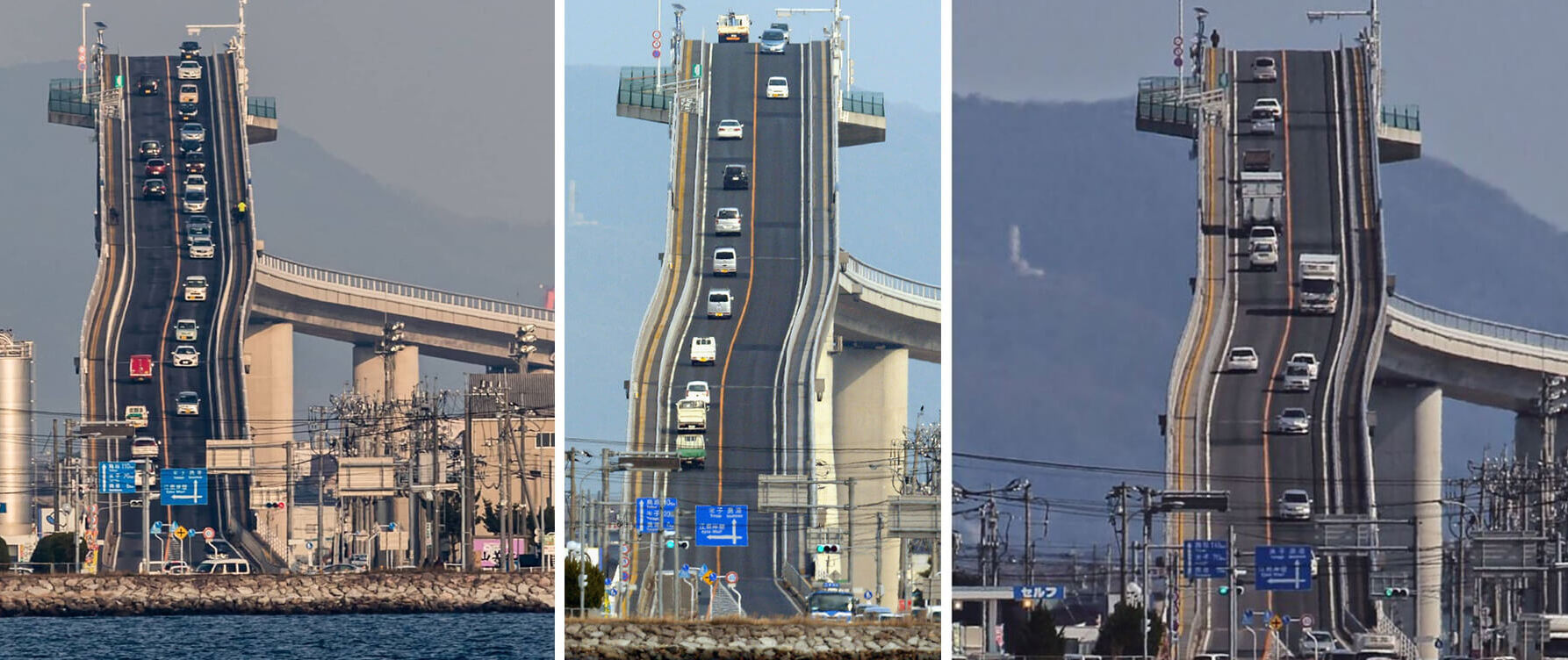

The Eshima Ohashi Bridge, often referred to as the Rollercoaster Bridge, is a marvel of modern engineering and a stunning architectural feat nestled between the cities of Matsue in Shimane Prefecture and Sakaiminato in Tottori Prefecture, Japan. As the largest concrete-framed rigid bridge in the country and the third largest in the world, this two-lane structure spans Lake Nakaumi, drawing visitors with its striking design and steep inclines that create the illusion of a roller coaster ride.
### History and Origins The roots of the Eshima Ohashi Bridge can be traced back to the early 20th century, with the original bridge opened in 1954. It played a crucial role in connecting the communities across the lake and facilitating trade and transportation. However, as traffic increased, the need for a more robust structure became apparent. In 2004, the current bridge was completed, boasting a height of 44.7 meters at its peak and gradients of 6.1% and 5.1% on either side. Its unusual steepness not only serves a functional purpose but also imparts an exhilarating visual experience for drivers and pedestrians alike.
### Art and Architecture The architectural significance of the Eshima Ohashi Bridge lies in its modernist design, showcasing the principles of concrete engineering and aesthetic minimalism. The bridge's silhouette, particularly when viewed from certain angles, evokes the image of a roller coaster, a feature that has contributed to its nickname. The engineers and architects behind the bridge, including the Shimane Prefectural Government, aimed for a structure that could withstand natural disasters like earthquakes and typhoons, while also becoming a symbol of the region's resilience and innovation.
In terms of artistic significance, the bridge has inspired local artists and photographers, who often capture its majestic form against the backdrop of seasonal changes in Lake Nakaumi. It has become a popular subject in local art exhibitions and photography contests, celebrating both its engineering and its aesthetic appeal.
### Local Culture and Traditions The area surrounding the Eshima Ohashi Bridge is rich in cultural traditions. Matsue, known as the City of Water, is deeply intertwined with its natural surroundings. Local customs reflect a harmonious relationship with the lake, including fishing and traditional boat-making.
One of the most notable festivals is the Matsue Suigosai, held every summer, which features fireworks, traditional music, and dance performances along the shores of Lake Shinji. This festival not only celebrates local heritage but also draws visitors from across Japan, showcasing the area’s vibrant culture.
### Gastronomy No visit to the area would be complete without indulging in the local gastronomy. Matsue is particularly famous for its shijimi clams, harvested from the brackish waters of Lake Shinji. These clams are a staple in local dishes, often served in a savory miso soup or as part of a rice bowl. Additionally, the region is renowned for its sake, with Matsue being home to several breweries that produce exquisite varieties that pair beautifully with local seafood.
Another culinary delight is the Matsue Wagyu, a top-grade beef known for its rich marbling and flavor, often grilled or served as sashimi. Visitors can enjoy these local delicacies at various restaurants in Matsue, providing a genuine taste of the area’s culinary heritage.
### Lesser-known Curiosities While the Eshima Ohashi Bridge is a well-known landmark, there are some lesser-known facts that surprise many tourists. For instance, the bridge's steep incline was designed not only for aesthetic purposes but also to allow boats to pass underneath. Additionally, on foggy days, the bridge can appear to float above the lake, creating a surreal atmosphere that delights photographers.
Another curiosity is the local belief that crossing the bridge brings good luck. Many locals share stories of personal triumphs and achievements related to their journeys across the bridge, adding a layer of cultural significance to this engineering marvel.
### Practical Visitor Information The best time to visit the Eshima Ohashi Bridge is during the spring and autumn months when the weather is mild and the scenery is particularly picturesque. Springtime brings beautiful cherry blossoms, while autumn showcases vibrant foliage around the lake.
For those planning to drive across the bridge, be sure to take it slow to fully appreciate the view. There are also several observation points nearby, offering stunning panoramic views of the bridge and the surrounding landscape. Additionally, consider visiting nearby attractions such as the Matsue Castle, a national treasure, and Shinji Lake, known for its scenic beauty and hot springs.
### Conclusion The Eshima Ohashi Bridge is more than just a transportation route; it is a symbol of innovation, culture, and the breathtaking natural beauty of Matsue. Its steep slopes and striking design invite curiosity and adventure, making it a must-see for travelers.
For a personalized itinerary that ensures you don’t miss any hidden gems in Matsue, consider using the Secret World app.
