
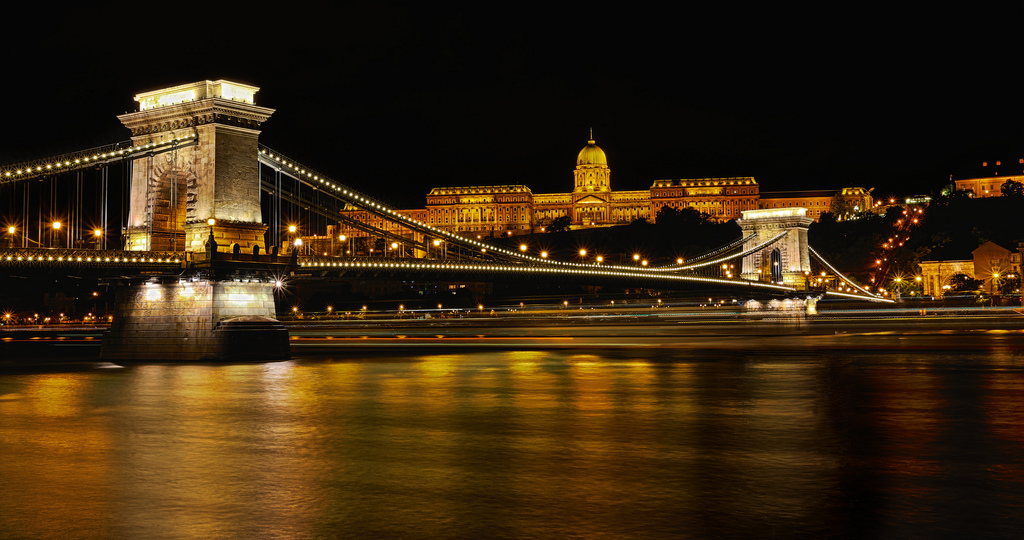

Spanning the majestic Danube River, the Szechenyi Chain Bridge in Budapest stands as a testament to human ingenuity and the city's vibrant history. As you stroll across this iconic structure, you're not merely walking from Buda to Pest but traversing a timeline that has seen revolutions, restorations, and the unyielding spirit of Hungary.
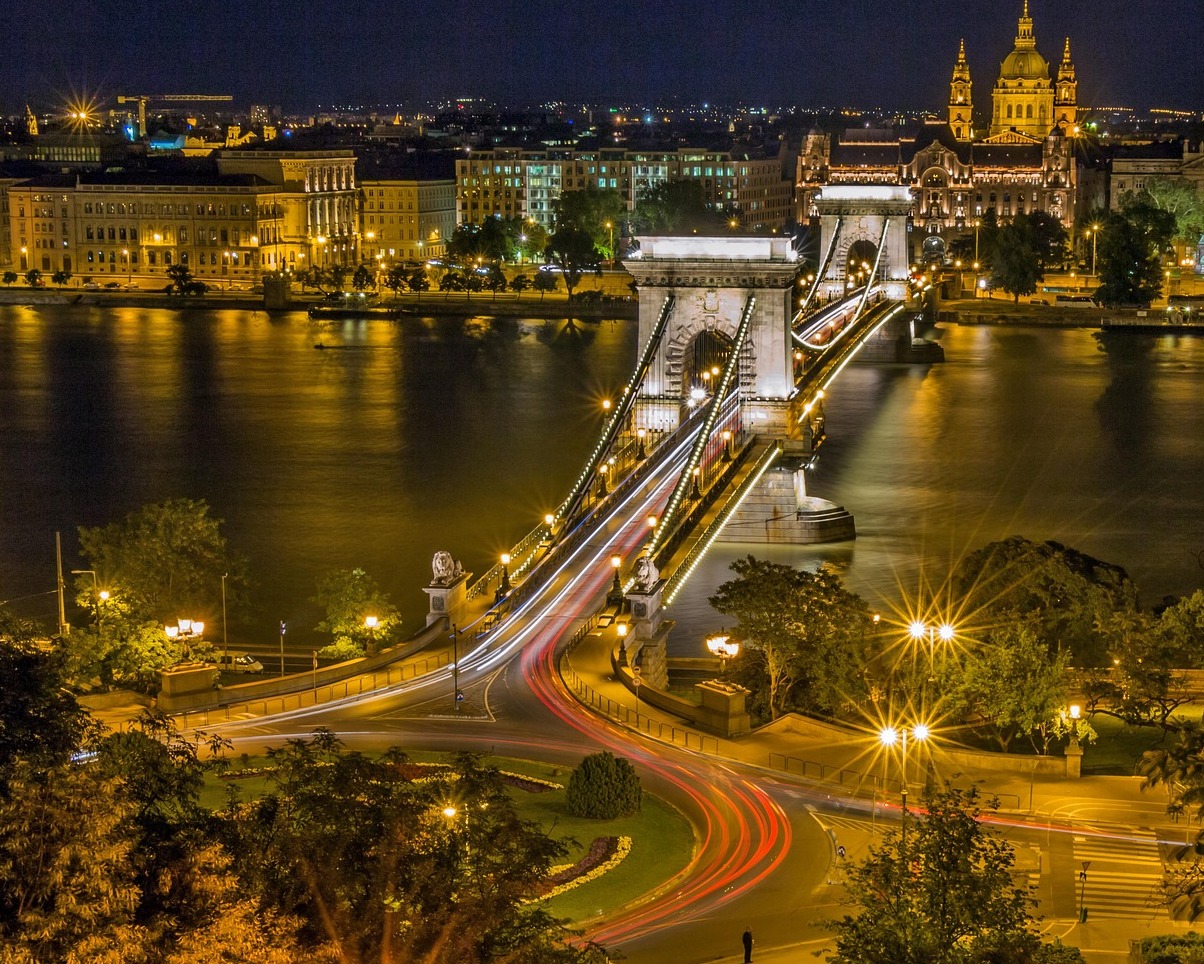
The origins of the Szechenyi Chain Bridge date back to the early 19th century. It was the brainchild of Count István Széchenyi, a prominent Hungarian statesman often hailed as "The Greatest Hungarian." Inspired by a personal experience in 1820, when he was unable to attend his father's funeral due to the Danube's impassable waters, Széchenyi championed the construction of a permanent bridge. The bridge opened in 1849 amidst the reverberations of the Hungarian Revolution, symbolizing a new era of connectivity and modernity. Designed by English engineer William Tierney Clark and constructed under the supervision of Scottish engineer Adam Clark, the bridge was a marvel of its time, merging functional design with aesthetic elegance.
Architecturally, the Szechenyi Chain Bridge is a masterpiece of the Classicist style, characterized by its imposing stone lions guarding each end, sculpted by János Marschalkó. The bridge’s chains, from which the road-bed hangs, are held by two robust river piers rising 48 meters above the river. These piers, with their grand arches, not only support the structure but also frame the picturesque views of the Buda Castle and the Parliament Building, creating one of the most photogenic scenes in Europe.
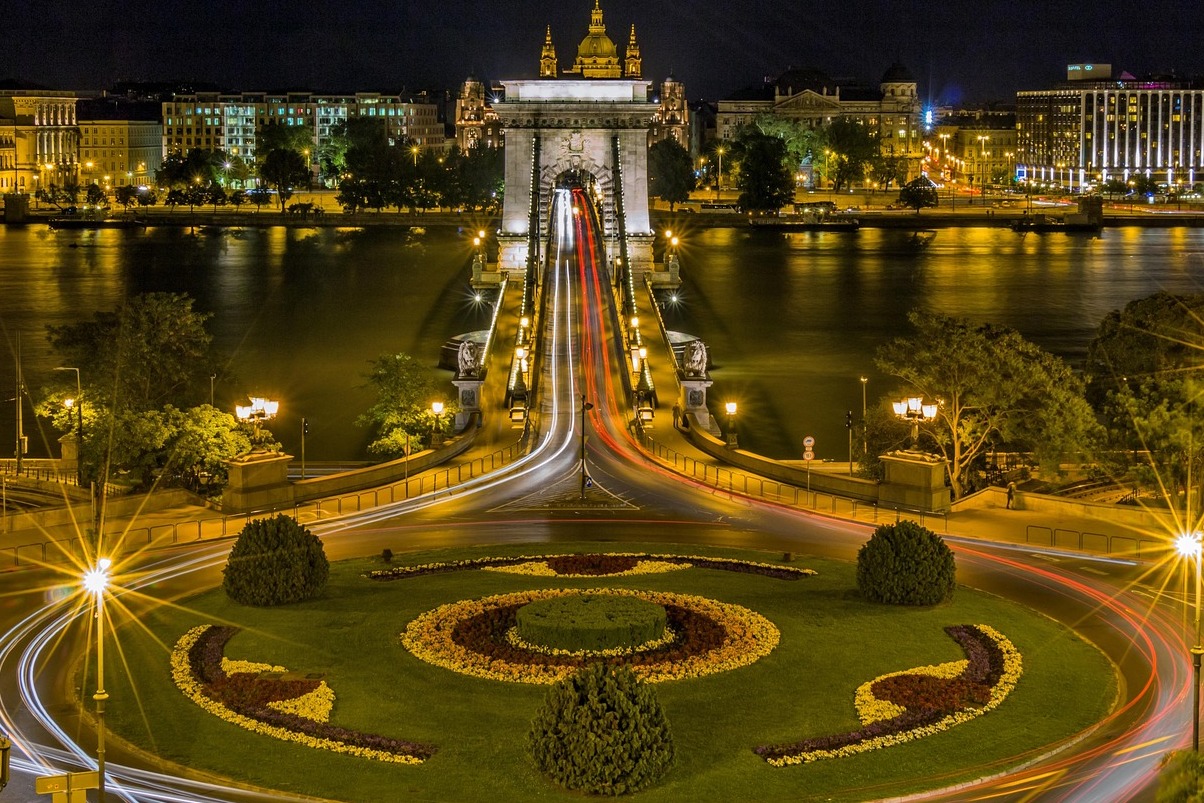
Beyond its structural beauty, the Chain Bridge holds a deep cultural significance for Budapest. It was the first permanent bridge to connect Buda and Pest, symbolizing the unification of the two cities into a single metropolis in 1873. Each year, the bridge becomes a focal point during national holidays and festivals. Notably, during the annual Bridge Festival in the summer, the bridge is closed to vehicular traffic, allowing pedestrians to enjoy lively music performances, art installations, and local food stalls that celebrate Hungarian culture.
Speaking of gastronomy, the areas surrounding the Chain Bridge offer a delightful array of traditional Hungarian dishes. From hearty goulash to the sweet indulgence of kürtőskalács (chimney cake), visitors can savor the rich flavors that echo Budapest's culinary heritage. Pair your meal with a glass of Tokaji wine, a sweet dessert wine that has been cherished in Hungary for centuries, and you'll experience a true taste of local tradition.
For those with a penchant for hidden stories, the Chain Bridge has its share of lesser-known curiosities. One fascinating tale involves the aforementioned stone lions. Legend has it that the sculptor, Marschalkó, was so proud of his creations that he claimed they were flawless. However, a young boy pointed out that the lions were missing tongues, prompting Marschalkó to leap into the Danube in despair. While the story is a myth—the lions do indeed have tongues—it adds a whimsical layer to the bridge's storied past.
When planning a visit to the Szechenyi Chain Bridge, consider timing your trip during late spring or early autumn when the weather is mild, and the city is bathed in golden sunlight. The bridge is especially enchanting at night when illuminated, offering a romantic ambiance and breathtaking views of Budapest's skyline. To avoid the crowds, aim for an early morning stroll, when the city is just waking up and the bridge's grandeur can be appreciated in solitude.
For those looking to delve deeper into the bridge's history, a visit to the Adam Clark Square on the Buda side provides further insights. Here, you'll find the Zero Kilometer Stone, a starting point for all road distances in Hungary, underscoring the bridge's centrality to Hungarian life.
In every stone and chain, the Szechenyi Chain Bridge tells a story—a narrative of unity, resilience, and artistic triumph. As you walk its length, you're not just crossing a river; you're stepping into the heart of Budapest's rich and enduring legacy.


